


First Sunday of Advent, Year C
First Reading: Jer 33:14-16
Second Reading: 1 Thes 3:12-4:2
Gospel Reading: Lk 21:25-28, 34-36
“The days are surely coming,” God says, “when I will fulfill the promise I made to the House of Israel and the House of Judah.” In the meantime, St. Paul urges us to live so as to please God. Jesus tells us to “be alert at all times,” praying for the strength “to stand before the Son of Man” at the end of the world.
Today’s world is full of evil. Why does God not end it? Why does he delay?
That must have been the question St. Peter was answering when he wrote, “In the Lord’s eyes, one day is as a thousand years and a thousand years are as a day. The Lord does not delay in keeping his promise—though some consider it delay. Rather, he shows you generous patience, since he wants none to perish but all to come to repentance.”
We await “new heavens and a new earth where, according to his promise, the justice of God will reside. So, beloved, while waiting for this, make every effort to be found without stain or defilement, and at peace in his sight. Consider that our Lord’s patience is directed toward salvation.”
“Be on your guard lest you be led astray by the error of the wicked, and forfeit the security you enjoy. Grow rather in grace, and in the knowledge of our Lord and Saviour Jesus Christ.”
In the course I teach, The Catholic Faith in Plain English, I ask participants to read the Bible’s Book of Joshua. Often, they are shocked by the “mass killing.” However, one year a lady had a different reaction: “How patient God is!”
We should remember that when we find him slow to respond to our prayers.
The Catechism of the Catholic Church explains. If we do not pray with the mind of Christ—if our wills are not totally united to his—we can expect that through selfishness or ignorance we will ask for things that are not good, for others or for us.
God cannot possibly grant these requests, any more than a parent can grant a small child’s demand for a razor blade, “for he desires our well-being, our life.” Therefore, when we pray like this, we must always add, “If it be your will.”
This is how Jesus prayed the night before he died. Down on his knees, in anguish so great that his sweat fell to the ground like drops of blood, he prayed three times: “My Father, if it is possible, let this cup pass me by. Still, let it be as you would have it, not as I.”
This was not the “filial boldness” he had displayed at the raising of Lazarus just days before. Now he seemed unsure of his Father’s will, submitting to it rather than doing it.
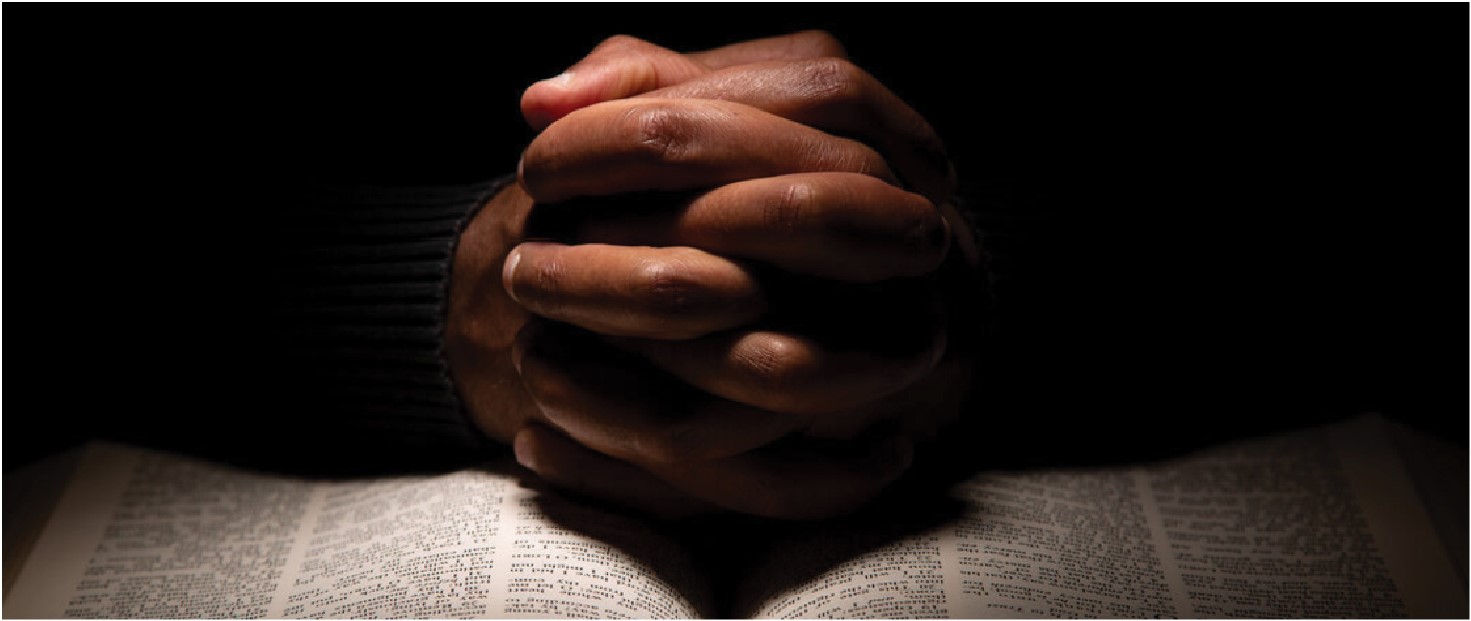
He was praying like a sinner. In giving us his Body to eat and his Blood to drink, he had become infected with “the sin of the world,” leading him to cry from the cross, “My God, my God, why have you forsaken me?” Jesus told us to keep on praying like this with urgency and patience, without losing heart.
It is more important to ask than to get what we ask for, because by asking, “we express awareness of our relationship with God,” the giver, who, in giving, gives the far more precious gift of himself.
God wants us to exercise our desire in prayer so “that we may be able to receive what he is prepared to give.” He wants to do “something even greater” than what we ask, but he cannot give us what we are incapable of receiving. Therefore, while we “cling to him in prayer,” he transforms our “praying heart,” making us capable of “simply saying ‘Yes!’” to him with an undivided heart.
The whole world, including us, needs all the time he will give us.
Father Hawkswell is again teaching The Catholic Faith in Plain English, with new insights. The whole course is available in written form and, one session per week, in YouTube form at beholdvancouver.org/catholic-faith-course. Father is also teaching the course in person: on Sundays at 2:00 pm in the John Paul II Pastoral Centre, 4885 St John Paul II Way, Vancouver (33rd and Willow); and on Mondays at 10:00 am in St. Anthony’s Church hall, 2347 Inglewood Avenue, West Vancouver. Next week’s topic is “A Place for Science in the Catholic Faith.”
Your voice matters! Join the conversation by submitting a Letter to the Editor here.







