


The Catechism of the Catholic Church states: “Fortitude is the moral virtue that ensures firmness in difficulties and constancy in the pursuit of the good.”
Fortitude “strengthens the resolve to resist temptations and to overcome obstacles in the moral life,” the Catechism continues, “enabling one “to conquer fear, even fear of death, and to face trials and persecutions. It disposes one even to renounce and sacrifice his life in defence of a just cause. ‘The Lord is my strength and my song.’ ‘In the world you have tribulation; but be of good cheer, I have overcome the world.’” (CCC 1808)
St. Thomas Aquinas said, “Fortitude is assigned to the irascible power, and temperance to the concupiscible power.”
Pope Francis commented: “Here, then, is the most ‘combative’ of the virtues. If the first of the cardinal virtues, that is, prudence, was primarily associated with man’s reason; and while justice found its in the will, this third virtue, fortitude, is often linked by scholastic authors to what the ancients called the ‘irascible appetite,’ Ancient thought did not imagine a man without passions: he would be a stone. And passions are not necessarily the residue of a sin; but they must be educated, they must be channelled, they must be purified with the water of baptism, or better with the fire of the Holy Spirit. A Christian without courage, who does not turn his own strength to good, who does not bother anyone, is a useless Christian. Let us think about this! Jesus is not a diaphanous, ascetic God, who does not know human emotions.”
The Holy Father described the twofold development in the virtue of fortitude: one passive, another active.
“The first is directed within ourselves. There are internal enemies we must defeat, which go by the name of anxiety, anguish, fear, guilt…. Fortitude is first and foremost a victory against ourselves. Most of the fears that arise within us are unrealistic, and do not come true at all. It is better, then, to invoke the Holy Spirit and face everything with patient fortitude: one problem at a time, as we are able, but not alone! The Lord is with us….. And then there is the second movement of the virtue of fortitude, this time of a more active nature. In addition to internal trials, there are external enemies, which are life’s trials, persecutions, difficulties that we did not expect and that surprise us.”
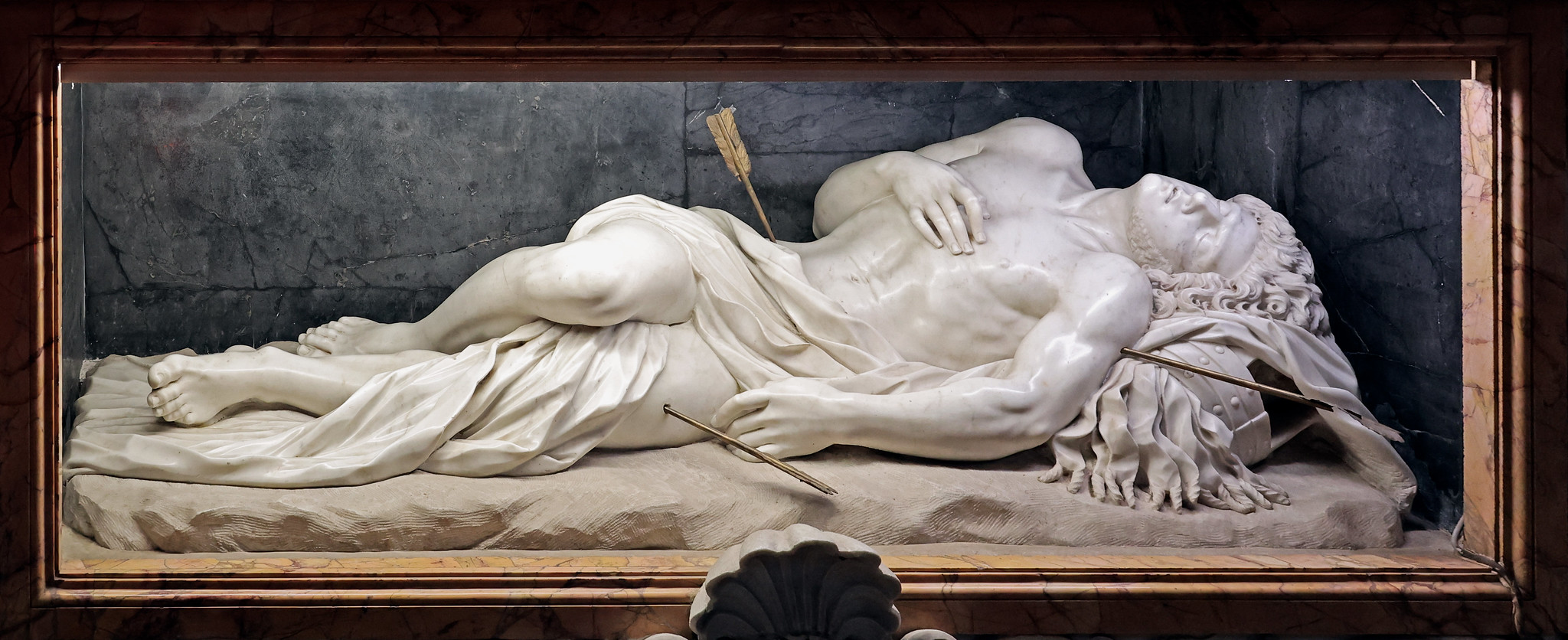
Fortitude can be acquired or infused. Acquired fortitude is aimed at human justice and the welfare of the state, whereas infused justice is directed towards the supernatural end of enjoying God. Fortitude involves both taking initiative and endurance. Endurance is the principal act of fortitude, and martyrdom is the ultimate expression of infused fortitude. According to St. Thomas Aquinas, fortitude is exemplified in martyrdom.
Msgr. J. Brian Bransfield, former General Secretary of the United States Conference of Catholic Bishops, wrote, “The Christian life challenges the world. But the believer is tempted through fear to compromise the Christian way and give in to the world. When a Christian is shy or apologetic about the faith, the virtue of fortitude can strengthen the believer to resist the fear.”
At the other extreme, he wrote, “fortitude moderates the temptation to proclaim the Christian message in an overzealous way. A too aggressive campaign disrespects the full depth of human nature by reducing Christianity to force. In such cases, fortitude introduces moderation.”
Msgr. Bransfield noted that St. Gregory the Great’s teaching on fortitude –that it “actually inspires the Christian to heroically love the difficulties of this world for the sake of the next world. Fortitude inspires us to endure and remain steadfast under all kinds of dangers, including death, with confidence in God.”
Thomas à Kempis wrote, “Little by little, with patience and fortitude, and with the help of God, you will sooner overcome temptations than with your own strength and persistence.”
The practice of fortitude is related to the exercise of other virtues. According to St. Bernard, “Prudence is the mother of Fortitude, nor ought any deed of daring to be called fortitude, but rather rashness, if it be not the child of prudence.”
St. Augustine said, “Purity is a virtue of the mind, and it has fortitude as its companion, by which it determines to endure any evils rather than consent to evil.”
Author Peter Kreeft said, “Our instinctive desire for pleasure and fear of pain is the matter, or raw material, to be formed and controlled by all four cardinal virtues. Prudence provides the map, fortitude tames the fears, temperance tames the appetites, and justice regulates the resulting activities.”
Your voice matters! Join the conversation by submitting a Letter to the Editor here.
勇德是戰勝自己
天主教教理指出:「勇德是倫理的德行,它確保人在困境中有毅力,在追求善時有恆心。 勇德堅定人的主意,在倫理生活中力拒誘惑,克服困難。勇德使人能夠克勝恐懼,視死如歸,冒險犯難,甘受迫害。勇德能夠使人為 了維護正義的事,甘願放棄一切,甚至犧牲自己的生命。『上主是我 的勇力與歌詠』(詠 118:14)。『在世界上你們要受苦難;然而你們放 心,我已戰勝了世界』(若 16:33)。」(天主教教理#1808)
聖多瑪斯說:「勇德屬於憤怒的力量,節德屬於慾望的力量。」教宗方濟各評論說:「這就是所有德行中最具戰鬥性的。如果第一個樞德—智德—主要與人的理性有關;而義德是依循智德作出恆久和堅定的意願,這第三個德行—勇德,通常被士林學派作家為古人所稱的「暴躁的性情」聯繫在一起。古代思想不會想像一個人是沒有激情的:那樣他會像一塊石頭。激情不一定是罪過的遺跡;但必須被教育、引導,並以聖洗的水淨化,或更好的是以聖神的火來淨化。一個沒有勇氣、不把自己的力量用於善行、不打擾人的基督徒,是一個無用的基督徒。讓我們思考這一點!耶穌不是一個透明、禁欲主義和不了解人的情感的天主。」
教宗描述了勇德德行的兩個發展:一個是被動的,另一個是主動的。「第一個是針對我們內心的。我們必須擊敗一些內心的敵人,它們叫做焦慮、苦惱、恐懼、內疚…。勇德是對抗我們自己的首場和最重要的一場勝利。我們內心大部分的恐懼是不真實的,根本不會成真。因此,最好祈求聖神,並以有耐心的勇德面對一切:一次解決一個問題,盡我們所能,但不是單獨面對!主與我們同在…。然後是勇德的第二個行動,這次是更主動的。在內心的試煉之外,還有外在的敵人,即人生中的考驗、迫害,出乎意料和意外的困難。」
勇德是可學習或注入的。學習得來的勇德是為了世人義德和國家的福祉,而注入的義德則是為了享受天主的超自然終極目標。勇德涉及主動和忍耐。忍耐是勇德的主要行動,殉道是注入的勇德的最崇高表現。根據聖多瑪斯,勇德在殉道中得以體現。
J. Brian Bransfield蒙席寫道:「基督徒的生活挑戰世界。但信徒會因恐懼而受到誘惑,著基督徒的道路妥協,屈服於世界。當基督徒對信仰感到羞怯或抱歉時,勇德可以加強信徒抵抗恐懼…。在另一個極端,勇德也可以調整基督徒被誘惑對福傳走上過於熱心的途徑。一場過於激進的運動不尊重人性的全部,並削弱基督的教會的力量。在這樣的情況下,勇德帶來了調節。若望保祿回顧了聖額我略的教導,勇德實際上激勵基督徒,為了來世,英雄般地愛上這個世界的困難。勇德激勵我們在各種危險中,包括死亡,堅定不移地依靠天主。」
聖耿稗思寫道:「但是退誘惑不當急躁,而當忍耐恆心,仰賴天主。慢慢的,自然就能得勝。」勇德的實踐與其他德行的鍛煉有關。根據聖伯爾納鐸的說法:「智德是勇德之母,若沒有智德,任何冒險的行為都不應被稱為勇德,而應稱為魯莽。」聖奧斯定說:「純潔是心靈的德行,與之相伴的是勇德,這使人決心忍受任何惡事,也不願同意惡行。」Peter Kreeft說:「我們本能對快樂的渴望和對痛苦的恐懼,是四樞德所要塑造和控制的素材。智德提供了地圖,勇德馴服了恐懼,節德馴服了慾望,義德調節了由此產生的行為。」
Your voice matters! Join the conversation by submitting a Letter to the Editor here.







