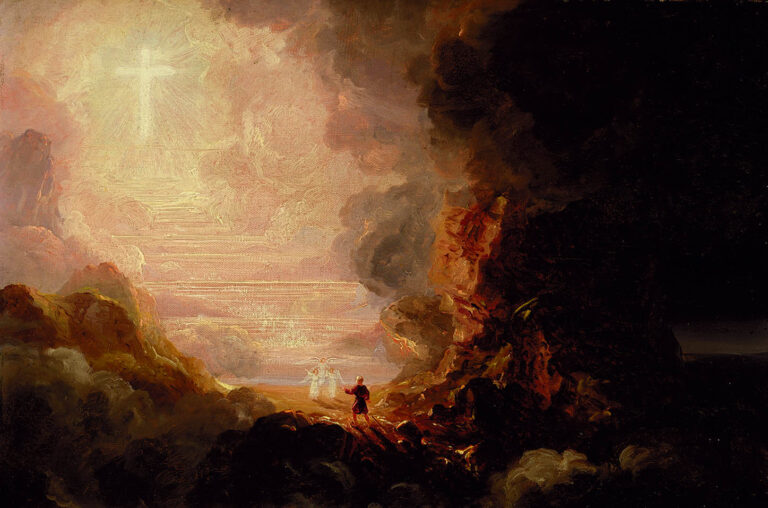

In order to sustain and nurture the spiritual life and to deepen friendship with Jesus, we must pray regularly. Father John Hardon wrote, “The principal kinds of prayer are vocal, which can be either private or public, and mental, which can be either meditation or contemplation.” According to the Catechism, “vocal prayer is an essential element of the Christian life” (CCC, 2701). “The need to involve the senses in interior prayer corresponds to a requirement of our human nature. We are body and spirit, and we experience the need to translate our feelings externally. We must pray with our whole being to give all power possible to our supplication.” (CCC, 2702)
Pope Francis explained: “The prayer of the lips that is whispered or recited together, is always accessible…. One can always remain faithful to vocal prayer. It is like an anchor: one can hold on to the rope and remain faithful, come what may…. One must not succumb to the pride of scorning vocal prayer. It is the prayer of the simple, the one Jesus taught us: Our Father, who art in heaven…. The words we speak take us by the hand; at times they restore flavour, they awaken even the sleepiest of hearts; they reawaken feelings we had forgotten. And they lead us by the hand towards the experience of God. And above all, they are the only ones that, in a sure way, address to God the questions that he wants to hear. Jesus did not leave us in a fog. He told us: ‘when you pray, say this,’ And he taught the Lord’s Prayer.”
Father John Hardon wrote, “In mental prayer, the words used are not determined or prescribed. Those who pray mentally express themselves spontaneously, according to the sentiments of their own mind and heart. Meditation is that form of mental prayer in which the mind is specially occupied with reflecting on divine things. These prayerful reflections become the means of stimulating the will to make acts of confidence and sorrow, of gratitude and petition, and of adoring love of God. Contemplation is that form of mental prayer in which the mind is not so much reasoning about God as looking at God in simple faith and adoration. It may be called the end or purpose of meditation. We reflect on God and divine things (meditation) in order to remain intent and enjoy what we had been meditating (contemplation). To contemplate is to see God with the eyes of faith. (The Question and Answer Catholic Catechism 1611-1612, 1614).
The Catechism states: “To meditate on what we read helps us to make it our own by confronting it with ourselves. Here, another book is opened: the book of life. We pass from thoughts to reality” (CCC, 2706). “There are as many and varied methods of meditation as there are spiritual masters. Christians owe it to themselves to develop the desire to meditate regularly, lest they come to resemble the three first kinds of soil in the parable of the Sower. But a method is only a guide; the important thing is to advance, with the Holy Spirit, along the one way of prayer: Christ Jesus” (CCC, 2707).
Pope Francis said, “We must thus always remember that the method is a path, not a goal… The methods of meditation are paths to travel in order to arrive at the encounter with Jesus, but if you stop on the road, and just look at the path, you will never find Jesus. You will make a ‘god’ out of the path. However, the path is a means to bring you to Jesus.” According to St. Teresa of Avila, prayer consists not in thinking much, but in loving much. The saint said, “Mental prayer is nothing else than an intimate sharing between friends; it means taking time frequently to be alone with him who we know loves us.”
耶穌是祈禱的道路
為了維持和培養神修生活,並加深與耶穌的友誼,我們必須定期祈禱。John Hardon神父寫道:「主要的祈禱形式包括口禱,可以是個人或公開的,以及心禱,可以是默想或默觀。」據天主教教理稱「口禱是基督徒生活的基本要素。」(天主教教理#2701)「內在的祈禱配合感官的這種需要,符合我們人性的要求。我們是由靈魂和肉身所組成的,因此,我們感覺到需要將我們的感受形之於外。我們須以我們整個的存在祈禱,好能全力作懇求。」(天主教教理#2702)
教宗方濟各解釋道:「唇舌的祈禱,無論是低聲細語還是共同背誦,總是可做得到的 … 。人們總是能夠忠於口禱。就像一個錨:無論發生什麼事,我們都能抓住繩子、保持忠誠 … 。人不應屈服於輕視口禱的驕傲。這是簡單的祈禱,是耶穌教給我們的:我們的天父 … 。我們所說的祈禱親手帶領我們,有時能恢復氣息,喚醒沉睡的心靈;喚醒我們曾經遺忘的感受。親手牽引我們體驗天主的臨在。最重要的是,這是唯一確實向天主提出衪想聽到的問題。耶穌沒有讓我們陷入迷霧。衪告訴我們:『當你們祈禱時,要這樣說。』衪教導了我們天主經。」
John Hardon神父寫道:「在心禱中,所使用的話語不是預定或指定的。心禱的人根據自己的思想和心靈的感受,自發地表達自己。默想是心禱的一種形式,其中心神專注於反思神聖的事和物。這祈禱的反思成為激發意志作出決心和悔改、感恩和求恩、以及朝拜天主的行為。默觀是心禱的另一種形式,其中心神不是在思考關於天主,而是簡單地以信德和朝拜來默觀天主。這可以被稱為默想的終點或目的。我們反思關於天主和神聖的事和物(默想),是為了保持專注並享受我們曾經默想過的內容(默觀)。默觀就是以充滿信德的眼睛看天主。」(天主教教理問答#1611-1612、1614)
天主教教理稱:「默想我們所閱讀的,並將我們自己與之對照,幫助我們將之化為己有。這樣另一本書,即生活之書便被打開。我們從思想進入實 際。」(天主教教理#2706)「默想方法的不同,一如靈修導師的不 同。基督徒應有規律地作默想,不然便相似撒 種比喻中的前三類場地。然而方法只不過是指 引:重要的是偕同聖神在祈禱的唯一道路上前進,這道路就是耶穌基督。」(天主教教理#2707)
教宗方濟各說:「因此,我們必須緊記,方法只是一條路徑,而不是目標 … 默想的方法是通往與耶穌相遇的道路,但如果你停留在道路上,只是凝視著這條路,你永遠不會找到耶穌。你會把這條路當作一個『天主』。然而,這條路是把你帶到耶穌面前的一種方法。」
根據阿維拉的聖女德蘭所說,祈禱不在於過多的思考,而在於充滿着愛。聖女說:「心禱不過是親密朋友之間的分享;意味著經常花時間只與那位我們知道愛我們的人在一起。」