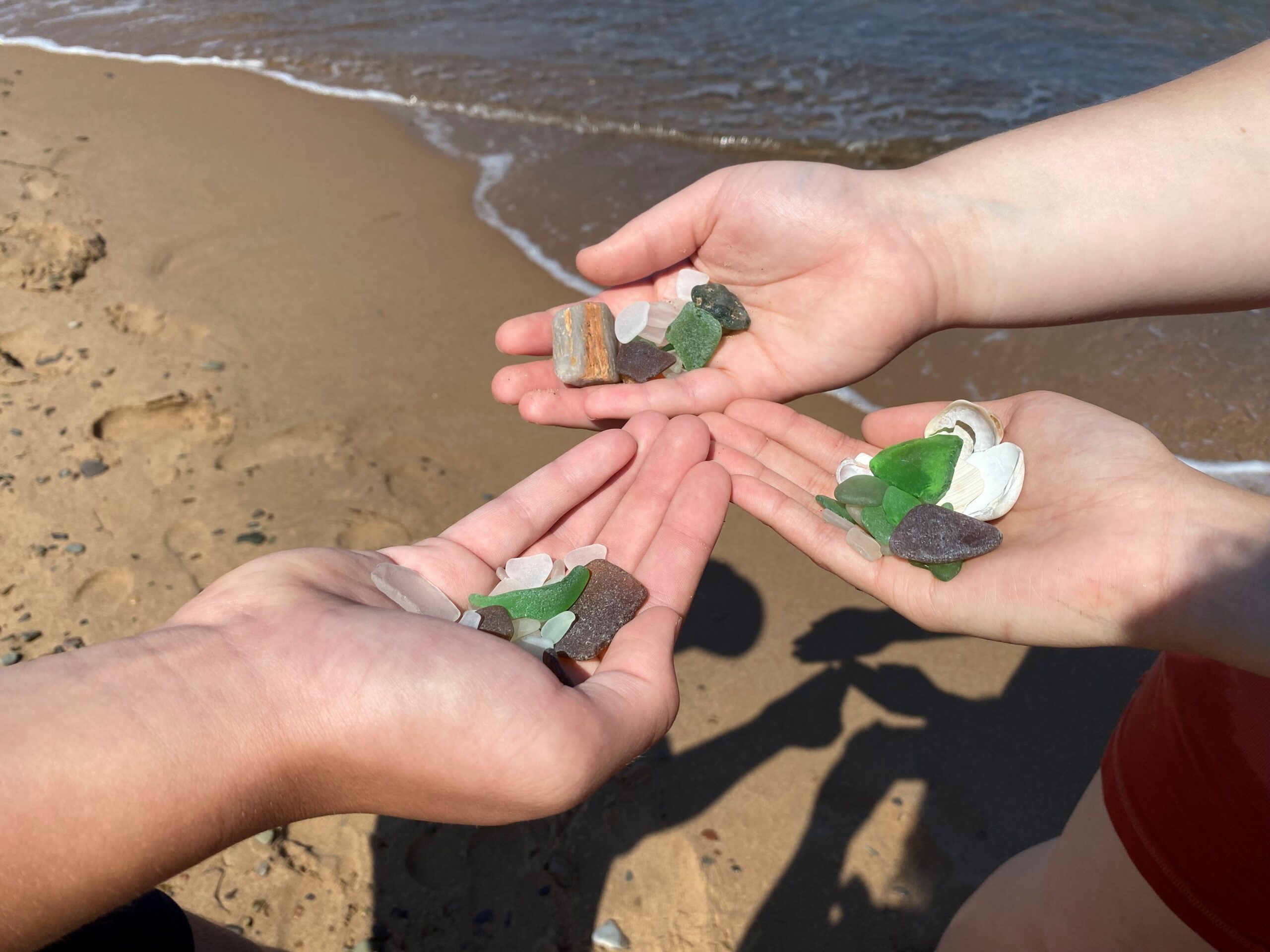

One of nature’s best reminders of the importance of being open to transformation is sea glass. A recent sea glass hunting expedition was a timely reminder of the fact that Christ himself showed us that transformation is not only beneficial, but necessary.
The Feast of the Transfiguration is on Aug. 6, and is our liturgical reminder that all Christians must go through transformation.
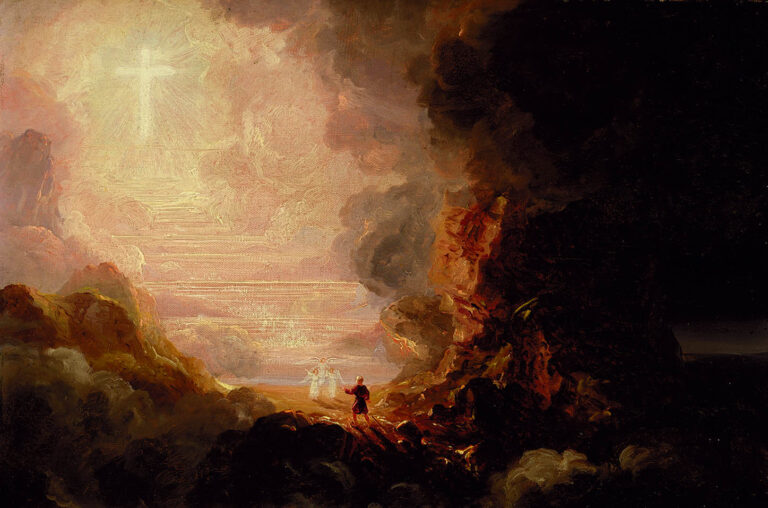
Jesus took Peter, James, and John up the mountain with him to pray. While there, “his face changed in appearance and his clothing became dazzling white” (Lk 9:29). Our Lord was giving his disciples a glimpse of the end game—the goal of glory. But prior to this journey up the mountain, he had warned his apostles that he, and they, were going to suffer first. They had to go through a transformation from the old to the new.
Transformations are all around us, especially in nature. Recently, our daughter had a friend visiting from Texas and we took the time to show her some of the local sites. On one of these outings, we discovered the beauty of Inverness in Cape Breton. Located on the western coast of the island that makes up the northern part of Nova Scotia, Inverness Beach is known for its abundance of sea glass that washes up on the shore regularly.
Three teenagers and I walked the breathtaking, golden sandy beach in search of sea glass. We were not disappointed. While the waves washed in at our feet, we were able to locate quite a number of small pieces of frosted, opaque, green, and brown glass that had been shaped by the sea, perhaps for decades.
As we examined our collection in the bright sun, we decided that sea glass offers us a spiritual metaphor for life. Are we not all like pieces of sea glass? We begin our life in one place and time, become broken at some point, then shaped and molded by the ups and downs of life, we emerge changed and more beautiful at our final destination.
Sea glass could also be seen as a symbol of hope, appropriate for this Jubilee Year of Hope and any time at all. For, what begins as someone’s discarded trash is transformed by the ocean into a thing of beauty. That ordinary glass might have been a simple piece of garbage, but whatever wreckage these pieces of glass went through, something new has been created. Something had to be broken and sacrificed in order to be transfigured into something better.
When Jesus took Peter, James, and John up the mountain and was transformed into a glorified state before their eyes, their gut reaction was to pitch tents and stay there forever, to keep that beautiful moment encapsulated on that mountaintop. Instead, the voice of God the Father intervenes and says: “This is my chosen Son; listen to him.” Jesus was showing his disciples that he, and later they, would be transformed through the death and Resurrection on the cross.
We can be resistant to change, especially change that hurts and requires self-sacrifice. We don’t have the advantage of the big picture, of knowing how things can be transformed for the better. But, like the journey of a piece of sea glass, the many variables and challenges we encounter can work for our betterment.
Just before the Transfiguration, Jesus had made it clear to his disciples that self-sacrifice was going to be required to fulfill his mission. And not only for him, but also for his followers. “If any man would come after me, let him deny himself and take up his cross daily and follow me. For whoever would save his life will lose it; and whoever loses his life for my sake, he will save it,” reads the prior passage in Luke (Lk 9:23).
Looking at the various pieces of sea glass we collected, we could see that what was once something broken with harsh, jagged edges had been transformed—transfigured, if you will—into precious, smooth pieces, each with a different story.
Christ doesn’t ever want us to stay broken. He wants us to be the best version of ourselves that we can be, but sometimes that means weathering some storms, maybe even drifting for a while. Transformation is all around us. Even a handful of sea glass can call us to go from sinner to saint, from fisherman to apostle, from ordinary humanity to transfigured glory. Christ has shown us the way through his death and Resurrection—the ultimate transfiguration.
Lazzuri writes from her home in Nova Scotia, where she lives with her husband, four of her six children, and her mom. She can be reached at clarelazzuri@gmail.com.
Your voice matters! Join the conversation by submitting a Letter to the Editor here.