

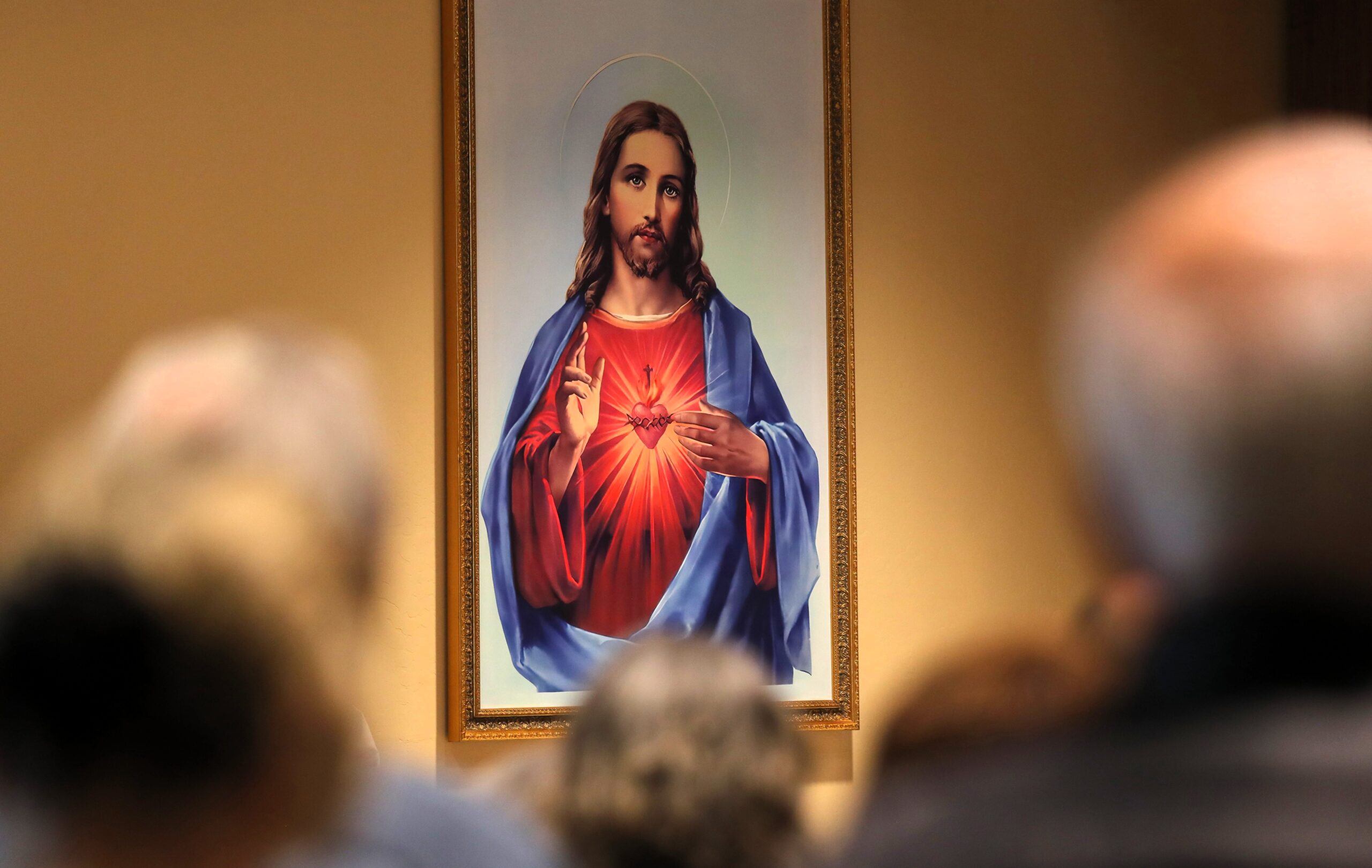

Because we were created for love, to not receive it feels like a blow to our human nature.
Billions of dollars are spent each year in therapy, all in search of a remedy for the aching human heart. Our search for love is feverish and unquenchable. As St. Augustine famously put it, “You have made us for yourself, O Lord, and our hearts are restless until they rest in you.”
St. Thomas Aquinas wrote that God is perfect simplicity, and that the way to the kingdom is straight and simple. When sin entered the world, however, the simplicity that was our lot became distorted, as our desires and natures were twisted. We began to feel the effects of wanting things that God did not will for us. Our sojourn on earth became complicated — and consequently, our relationships as well.
All through the Gospels, Jesus is trying to illustrate the way the Father wants us to live and the relationship he wants with each one of us. “Abide in me,” Jesus implores. Lean on me. Yoke yourself to me. Don’t tire yourself out with trying to “fix yourself” or “find yourself.” You can’t. But I can. My yoke is easy. Look! I’ll do all the heavy lifting! Just keep your eyes on me!
The whole time he was with us, he told us stories to engage our hearts and appeal to our humanity. He could have taught theology, but he told stories — like one does with little children.
In fact, we have to allow ourselves to be very little in order to enter through the narrow way. And to simply let ourselves be loved perfectly by Jesus’ heart — and then go on to simply worship and offer praise to the one who loves perfectly.
Jesus told St. Margaret Mary Alacoque: “Behold this Heart which has so loved men that It has spared nothing, even to exhausting and consuming Itself, to prove to them Its love. And in return, I receive from the greater part nothing but ingratitude.”
The one who was full of grace, our Mother Mary, offered God the Magnificat in response to his goodness. She who was perfect sang a song of praise to the one who loves perfectly.
When Mary was conceived without sin, she was set apart from humanity as the pinnacle of creation. She encapsulated perfect docility to the Holy Spirit and the innocence and perfect trust that was our default state. Being full of grace, God’s life and abundance was able to freely flow in her and preserve her from the anguish and effects of sin.
But what about the rest of us?
Jesus sees the many little ways we have been neglected, abandoned, or just not loved well by those put in our charge. Though many of us do not set out to hurt another human heart, we leave within our wake so much pain “in what we have done and in what we have failed to do.”
When we find ourselves trying to regain our footing in the wake of trauma or tragedy, we can retreat into the Heart of Jesus. There, he will restore all that has been lost — in his time — and help us to shoulder our burdens. He knows the whole spectrum of human anguish and desires that we open ourselves to receive his superabundant, unrequited love that he describes as “so inflamed with love for men […] unable any longer to contain within Itself the flames of Its burning charity.”
We need to meet the Heart of Jesus with active docility: active, because it needs to be a willed and repetitive (moment-to-moment) surrender; and docility, because we ultimately let God cause the growth once we have watered. Christ’s healing heart is hindered only by our reluctance and apathy.
Your voice matters! Join the conversation by submitting a Letter to the Editor here.







