

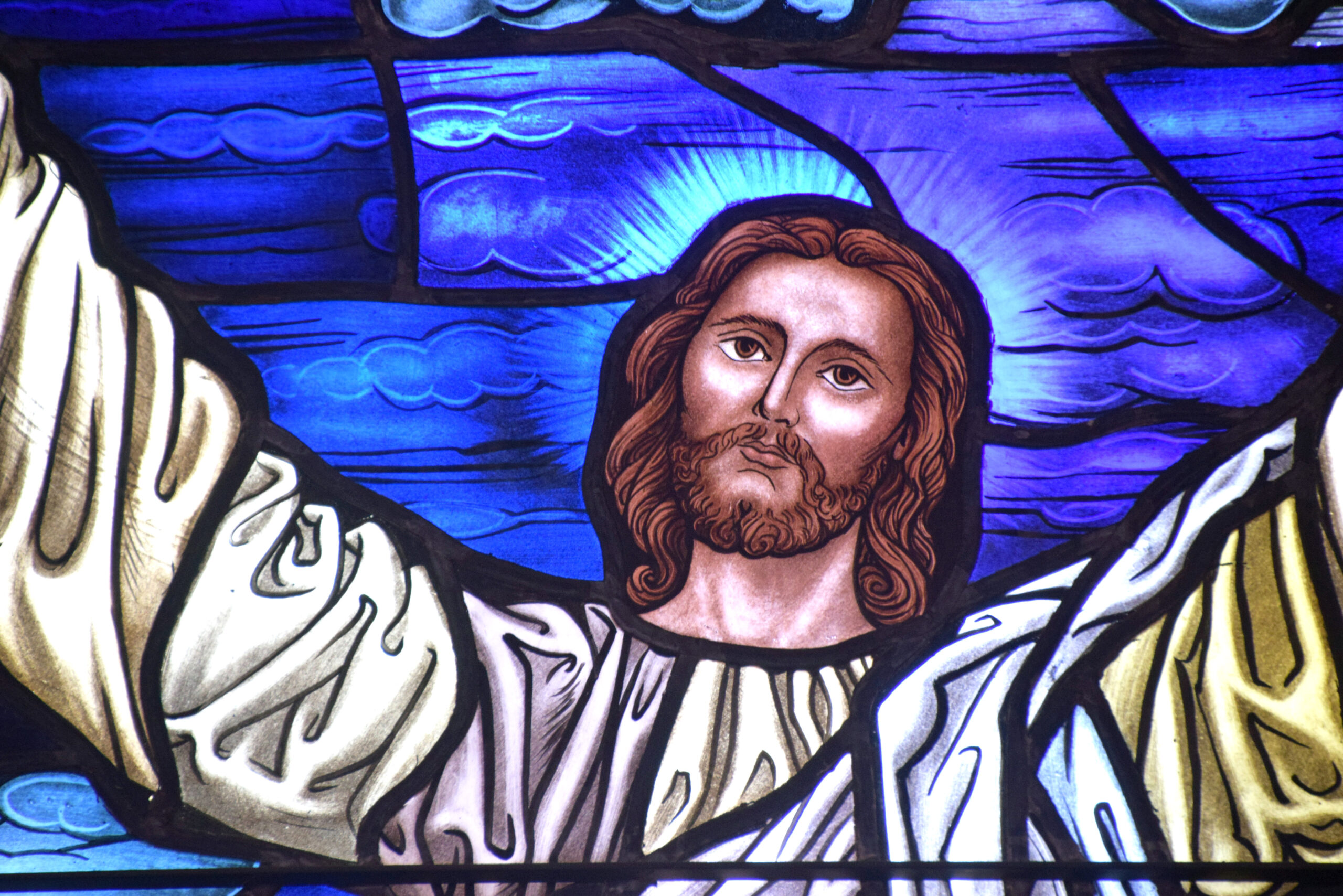

Celebrating the Feast of the Ascension always used to feel confusing to me. Putting myself in the shoes of Jesus’ loved ones, who had been joyfully reunited with him after the Resurrection, I wondered if his rising into heaven would have felt like another death.
The Catechism of the Catholic Church states that “Jesus’ final apparition ends with the irreversible entry of his humanity into divine glory” (CCC 659). His entry into heaven is clearly “irreversible,” and yet the Church celebrates this permanent “departure.”
As St. Augustine of Hippo said, “While in heaven he is also with us; and we while on earth are with him. He is here with us by his divinity, his power and his love. We cannot be in heaven, as he is on earth, by divinity, but in him, we can be there by love.”
Matthew 28:19–20 likewise reminds us that Jesus did not simply leave his followers. He sent them on the mission: “Go, therefore, and make disciples of all nations, baptizing them in the name of the Father, and of the Son, and of the Holy Spirit, teaching them to observe all that I have commanded you. And behold, I am with you always, until the end of the age.”
We are called to continue Christ’s mission of leading others to eternity in heaven, but we are not asked to do this alone. Through Jesus’ love, God will always be with us. Furthermore, God will send an advocate — the Holy Spirit, whom we will celebrate on the Feast of Pentecost — to assist us. Through the gifts of the Holy Spirit and the openness of our hearts, we will be able to follow God’s plan in our lives, and to trust in his unwavering presence as we strive to ascend to heaven, taking others along with us through our witness.
In Evangelii Nuntiandi, Pope St. Paul VI stated, “Modern man listens more willingly to witnesses than to teachers, and if he does listen to teachers, it is because they are witnesses.” This statement resonates with me, as I consider the commissioning Jesus gave his disciples. They began the first “apostolic mission” of evangelizing and spreading the love and good news of Jesus’ Resurrection and promise of eternal life to anyone they encountered, even if that witness led them to death. As witnesses, people listened to them because they were willing to risk — and even face — death rather than keep silent about Jesus’ message.
In our current age, we have also been called to be witnesses. Today, Catholic Christians face many persecutions — not always threats of death, but definitely criticisms, online comments, and tension in relationships — for witnessing our faith. Therefore, we too face an “apostolic mission,” as Monsignor James P. Shea and the University of Mary explain in the 2020 book From Christendom to Apostolic Mission. We cannot become discouraged as we “make disciples of all nations,” as we are not called to reach “all nations” by ourselves. Others of our own times, as well as generations before and after us, have been called to the same mission.
We must cling to our faith and the accompaniment Jesus promised when we face opposition or when we feel that our ardour for the faith is being ignored or rejected by others. We must simply persist — through our witness — to lead others to the Gospel, and to remain focused on the promise of heaven for ourselves. As stated in From Christendom to Apostolic Mission, “The Church does not grow by mass movement; it moves forward one soul at a time, as each individual catches the fire of belief from another and is grafted into the body of Christ.”
St. Augustine also reminded us that Jesus is the head and we are the body: “No one but Christ ascended; not because there is no distinction between the head and the body, but because the body as a unity cannot be separated from the head.”
Building upon this optimism, I leave you with the Collect prayer for the Solemnity of the Ascension: “Gladden us with holy joys, almighty God, and make us rejoice with devout thanksgiving, for the Ascension of Christ your Son is our exaltation, and where the Head has gone before in glory, the Body is called to follow in hope.”
The Ascension is fullness of life, not another death. We are Christ’s body, on apostolic mission, and he is “with [us] always.”
Your voice matters! Join the conversation by submitting a Letter to the Editor here.







