

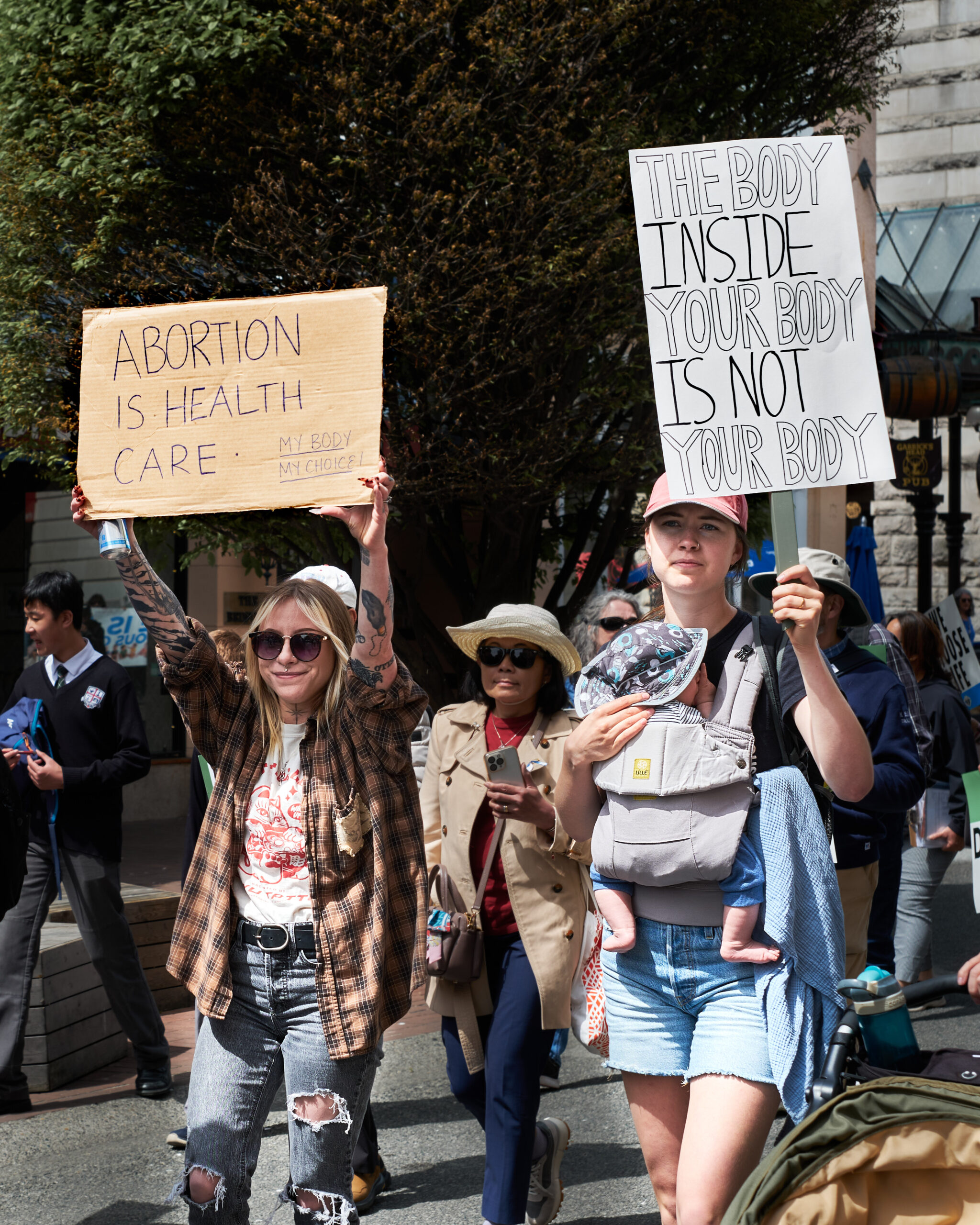

In the May 19 B.C. Catholic, there is a photo of two women at the March for Life. One is holding a pro-life sign and carrying her baby, while the other is holding a pro-abortion sign. The second woman was clearly not a March for Life supporter, and her message should have been noted in the caption. Without clarification, readers could mistakenly believe her sign reflected the views of the march.
Marimae Matthews
Port Moody
(You’re correct. The online caption identified the signs’ incongruent messages. It read: “A woman carrying a pro-abortion sign walks beside a mother holding her baby.” The print edition should have said the same. — Editor)
The growing demand for the freedom to end life is seeping into all parts of society. The fact remains: life — so precious in youth and health — is always a gift from our Creator.
To many, this is a sensitive topic. For others, especially those in pain or near death, it feels urgent, a way to escape suffering and move on to the next life.
But what will we find when we breathe our last? What awaits us if we choose to end life before our appointed time? I’ve always believed that, just as we were not consulted when we arrived on this earth, we will not be consulted when we leave. Both are in God’s hands.
Jesus said, “I come in order that you may have life and live it to the fullest” (Jn 10:10). That is the goal for all of us. Pain and suffering come, but how we endure them defines our final days and the eternal joy the Father has promised.
So take heart, friends. We all suffer in some way. But if I were to end my life now, I might be marching into hell, not the heavenly joy where my Father waits for me — in his time, not mine.
Rita Castillo
Vancouver
Re Clare Lazzuri’s March 24 column “Let Fr. Kapaun be your lenten witness:
Father Kapaun was certainly a saintly priest, if not a saint in fact. It’s good to know his story.
Not everyone suffers equally, but it surprises me that some now compare the pandemic’s communal suffering to that of the world wars or the Great Depression. That doesn’t make sense.
For many in the West, pandemic hardship meant missing vacations, restaurants, or time with friends. That isn’t real suffering.
But children isolated at home without attentive parents, and seniors barred from visitors or dying alone in care homes — that was suffering.
Marianne Werner
Vancouver
Your voice matters! Join the conversation by submitting a Letter to the Editor here.







