

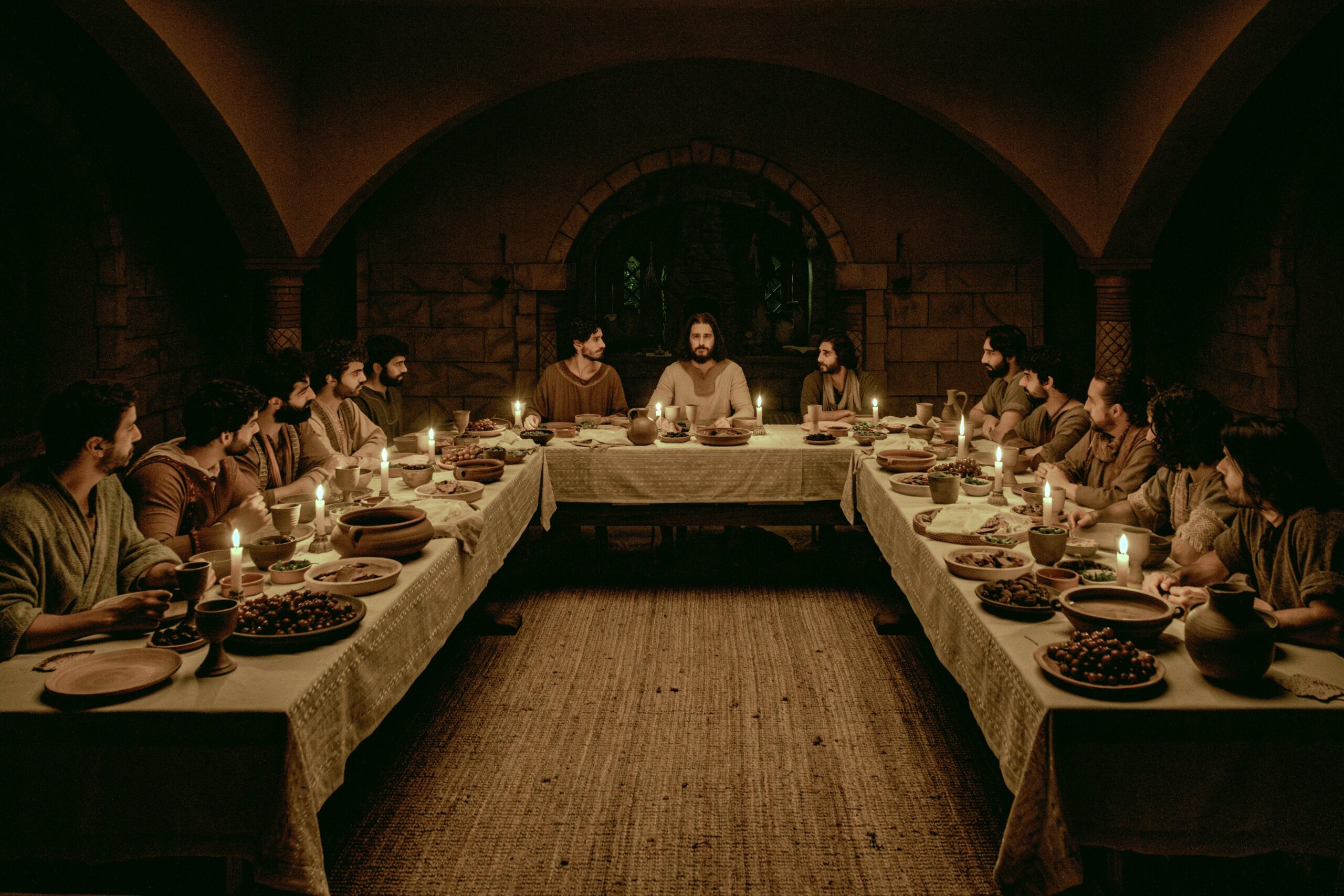

Despite its growing popularity, I have been reluctant to comment on The Chosen, the television series produced by “Loaves and Fishes” that narrates the story of Jesus.
In large measure, my delay has been due to the fact that, although the series is currently available for free and through some streaming services, it remains incomplete — only four of the proposed seven seasons are available. Season five is apparently about to be released. However, having viewed the first four seasons, I feel confident that anything I have to say will also apply to the remaining productions.
In fact, my reaction to what has been released is largely positive, though potential viewers should be aware of some caveats.
The first of these is that, unlike many previous attempts to portray the life of Christ on screen, The Chosen does not offer a clear narrative easily followed by those unfamiliar with the Gospels. Instead, the series plunges the viewer into the dramatization, often without identifying characters or explaining their role. Viewers are expected to piece together the story using what they already know of the Gospels.
Persistence pays off. This approach appears deliberate — the purpose of the series seems to be, above all, to ask the viewer to rethink the familiar.
The Chosen relies heavily on imagined interactions between characters. They are introduced almost haphazardly, and viewers gradually come to know them. This results in significant invention by the writers. For example, there are frequent, entirely imagined conversations among the disciples, often involving the kinds of questions many of us would want to ask. Characters given only brief mention in the Gospels are granted lengthy reflections on the events portrayed. Martha and Mary, for example, are given larger roles than one might expect. Thomas — he of doubting fame — is fleshed out in a way that logically builds on what little we know of him but gives him unusual prominence.
In other words, the point of the series is to flesh out the characters so that we can reconsider the import of the Gospels. The show raises the kinds of questions we might have asked if we had been there. This encourages deeper meditation on the Gospel stories. Because of this, many will welcome the fictional interplay among characters, the extension of minor incidents, and even moments of comedy.
For me, the biggest stumbling block is the portrayal of Jesus. I suppose this is inevitable, but the performance — for me, at least — lacks the gravitas and charisma that Jesus surely had to compel twelve men to follow him on a perilous journey. That said, I acknowledge that giving a convincing interpretation of Jesus is almost impossible. The portrayal nonetheless offers a novel perspective on his life.
Of course, “purists” may object to the inclusion of material drawn entirely from the writers’ imaginations. But if this causes us to think more deeply about Christ’s story, surely that is a good thing — especially since none of the additions conflict with the Gospel texts. The Chosen may help viewers ask new questions, reconsider events, and ponder the familiar in a different and refreshing way. And even if one rejects this approach, surely one can support any attempt to revive people’s faith through meditation.
Some may also take issue with the language used — often more modern than the lofty tone we associate with “Biblical” speech. Would a Jewish leader refer to “fiduciary” concerns when speaking with Judas? Would Jesus say that he and the twelve plan to “crash” at the lavish home of Martha and Mary? Personally, I found such language refreshing — a reminder that Jesus and his followers likely used the vernacular of their time.
This is not to say The Chosen is flawless. As noted earlier, the narrative can be confusing. There are no on-screen titles, no explanatory notes, and no voice-over narration to guide the viewer. However, as one becomes familiar with the series, the characters grow clearer and the narrative easier to follow.
At times, some scenes may feel overblown. The Roman centurion whose son is healed by Jesus is perhaps given more screen time than necessary, while other Gospel moments are ignored altogether. But such choices are within the writers’ creative licence — and some of their additions are both appropriate and thought-provoking.
One charming scene shows Jesus visiting his mother — something he surely did, though the Gospels are silent on it. Mary is depicted first and foremost as a mother. The scene opens with a humorous nod to the wedding at Cana, followed by Mary insisting on washing Jesus’ hair. As she does, they talk in a way that invites viewers to rethink their relationship. Though fictional, the moment encourages a new approach to the life of Christ.
In the end, it all comes down to one’s personal approach to the story of Jesus. But for those seeking something that may prompt a kind of reawakening, The Chosen may offer a welcome alternative to most television fare — which, in these troubling times, is no small thing.







