

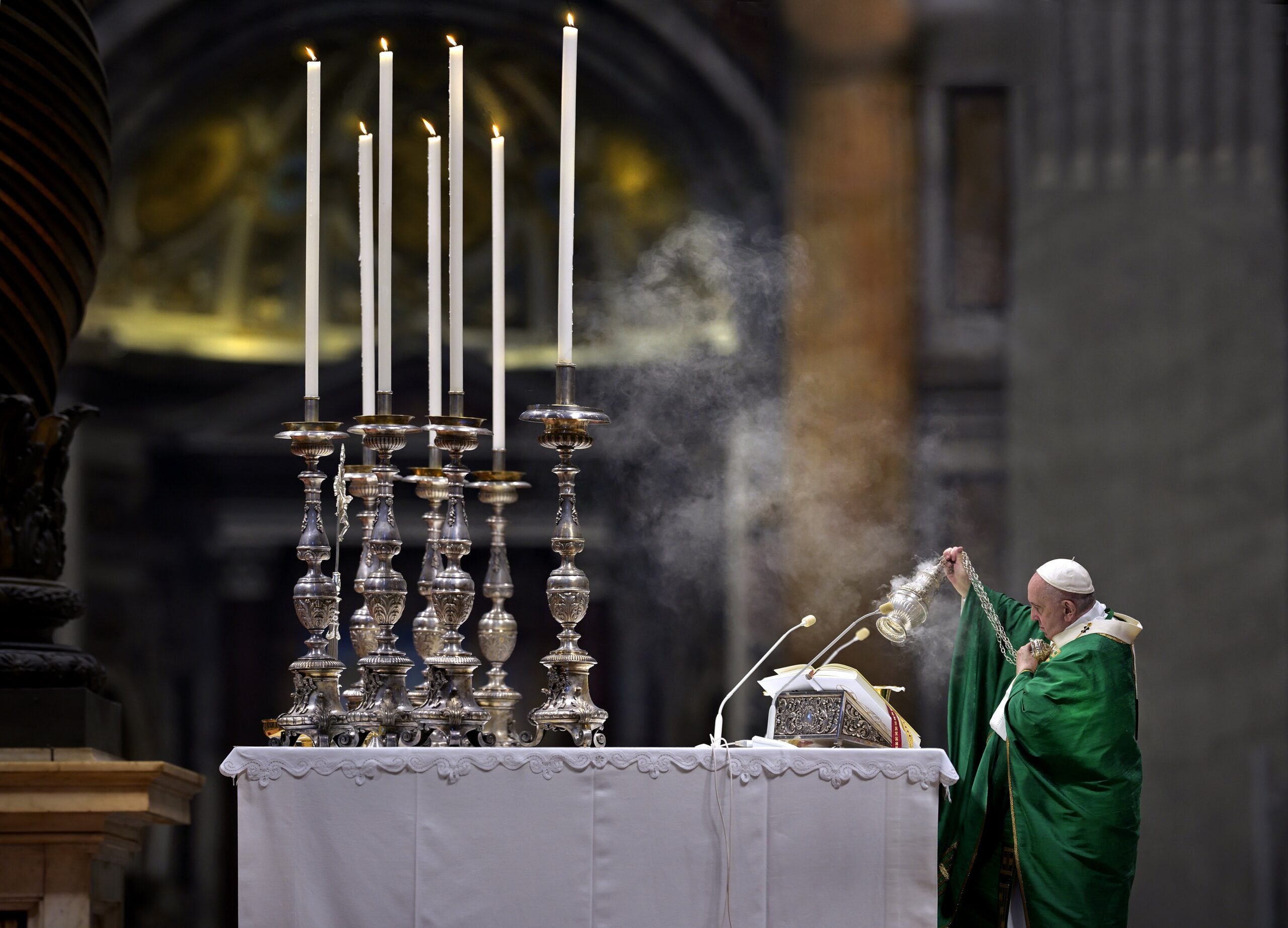

According to biblical scholars, after sending his First Letter to the Corinthians, St. Paul made what he called a “painful visit” (2 Cor 2:1) to Corinth and followed it with a “tearful letter”: “For I wrote to you out of much affliction and anguish of heart and with many tears, not to cause you pain but to let you know the abundant love that I have for you” (2 Cor 2:4).
A fourth-century commentator known as Ambrosiaster wrote, “It is obvious that when someone admonishes another and in the process he himself suffers more grief over it than the person being rebuked, he is not doing this in order to cause grief but to show what deep love he has for the other. Someone who rebukes another without feeling this way merely tramples on his feelings.”
St. Paul also wrote, “For we are the aroma of Christ to God among those who are being saved and among those who are perishing; to one a fragrance from death to death, to the other a fragrance from life to life” (2 Cor 2:15–16).
St. Cyril of Alexandria commented: “They send forth our Lord Jesus Christ as an aroma to God the Father in three ways. First, they have him dwelling in them and inhabiting them through the Holy Spirit. Second, they proclaim him to people everywhere and spread the word about him as they offer their zeal in this endeavour to God as a fragrant sacrifice. And third, they are conformed to him and are perfected through the same suffering.”
St. John Chrysostom likewise reflected, “Whether a person is saved or lost, the gospel continues to have its own power. The light, even when it blinds someone, is still light. Honey, though it is bitter to those who are sick, is still sweet. So also the gospel has a sweet savour to all, even if those who do not believe it are lost.”
Paul also wrote, “You are a letter from Christ delivered by us, written not with ink but with the Spirit of the living God, not on tablets of stone but on tablets of human hearts” (2 Cor 3:3). He had spent 18 months in Corinth founding the church community, serving as their spiritual father. Their very existence as a local church was itself evidence of his genuine calling and apostolic authority.
St. John of Avila commented, “Because they were an adequate letter to explain who St. Paul was and how beneficial his presence had been. And he says that this letter is one which all can know and read, because anyone, no matter how uncultured he be, even if he does not understand the language of words, can understand the language of good example and virtue, whose results he can see, and so can come greatly to esteem one who has such fine disciples.”
St. Paul continued, “For if there was glory in the ministry of condemnation, the ministry of righteousness must far exceed it in glory” (2 Cor 3:9). Catholic author Stephen Ray wrote, “The Mosaic Law was transitory and destined to fade because the New would inevitably outshine it with its eternal glory.”
The Second Vatican Council, in its Dogmatic Constitution on Divine Revelation, states: “God, the inspirer and author of both Testaments, wisely arranged that the New Testament be hidden in the Old and the Old be made manifest in the New.”
In his City of God, St. Augustine wrote:
“The truth is that the Old Testament of Mount Sinai, ‘producing children of slavery,’ now serves no purpose but to bear witness to the New. Otherwise, the words of St. Paul would not be true: ‘Yes, down to this very day when Moses is read, the veil covers their hearts’; but when any of them turn from the Old Testament to Christ, ‘the veil shall be taken away.’ What happens is that the deepest aspirations of those who make the change are shifted from the Old Testament to the New, whereupon they begin to look for spiritual—rather than earthly—happiness.”
In a letter to Honoratus, St. Augustine added, “Doubtless, there is a veil in the Old Testament, which will be removed as soon as one comes to Christ. At his crucifixion, ‘the veil of the temple was torn,’ to signify what the apostle said about the veil of the Old Testament, ‘Because in Christ it is made void.’”
Your voice matters! Join the conversation by submitting a Letter to the Editor here.
ar
福音對眾人皆有甘飴馨香
根據聖經學者記載,聖保祿在寄出《格林多前書》後,曾到格林多作了一次「憂苦的探訪」(格後2:1),並寫給他們一封「流着許多淚的信」——「我在萬般的痛心憂苦中,流著許多淚給你們寫了信,並不是為叫你們憂苦,而是為叫你們認清我對你們所有的愛,多麼卓絕。」(格後2:4)四世紀聖經註釋家「盎博息雅斯特」曾寫道:「很明顯,當一個人責備他人時,自己所受的痛苦反而比被責備者更深,這樣的人並非為了使對方憂傷,而是要表達自己對對方深切的愛。若一個人責備他人卻沒有這份心情,就只是踐踏對方的感受罷了。」
聖保祿寫道:「因為我們就是獻與天主的基督的馨香,在得救的人中是,在喪亡的人中也是。但為後者,是由死入死的芬芳;為前者,卻是由生入生的芬芳。」(格後2:15-16)亞歷山大的聖濟利祿解釋:「他們以三種方式將我們的主耶穌基督作為馨香之祭呈獻於天父:第一,他們藉著聖神,讓基督住在自己內,與他們同在;第二,他們向各處宣揚基督,以熱忱的奉獻將此作為馨香祭品獻於天主;第三,他們藉著與基督同受苦難,與祂契合,達到成全。」金口聖若望補充:「無論人得救或喪亡,福音自有其力量。光即使令人刺眼,仍是光明;蜂蜜對病人雖感苦澀,仍是甘甜。同樣,福音對眾人皆有甘飴馨香,即便不信之人喪亡,福音本身依然甘美。」
在格林多後書中,聖保祿寫道:「你們就是我們供職所寫的基督的書信:不是用墨水寫的,而是以生活的天主聖神;不是寫在石版上,而是在血肉的心版上。」(格後 3:3)保祿在格林多逗留了18個月,建立了當地的教會團體。他是他們的神師。這個地方教會的存在本身就是保祿真正蒙召和他宗徒權威的明證。
聖若望亞維拉評論說:「因為這些人本身就是足夠的書信,可以說明聖保祿是誰,他的臨在有何益處。他說這封書信是人人都可以認識和閱讀的,因為即使是一個沒有文化、聽不懂語言的人,也能理解德行和好榜樣的語言,他能見到其成果,從而對擁有這樣門徒的宗徒生出極大的敬重。」
聖保祿又寫道:「如果先前定罪的職務有過光榮,那麼,成義的職務更該多麼充滿光榮!」(格後3:9)天主教作家Stephen Ray寫道:「梅瑟的法律是暫時的,注定要消逝,因為新約必然以其永恆的光榮超越舊約。」
梵蒂岡第二次大公會議(《天主的啟示》教義憲章)指出:「新舊約諸書的默感者及作者-天主如此明智地安排,使得新約隱藏於舊約裡,舊約顯露於新約中。」
聖奧思定在其著作《天主之城》中寫道:「事實上,來自西乃山的舊約:『生為奴隸的子女』,現在的唯一目的就是為新約作見證。否則,聖保祿的話就不會成立:『直到今天,幾時讀梅瑟時,還有帕子蓋在他們的心上』;但當他們幾時轉向主:『帕子就會除掉』。也就是說,那些歸向基督的人,其最深的渴望會從舊約轉移到新約,在那裡他們開始尋求靈性的而非世俗的喜樂。」
聖奧思定在寫給Honoratus的信中說:「毫無疑問,舊約中的帕子,這帕子一旦來到基督面前便會被除去。當耶穌被釘十字架時,『聖所的帳幔,從上到下分裂為二』,這象徵著宗徒所言,舊約的帕子『在基督內纔得除去。』」
Your voice matters! Join the conversation by submitting a Letter to the Editor here.







