


Two things stand out about the growing shrine that appeared at the site where so many people were killed last week at the Lapu Lapu Filipino street festival. First, that the memorial arose and grew so spontaneously. Second, how composed the mourners attending it are.
I visited on two evenings — once while there was still a police presence, and again when only mourners were there: standing, reflecting, lighting candles, tending to the offerings of flowers, teddy bears, wreaths, and framed photographs.
They stood quietly. Some took photos, but it felt more like documenting than Instagramming. Many had tear-filled eyes. They stood somberly as mourners continued to arrive — by car, by foot, by bus. They came alone, as couples, and in families, most clutching cellophane-wrapped bouquets or small mementos to gently place among the growing display.
It’s a sight Vancouver isn’t accustomed to. This is a city where 56 per cent of people report no religious affiliation, compared to the national average of 35 per cent.
And yet here they are. It’s impossible not to note the profoundly Filipino character of the memorial, and so it’s no surprise that it has taken on such a sacred nature. The tragedy struck the Filipino community, and in response, that same community — deeply formed by its Catholic faith — is ever present at the shrine.
In Vancouver, about a third of residents who report a religion identify as Catholic. Since Filipinos are overwhelmingly Catholic, a rough estimate based on Statistics Canada data suggests about one in three Vancouver Catholics is of Filipino background.
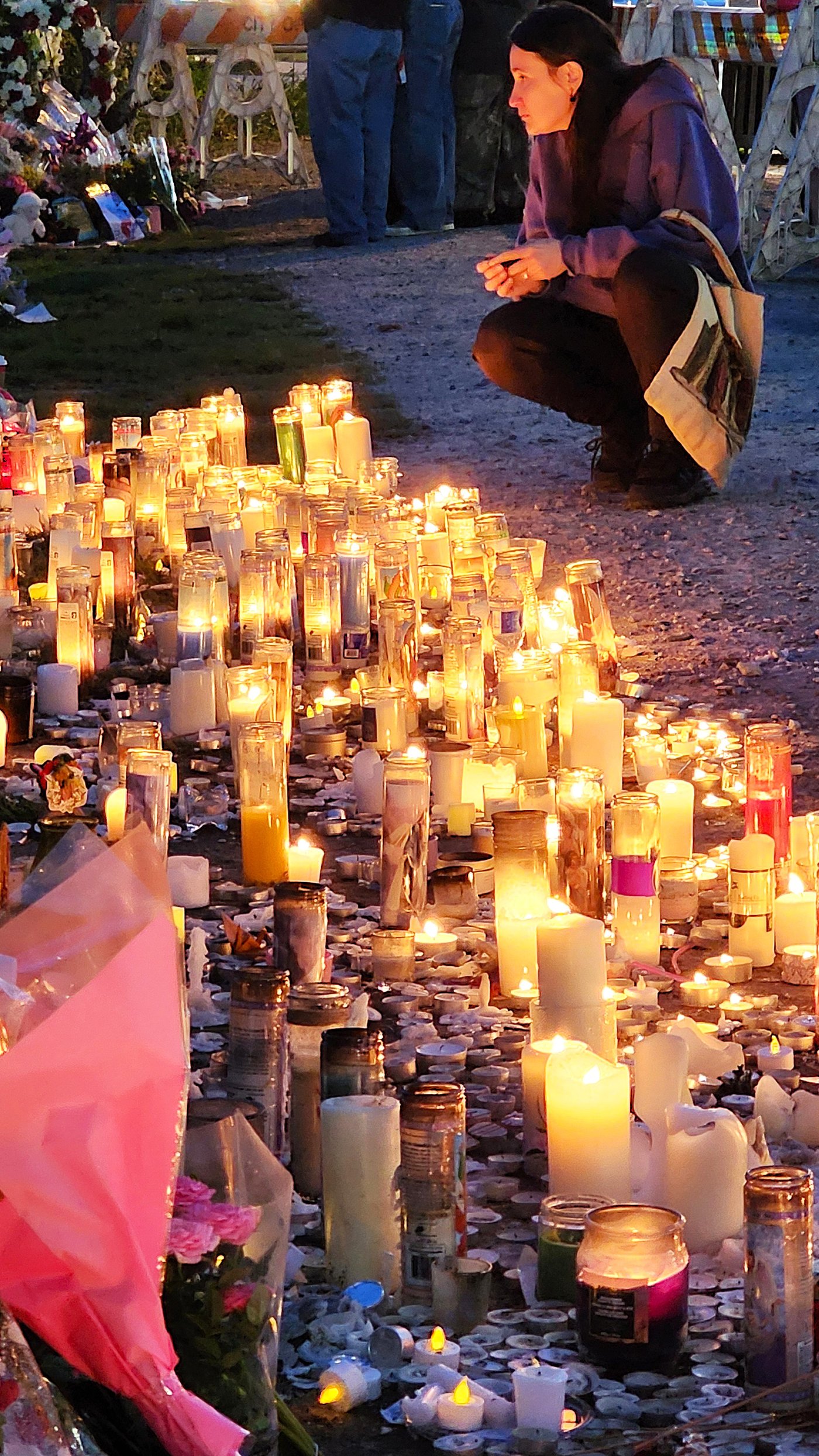
The candles themselves speak of the religious culture — tall, glass-enclosed, with images of the Sacred Heart, Our Lady of Guadalupe, and Guardian Angels. Small votive candles like you light in church for 50 cents. Rosaries. Statues of Our Lady. Crosses. And flowers — so many flowers: roses with baby’s breath, carnations, lilies, and others I can’t name.
There are Filipino flags, handwritten messages in English and Tagalog, words of condolence from faith groups and organizations, and Scripture verses: “The Lord is close to the brokenhearted” (Psalm 34:18).
Strikingly, Mountain View Cemetery is directly across the street, and I found myself recalling something a Protestant friend once said to me — with a touch of respect, I think: that Protestants, unlike Catholics, aren’t always sure what they’re to do at a cemetery.
Here, across the street, the hundreds gathered seem to know exactly what to do, not out of religious tradition, or cultural. It’s something deeply human to remember and honour our departed loved ones.
What’s more, the shrine now has company. Around the neighbourhood, other memorials have sprung up. Some nearly rival the main one in size. Others are simple: a pair of lit candles resting against a street sign pole. I passed one in a nearby school playground where dozens of people had gathered with candles.
Block after block, signs of grief — and grace — appear.
Last weekend, I attended the funeral of a parishioner. The funeral Mass was carefully planned, and the reception at the school gym was lovingly prepared. The tables were filled with family, friends, parishioners, and classmates of the children. The man’s wife, though grieving, addressed everyone at the beginning of the reception and encouraged everyone to talk and enjoy each others’ company. And they did. I haven’t been to such a comforting funeral in some time.
Funerals help us to send the departed on their way to the Lord. They also bring peace to those left behind. In some way, that’s what many people are reaching for in the wake of the Lapu Lapu tragedy. In a culture that so often has no room for God, hearts and souls are crying out for something only he can fill. In the meantime, people are filling it the best way they know how.
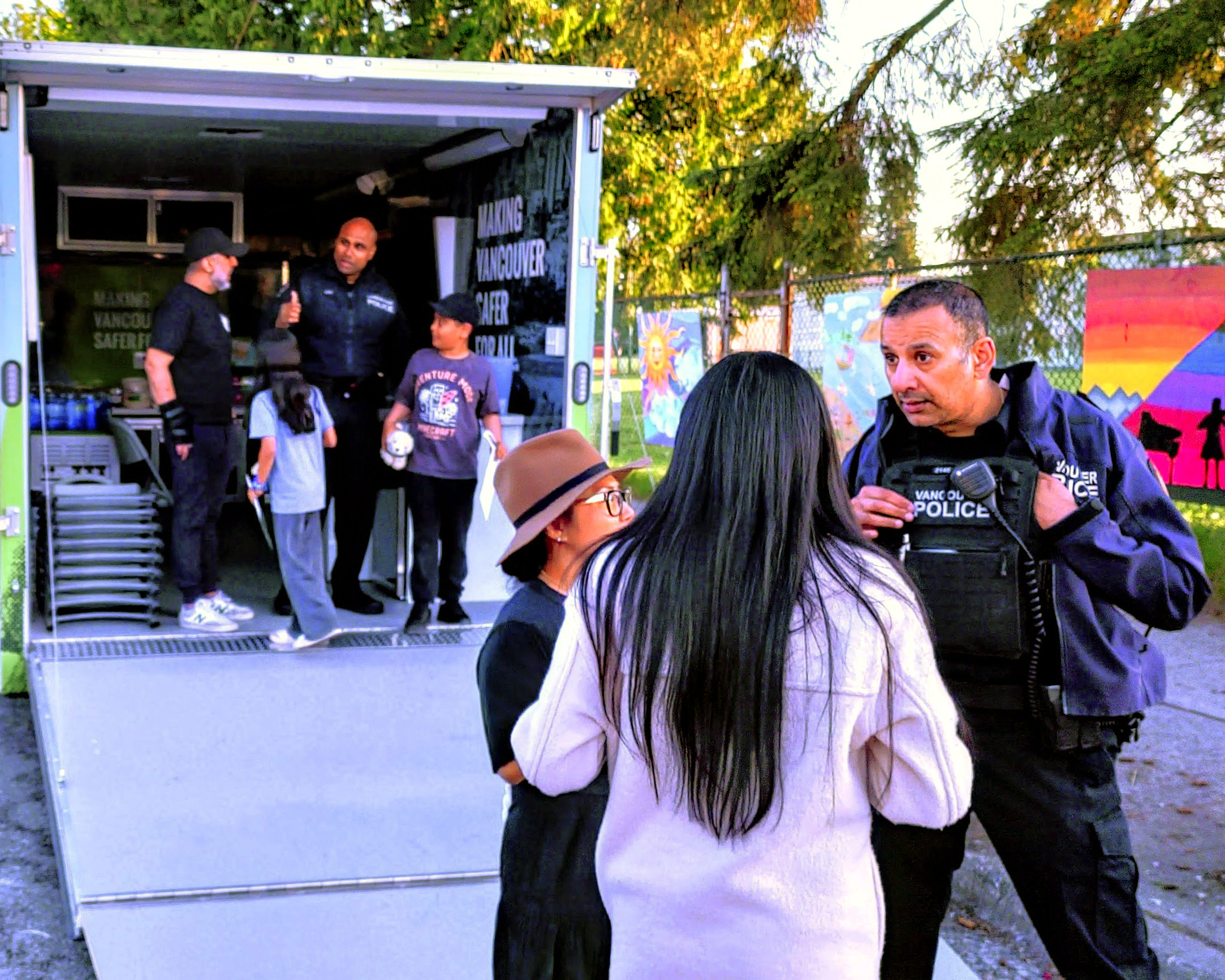
Like at the funeral, there are tears, embraces, and quiet acts of support. People are adjusting flowers and keeping candles lit. A young man moves quietly through the crowd offering a bowl filled with chocolate bars. Police officers are chatting with children, handing them VPD souvenirs.
In what may be the most secular city in North America, the shrine marks a beginning. In this Jubilee Year, it’s a quiet but unmistakable sign of hope.
Your voice matters! Join the conversation by submitting a Letter to the Editor here.







