


With the possible exception of United States president Donald Trump, the most controversial individual in North America, perhaps across the planet, seems to be one Elon Musk.
As the Trump regime seems set on causing chaos in numerous spheres, both international and domestic, it is technology entrepreneur Musk who has become a bit of a lightning rod for growing public dissatisfaction at home and abroad.
A figurative lightning rod, that is, greater than the actual electric discharge rods surrounding his SpaceX rockets ahead of launch, be it the now well-known and reliable Falcon series or the experimental Starship. The latter added to the Musk vilification when successive launches came apart over the Caribbean and produced a rather unexpected light and particle show above several territories, even requiring the rerouting of several tourist aircraft and airport closures in Florida.
This latest round of disdain for the South Africa-born Musk is mostly driven by his outsized influence on American political policy and action, particularly through the pseudo-branch of government known as DOGE (pronounced doje), the Department of Government Efficiency.
Initially, DOGE was to be run by Musk and fellow entrepreneur, as well as presidential candidate, Vivek Ramaswamy. That didn’t last long, possibly because of Musk’s ego, although Ramaswamy says it was so he could pursue a gubernatorial position.
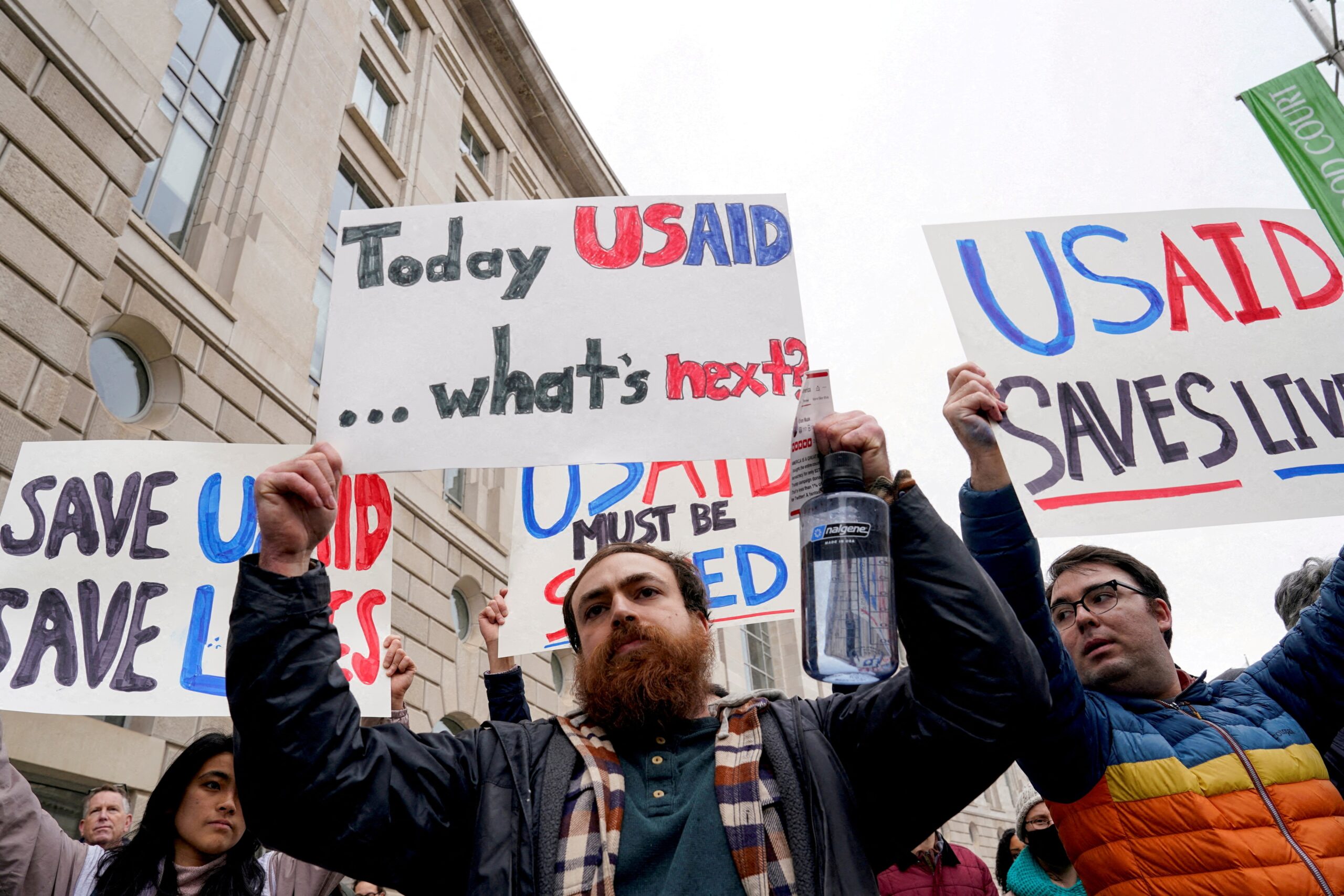
DOGE appears to be running with little in the way of oversight, with many of the key operatives being young employees from Musk ventures SpaceX or Tesla. Taking a slash-and-burn approach, DOGE has terminated tens of thousands of U.S. federal government employees, most by simple email messages.
Using a formulaic model, with artificial intelligence undertones, fired employees received form letters stating they were no longer useful. There appeared to be no actual assessments of performance or of the possible essential nature of some of the positions. This was borne out by the subsequent panicked attempts in various branches to rehire workers in critical positions such as nuclear weapons management, aviation administration, disease control, and weather forecasting.
This slash-and-burn tack, along with Musk appearing at the Conservative Political Action Conference (CPAC) with a chainsaw—presented earlier to Trump by another controversial figure, Argentina’s President Milei—has set off a torrent of anger across America. His possible use of a fascist-style salute at CPAC, coupled with a thinly veiled attempt at interference in the German national elections using his Twitter/X platform, ensured more widespread protests against Musk and his various enterprises.
In recent weeks, there have been protests and even gunfire and Molotov cocktails thrown at Tesla dealerships and outside Tesla factories in the United States and in Europe. Musk is the CEO of the electric vehicle maker, although he was not the company founder. As newspaper headlines such as this one—“Tesla charging stations torched in apparent arson near Boston,” on an NBC news website—have become common, some owners of the EVs have added bumper stickers to their cars. Examples: “I bought this Tesla used: no money to Elon,” “I bought this car before realizing Elon was a few percent off a full charge.”
Tesla and Cybertruck owners in some cases have taken to leaving their vehicles in Sentry Mode whenever they are parked outside; this mode records anyone who comes into proximity of the vehicle’s sensors. Tesla drivers here in Metro Vancouver have reported thumbs down and other gestures from pedestrians.
All of this raises interesting ethical questions. When is protest justified? What level of protest is justified? Surely vandalism can never be justified. Emotions are running high over Musk’s actions on various fronts. That he is so closely aligned with Trump has made Musk even more of a target for protest here in Canada.
A massive Tesla distribution centre, with space for around 600 cars, is set for completion in Port Coquitlam later this year. One wonders whether it will sport any identifying branding until the emotions surrounding Musk cool off.
For now, there also remains the growing petition to have Musk’s Canadian citizenship revoked (he holds dual citizenship with the United States). Signatures to the petition had almost reached the 400,000 level as this column went to press. In reaction to the petition, Musk stated, “Canada is not a real country,” as if to underscore Trump’s stated desire to see Canada as America’s 51st state. This despite Musk’s first job being with a forest products company right here in Vancouver.
Musk may well face all sorts of legal challenges, ranging from firings later deemed illegal or without due process to class-action suits from Tesla shareholders dismayed at the plunge in share value as potential purchasers consider other options.
As for an actual endgame for Musk and his politically charged efforts on behalf of the Trump administration, it is a little difficult to grasp. Tesla car and truck sales have plummeted in various jurisdictions, dragging the value of the company down to the point where some investors want the CEO gone. Others see a broader view in which Musk’s dismantling of regulatory agencies leads to an anything-goes environment where full self-driving of Tesla vehicles can be more easily deployed and where oversight of his SpaceX ventures is diminished.
Follow me on Twitter/X (@PeterVogel)
Your voice matters! Join the conversation by submitting a Letter to the Editor here.







