


In Chapter 14 of the First Letter to the Corinthians, St. Paul pointed out that the gift of prophecy is superior to tongues.
Biblical scholar Father George Montague explained: “Prophecy in this context is obviously not focused on predicting the future, but rather on inspired preaching—revealing the mind of God. A prophet in the Old Testament was one who proclaimed faithfully what God wanted to be said, and this is certainly the emphasis with prophecy in the Church.”
St. Paul wrote, “The one who prophesies speaks to people for their upbuilding and encouragement and consolation. The one who speaks in a tongue builds up himself, but the one who prophesies builds up the church.” (1 Cor. 14:3-4)
St John Chrysostom commented: “This is the rule constantly followed by St Paul—to give preference to the gifts that make for the edifying of the Church. Someone will ask, ‘Is it possible for someone to speak in tongues without speaking to the benefit of his brethren?’ Listen: those Christians do speak [in tongues], but what they say is less helpful to the edification, exhortation and consolation of souls than the gift of prophecy. Both [prophets and those who speak in tongues] are acting as the voice of the Holy Spirit who moves and inspires them; but what the prophet says is useful to those faithful who hear him, whereas the gift of tongues does not lead to understanding unless the hearers themselves have received the same supernatural gift.”
A fourth-century biblical commentator known as Ambrosiaster wrote: “Paul wants them to be mature intellectually so they will grasp accurately what is needed for the upbuilding of the church. In this way they will leave behind malice and errors, striving instead for the things which are conducive to the good of the brotherhood.”
In 14:26-40, St. Paul gave rules for orderly liturgical assemblies. St John Chrysostom said, “Nothing builds up as much as good order, peace and love, just as nothing is more destructive than their opposites. It is not only in spiritual affairs but in everything that one may observe this.”
St. Paul wrote, “Let two or three prophets speak, and let the others weigh what is said.” (14:29) Origen of Alexandria (3 century) said, “I have often asked myself why it was that when there were prophets of God and also false prophets, the false prophets enjoyed greater favor with the kings than the prophets did, and yet the books of the false prophets were not written down and preserved among the people, while the books of the prophets, who were condemned and hated and endured well-known sufferings, were published and are held in honor. What was the reason for this? Taking my lead from the apostle, I would suggest that just as the spiritual gift of prophesying was present among the people, so also was the gift of distinguishing true prophets from false.”
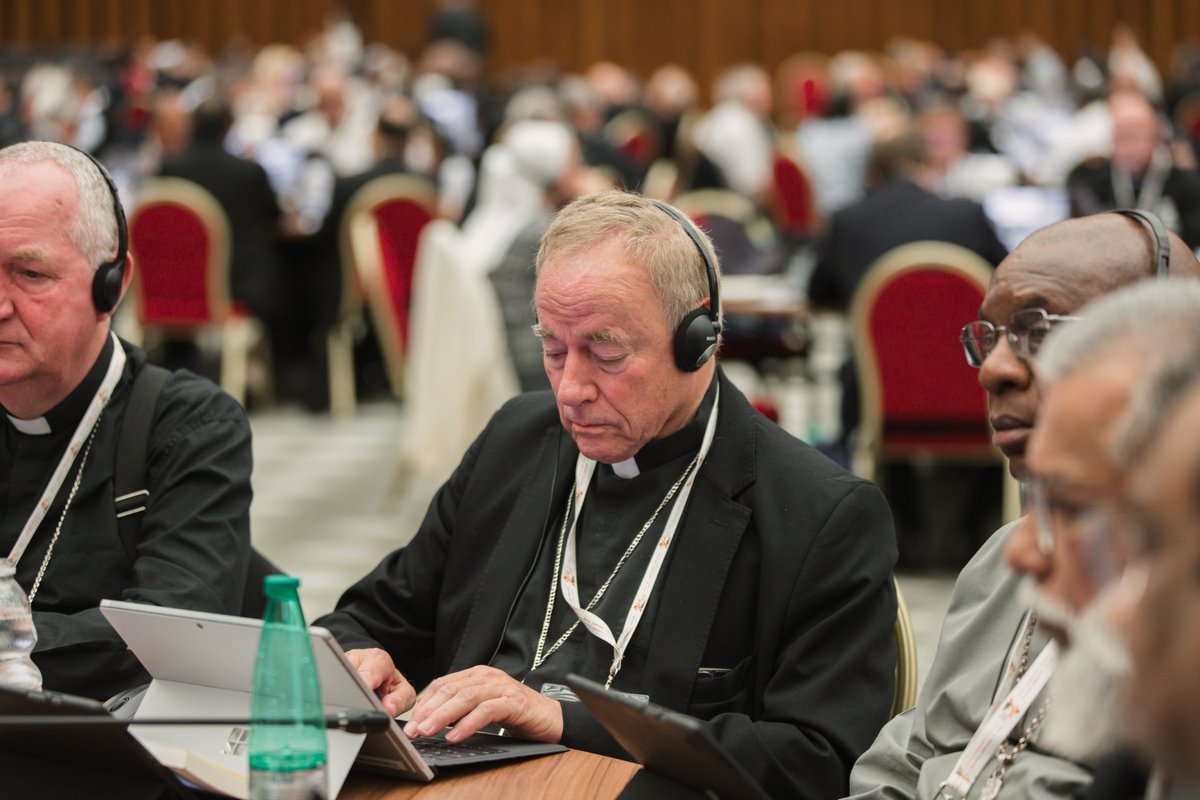
According to the Catechism of the Catholic Church, the primary prophets (the bishops) are to judge and discern the genuineness of prophecies.
St. Paul wrote, “The spirits of prophets are subject to prophets.” (14:32)
Father George Montague explained: “Genuine ecstasy or rapture is a gift; it cannot be induced or planned by the subject. If one loses sensible contact with the surrounding world, so as not to sense even a pinprick, the experience, though transformative, is always temporary, after which one returns to normal everyday life. Often one is told, either by the vision or by one’s spiritual director, to record the experience as best one can, or one is directed to give a message to someone (as Juan Diego was told to speak to the bishop). Thus, unlike the Greek oracles, the person remembers what was revealed. Now what Paul is saying in 14:32 concerns the communication to the assembly of what is received. And thus whether to speak out what one has received, and when to do it, is under the prophet’s control.”
Your voice matters! Join the conversation by submitting a Letter to the Editor here.







