


When Shakespeare penned Hamlet’s speech giving advice to the players, he observed that actors, in fulfilling their parts, were holding “the mirror to nature,” showing “virtue her own feature.”
The Bard knew a thing or two about theatre, and it is clear that he believed one of the main purposes of theatre was to help people better understand themselves.
Certainly, over my long life, I have come to recognize that the arts have helped me towards some greater awareness. It takes little effort for me to recall the impact of the arts in helping me come to terms with who I am and my response to the world: the paintings of Chardin, Vermeer, and Constable; plays such as Our Town, Philadelphia, Here I Come, and Lettice and Lovage; movies such as Citizen Kane, Cinema Paradiso, and Who’s Afraid of Virginia Woolf?; and operas such as The Marriage of Figaro have all contributed to a better understanding of my own values and how I should respond to the world.
Indeed, in my last column, I remarked that the Vancouver Opera production of Flight gave me some novel insight into what happens to us as we proceed on life’s journey.
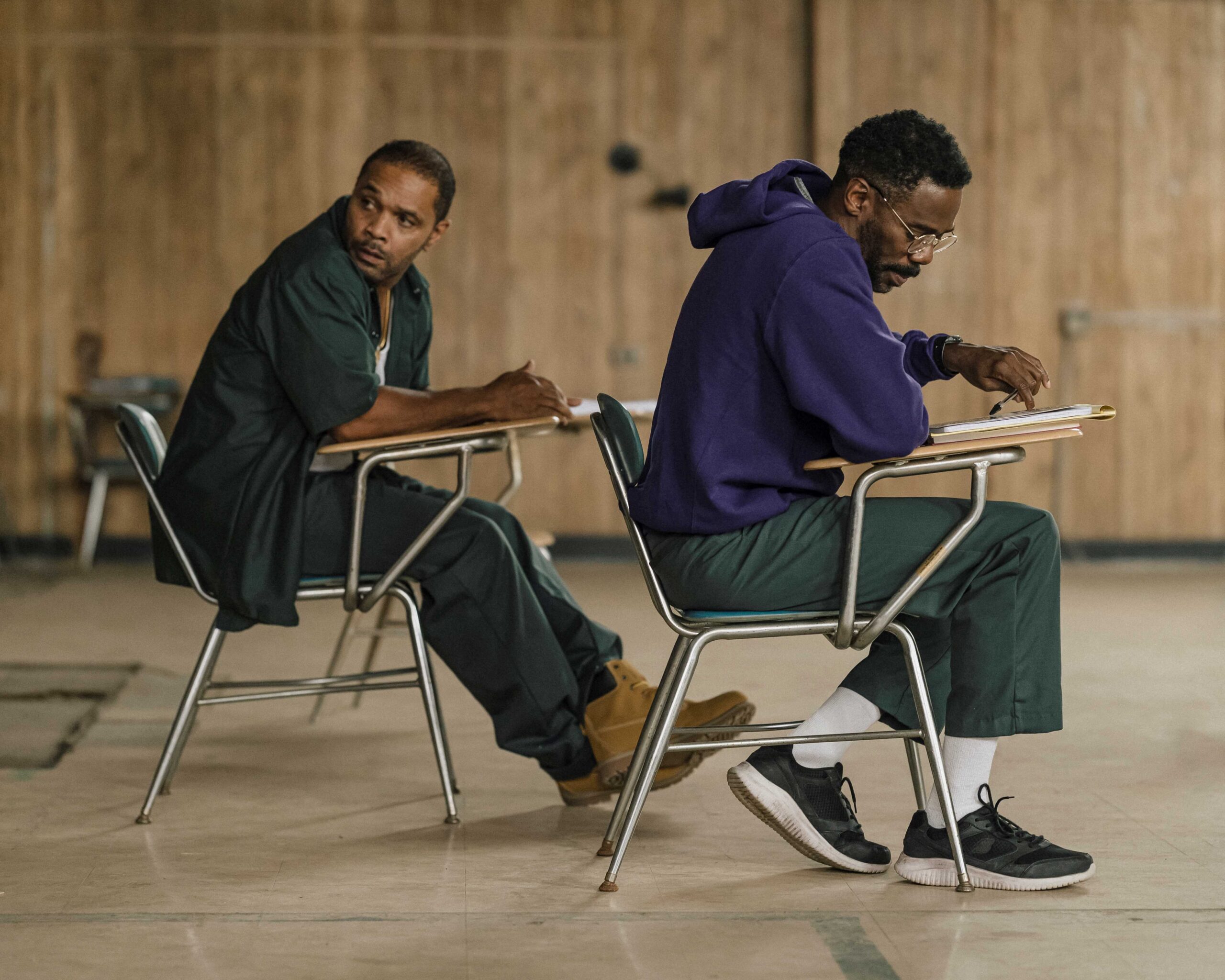
Even more recently, I had the privilege of seeing Sing Sing. This is a film that shows, in semi-documentary fashion, the impact that theatre can have on incarcerated convicts.
Essentially, the film follows a group of Sing Sing Penitentiary inmates as they participate in the Rehabilitation Through Arts (RTA) program.
The purpose of the program is, through drama, to help inmates better understand themselves, resolve their inner conflicts, and prepare for a return to freedom.
Essential to the narration is a man called Divine G., who has already participated in previous productions in the jail. He and his group of fellow inmates, having just finished a successful production of A Midsummer Night’s Dream, must now decide which play they wish to tackle next. Most of the group wants a comedy, though some still consider Hamlet. Divine G. offers to write a comedy based on time travel, a play that covers all bases, including the character of Hamlet.
The remarkable thing is that he does just that. The film then follows the actors and their director, a sensitive and talented volunteer who sees the healing benefits of the RTA program, as they engage in theatre exercises, deal with a number of conflicts and crises, and rehearse the production. The result is a film that is fascinating, dramatic, moving, salutary – and surprising.
Perhaps the most surprising aspect is that many of the characters in the film are played by successful graduates of the RTA program, most notably Colman Domingo as Divine G. The entire cast, under the direction of Greg Kwedar, acquits itself superbly.
Together, they allow audiences to see the inmates in all their complex humanity as they come to a fuller understanding of themselves and each other – ultimately moving towards an acceptance of their own inner conflicts, preparing for their eventual release, and embracing freedom responsibly and successfully. In fact, the recidivism rate among graduates of the program is notably low.
Clearly, the RTA program has been enormously successful, and the film provides audiences with a brilliant portrait not only of a small group of men working together towards clarity and understanding but also of the importance of the arts in fostering personal growth.
Sing Sing should figure prominently in the upcoming Oscars. Meanwhile, potential viewers can watch it on Amazon Prime. The film leaves audiences wanting to know more about the RTA program, how the men manage the intricacies of mounting a complex play with little access to the outside world, and what other successes the program has enjoyed. However, viewers might find their experience enhanced by the use of subtitles.
Sing Sing is a “must-see,” engrossing film. I cannot recommend it highly enough.
Indeed, in addition to being an entertaining and salutary experience, Sing Sing serves as a timely reminder—especially with upcoming elections, both provincially and nationally—of the need for government funding of the arts at all levels. We should not forget that such funding is an essential adjunct to health care and education, vital to the well-being of all members of society.
Let’s hear it for the arts!
Sing Sing is available on streaming platforms.
Your voice matters! Join the conversation by submitting a Letter to the Editor here.







