


There are many things economists agree about, and many they don’t. The short-sightedness of economic tariffs is something there has been general agreement on for hundreds of years, dating back to the days of Adam Smith.
Yet the back-and-forth we’ve experienced over the Trump tariffs in recent weeks has been riveting to watch and, personally, hard to take a stance on.
Trump’s business negotiation background makes economic tactics his natural default. Tariffs may be an economic tactic, but they’re not limited to use in economic negotiations. The reason they’re frowned on by economists is because they aren’t an effective means of settling trade disputes.
They can, however, be a good way to help an opponent see the error of his ways.
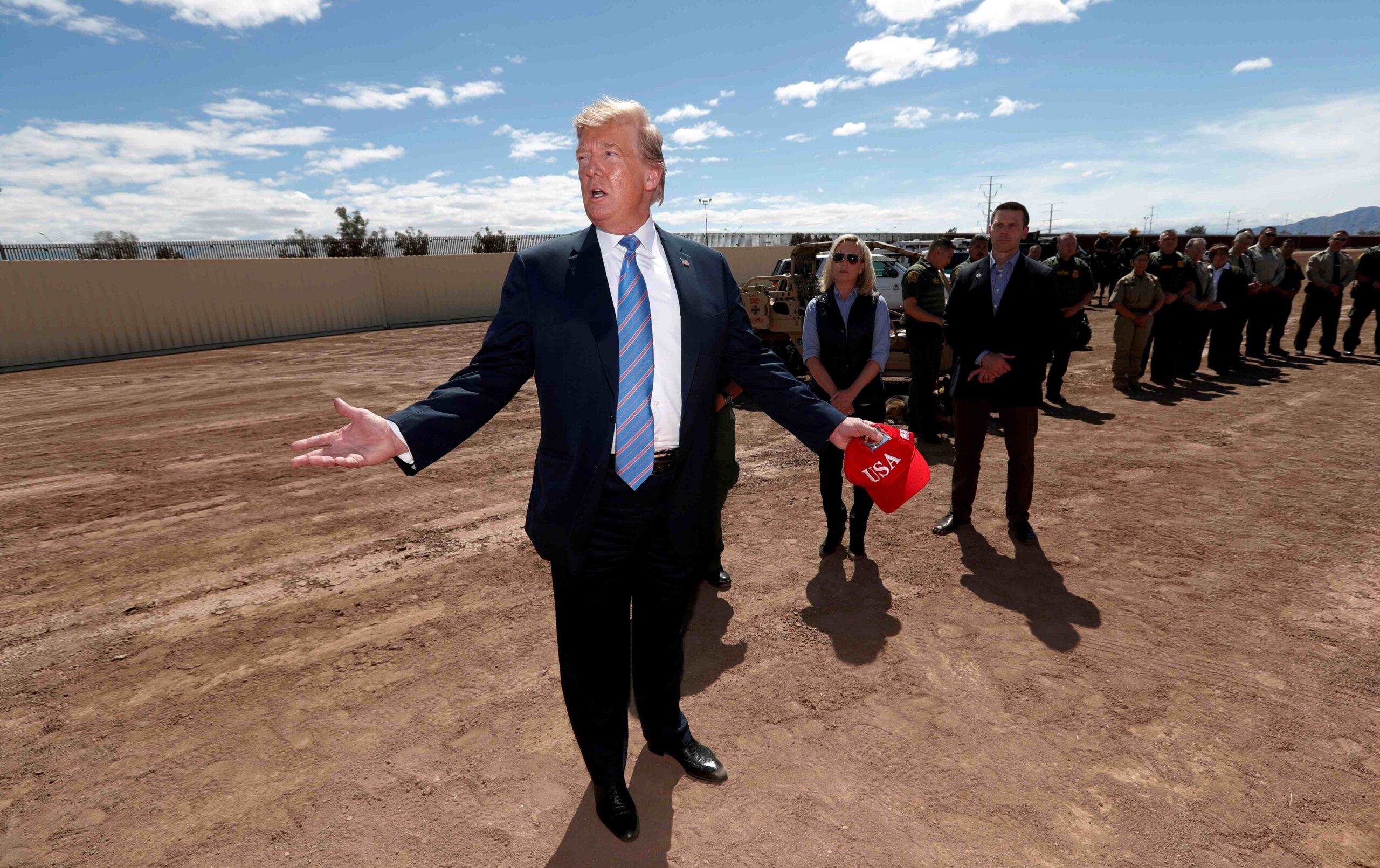
That’s how Donald Trump is using them. When he told Justin Trudeau to get his border in order, it was almost comical to watch the prime minister and other Canadian politicians spring into action. Trump’s blowhard style isn’t everyone’s cup of tea, but his demand wasn’t unreasonable—address the ease with which illegal migrants and drugs enter Canada and, in turn, the U.S.
Federal and provincial governments reacted to the threats with due seriousness, so it came as a surprise when, despite all the promises made, from a billion-dollar security plan to provincial border reinforcements, Trump imposed the tariffs anyway.
If Trump had achieved what he wanted, why would he bring in the punishment?
The answer is, that’s what has made him so successful. He’s unpredictable.
From a tactical, and American, perspective, everything he did made sense. Canadians, however, didn’t know what to make of what they perceived as a certain unfairness—being lumped in with Mexico and China, having our prime minister insulted, and after conceding measures to deal with Trump’s complaints, taking an uppercut to the chin anyway.
Alberta Premier Danielle Smith’s approach appeared to be the most prudent: take a deep breath and don’t overreact. Many of the other premiers, on the other hand, leaned toward hyperventilating and fighting fire with fire. Canadians resorted to everything from boycotting bourbon to booing the Star-Spangled Banner at hockey games.
In short order, a 30-day pause button had been hit. It was pure Trump—keep his opponents off balance with a jab here, a feint there. Canadians are still dazed, glad the tariffs are on hold, but wondering what will happen at the end of the month.
From a moral point of view, the ongoing encounter raises a host of questions. Are such strong-arm tactics—bullying, if you will—licit from a Catholic social teaching perspective? How appropriate are tariffs? Is it fair to threaten a trade war to achieve a political end?
The Church has a few things to say about moral economic principles. Documents like Pope Paul VI’s encyclical Populorum Progressio reflect on economic relations between nations and the impact they have on consumers. The primary question is: what will the impact of economic measures be on the most vulnerable?
Tariffs and levies can lead to increased prices for goods, which ultimately affects consumers, particularly those with fewer means to bear them. If economic penalties lead to higher costs for the vulnerable, they can be seen as unjust and contrary to human dignity and the common good.
On the other hand, tariffs might not always be just an economic measure that drives up prices. In Trump’s case, they are a tactic to use in the goal of protecting his country.
It may be time, then, for the adoption of something like a Just Tariff Theory, a parallel to the Just War Theory. James E. Hartley, a Christian economist, proposed the idea in 2018 when he was looking at escalating trade tensions between the U.S. and China.
Hartley suggested a just approach to tariffs would see a set of rules governing when the use of tariffs is justifiable, balancing economic harm from tariffs against the political or security benefits they might offer.
His starting premise is that economists agree that tariffs, like war, are bad. He gives an example to show why: A tariff is a tax on an imported good. Although some businesses benefit, it makes most consumers worse off by raising prices. This is where the Church’s teaching applies. As an economic tactic, it can harm the most marginalized.
If tariffs are going to be used not just for economic purposes but to achieve political goals, we need some rules, said Hartley.
Catholic Just War teaching maintains that in war, the cause must be just, it must be conducted by a legitimate authority, it must be a last resort, and there must be proportionality of measures.
In a similar vein, Hartley’s framework for evaluating when tariffs are justified and when they are merely harmful economic policies looks like this:
1. The harm done by the tariffs must be less than the harm the tariffs are meant to correct.
2. The harm done to people must be justly distributed. (For example, a tariff on diapers would hurt the poorest members of society and may be unjustifiable.)
3. The tariff must have a reasonable chance of accomplishing its aim.
4. There needs to be a clear, viable condition under which the tariff will be removed.
Would Trump’s tariff threats on Canada and Mexico be justified under such a Just Tariff Theory? Is the economic harm to Canadian and Mexican exporters (and American consumers) justified? Do the consequences of tariffs disproportionately harm the poor? Will they actually lead to stronger drug enforcement and border control?
Hartley expressed skepticism in 2018 about whether the impact of tariffs had been adequately considered. A Just Tariff Theory, he said, provided a means of reframing the debate and evaluating a particular tariff policy. Consideration could be given to whether tariffs would be effective, appropriately distributed, and wouldn’t cause greater harm than the good being sought.
At the end of the day, supporters of tariffs might take a second look and realize that tariffs have costs.
At the same time, he said, “by recasting the discussion in these ways, even a recalcitrant economist like me can suddenly realize that maybe, just maybe, in some cases, tariffs might be a good idea.”
Your voice matters! Join the conversation by submitting a Letter to the Editor here.







