

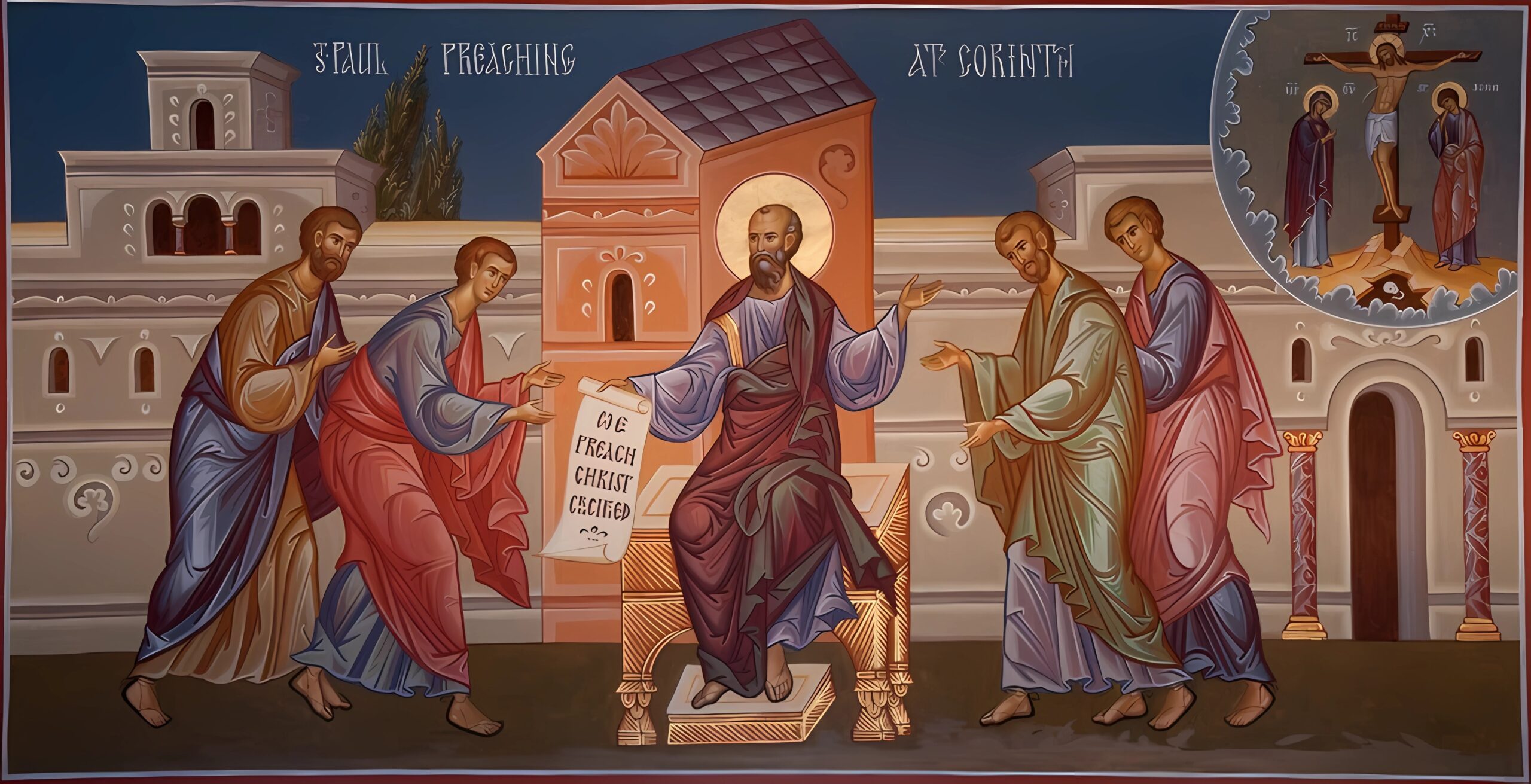

St. Paul wrote to the Corinthians, “But I, brothers, could not address you as spiritual people, but as people of the flesh, as infants in Christ. I fed you with milk, not solid food, for you were not ready for it. And even now you are not yet ready, for you are still of the flesh. For while there is jealousy and strife among you, are you not of the flesh and behaving only in a human way?” (1 Cor 3:1–3).
Discipline of the tongue through fasting and silence serves as a starting point for growing from being people of the flesh to being spiritual people. A spiritual writer, Ilias the Presbyter, wrote:
“‘The Lord will guard your going out and your coming in’ (Ps 121:8): that is, He will enable you by means of self-control to watch over the food you take in and the words you give out. For the person who exercises self-control over food and speech escapes the desire that enters through the eyes, and calms the anger that issues from a disordered mind. The spiritual aspirant must exercise the greatest care and exert himself in every way in relation to these two passions. By so doing he will strengthen his practice of the virtues and put his contemplation on a sound basis … .You can achieve frugality by lowering the quantity of your food, and sinlessness in speech by raising the quality of your silence.”
Regarding the apostolate, St. Paul wrote, “Let each one take care how he builds upon it. For no one can lay a foundation other than that which is laid, which is Jesus Christ.” (1 Cor 3:10–11)
Catholic author Stephen K. Ray wrote, “Even if a good foundation is laid, however, the builders must be careful how they build on it. Just as a good building on a poor foundation will collapse, so a poor building on a good foundation will also collapse. Paul says he has laid a good foundation – Jesus Christ. Now others will build upon it, but they must do so carefully.”
Generally speaking, the fruitfulness of our apostolate works depends on the quality of our interior life. St. John of the Cross said, “Let the men eaten up with activity, and who imagine they are able to shake the world with their preaching and other outward works, stop and reflect a moment. It will not be difficult for them to understand that they would be much more useful to the Church and more pleasing to the Lord, not to mention the good example they would give to those around them, if they devoted more time to prayer and to the exercises of the interior life.”
Pope St. Pius X said, “To restore all things in Christ by the apostolate of good works, we need divine grace, and the apostle will only receive it if he is united to Christ. Not until we have formed Christ within ourselves will we find it easy to give him to families and to societies. And therefore all those who take part in the apostolate must develop a solid piety.”
St. Teresa of Avila said, “A holy, perfect and virtuous man actually does far more good to souls than a great many others who are merely better educated or more talented.”
St. Paul wrote, “This is how one should regard us, as servants of Christ and stewards of the mysteries of God. … For though you have countless guides in Christ, you do not have many fathers. For I became your father in Christ Jesus through the gospel.” (1 Cor 4:1, 15)
Origen commented: “There is a big difference between being a servant of Christ and a steward of the mysteries of God. Anyone who has read the Bible can be a servant of Christ, but to be a steward of the mysteries one must plumb their depths … . The father is the one who has sown the seed of the gospel in their souls. The guides are those who have taken the child later on and helped him develop.”
St. John Chrysostom said, “Paul is not claiming any dignity here, but rather he is showing the depth of his love. Dignity belongs to the teacher, but love is the mark of the father.”
Your voice matters! Join the conversation by submitting a Letter to the Editor here.
愛是父親的印記
愛是父親的印記 聖保祿宗徒在致格林多人書中寫道:「所以,弟兄們,我從前對你們說話,還不能把你們當作屬神的人,只能當作屬血肉的人,當作在基督內的嬰孩。我給你們喝的是奶,並非飯食,因為那時你們不能吃,就是如今你們還是不能,因為你們還是屬血肉的人。你們中既有嫉妒和紛爭,你們豈不還是屬血肉的人,按照俗人的樣子行事嗎﹖」(格前3:1–3) 藉著守齋和保持沈默來訓練自己的舌頭,是從屬血肉之人成長為屬愛是父親的印記
聖保祿宗徒在致格林多人書中寫道:「所以,弟兄們,我從前對你們說話,還不能把你們當作屬神的人,只能當作屬血肉的人,當作在基督內的嬰孩。我給你們喝的是奶,並非飯食,因為那時你們不能吃,就是如今你們還是不能,因為你們還是屬血肉的人。你們中既有嫉妒和紛爭,你們豈不還是屬血肉的人,按照俗人的樣子行事嗎﹖」(格前3:1–3)
藉著守齋和保持沈默來訓練自己的舌頭,是從屬血肉之人成長為屬神之人的起點。一位神修作家伊利亞斯長老(Ilias the Presbyter)寫道:
「『上主保護你出外,保護你回來,從現在起一直到永遠的世代。』(詠121:8)。也就是說,祂將透過自我克制來幫助你管控進食的食物與出口的言語。能在飲食和言語上克制自己的人,能夠避開藉由眼目而來的慾望,並平息因紊亂的心智而生的憤怒。神修的上進者必須對這兩種激情格外謹慎,竭力操練。如此一來,他便能鞏固德行的實踐,並為默觀奠定穩固的基礎…你可以藉著減少食物的份量來達到節制,並藉著提升沈默的質量來實現言語的無過。」
關於宗徒職務,聖保祿宗徒寫道:「各人應該注意怎麼在上面建築, 因為除已奠立了的根基,即耶穌基督外,任何人不能再奠立別的根基。」(格前3:10–11)
Stephen K. Ray寫道:「即使奠定了一個良好的基礎,建築者仍必須小心如何在其上建築。正如建在不良基礎上的好建築會倒塌一樣,建在良好基礎上的差建築也會倒塌。保祿說,他已奠定了一個良好的基礎 – 耶穌基督。現在,其他人將在其上建造,但他們必須謹慎行事。」
一般而言,宗徒們工作所結出的果實,取決於他們內在生活的質量。聖十字若望說:「那些過於熱衷於活動,並以為可以靠自己的講道和外在工作撼動世界的人,應該停下來反思片刻。不難讓他們明白,如果他們將更多時間奉獻於祈禱和內在生活的操練,他們對教會的益處和取悅天主將會獲益更多,更不用提及他們會對周圍的人樹立良好的榜樣。」
教宗聖庇護十世說:「要藉著宗徒的善工在基督內修復一切,我們需要天主的聖寵,而宗徒只有在與基督結合時才能獲得這聖寵。唯有當我們在自己內形成基督時,才能更容易地將祂帶給家庭和社會。因此,所有參與宗徒工作的人必須培養堅實的虔誠生活。」
聖女大德蘭說:「一位聖善、完美且充滿德行的人,實際上對靈魂的益處遠超過許多只是受過更高教育或更具才能的人。」
聖保祿寫道:「這樣說來,人當以為我們為基督的服務員和天主奧秘的管理人。…因為你們縱然在基督內有上萬的教師,但為父親的卻不多,因為是我在基督耶穌內藉福音生了你們。」(格前4:1,15)
Origen評論道:「作基督的服務員和作天主奧秘的管理人之間有很大的差別。任何讀過聖經的人都可以成為基督的僕人,但要成為奧秘的管理人,必須深入探究其內涵 … 。父親是那位在他們靈魂中播下福音種子的人。引導者是那些後來帶領孩子並幫助他成長的人。」
金口聖若望說:「保祿在此並未要求任何尊嚴,而是表明他愛的深度。尊嚴屬於教師,而愛是父親的標誌。」
Your voice matters! Join the conversation by submitting a Letter to the Editor here.







