


25th Sunday in Ordinary Time, Year A
First Reading: Isa 55:6-9
Second Reading: Phil 1:20-24, 27
Gospel Reading: Mt 20:1-16
In the Gospel Reading, Jesus describes a landowner who pays all employees the same, no matter how much or how little work they have done. His parable aptly illustrates the First Reading.
“As the heavens are higher than the earth, so are my ways higher than your ways,” God says, “and my thoughts higher than your thoughts.”
A man in my course “The Catholic Faith in Plain English” complained about “deathbed” conversions. “We cradle Catholics have to obey the commandments all our lives,” he said; “they slip in at the end. It’s not fair.”
There are two misunderstandings here.
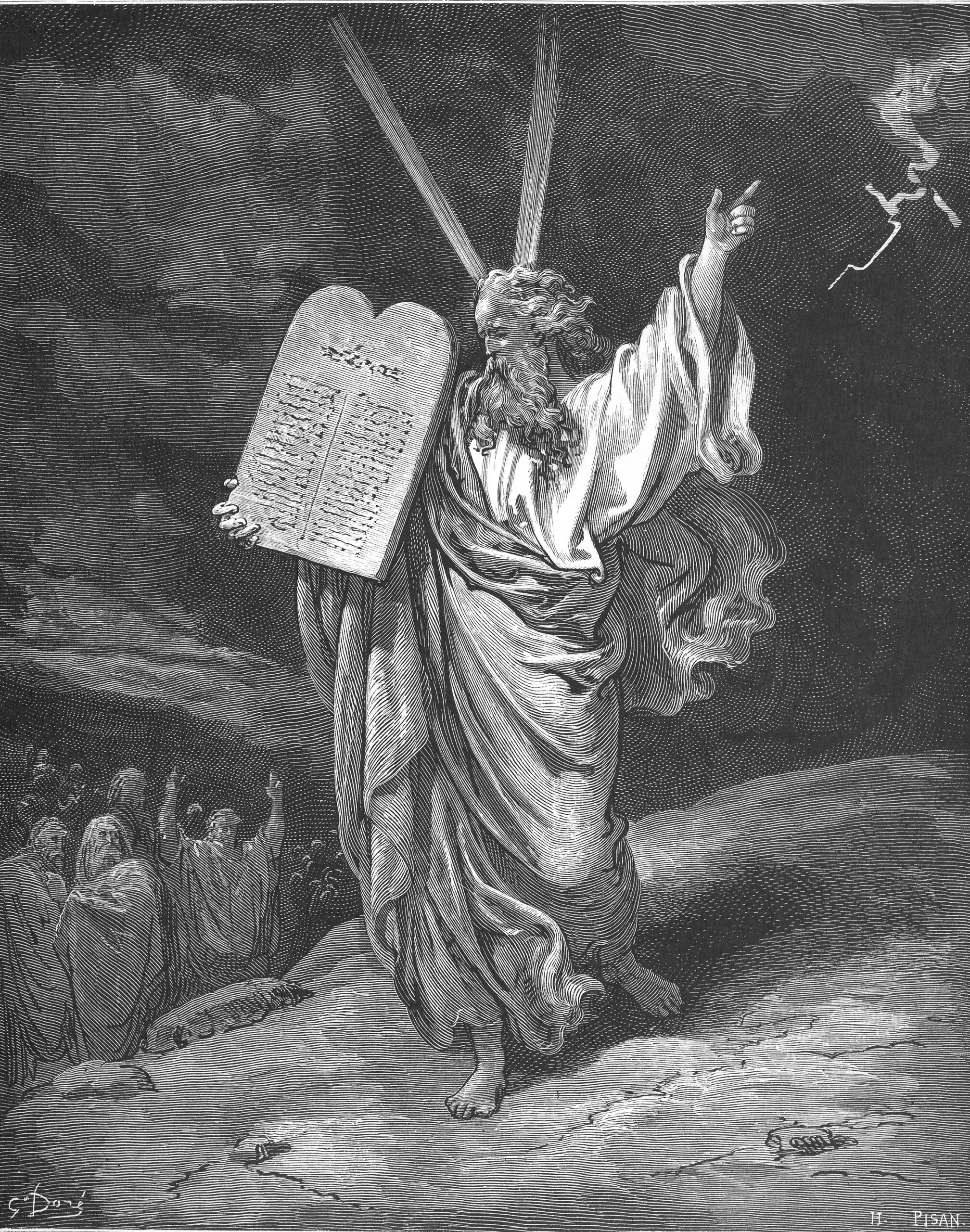
First: God gave the Israelites His commandments—the Decalogue—in the context of their liberation from slavery. “I am the Lord your God, who brought you out of the land of Egypt, out of the house of bondage,” he said, and he repeated it every time he referred to his commandments.
The Decalogue is part of God’s covenant with us, in which he swore to be our God and make us his people. It has its source in his love. It is his gift to us. It tells us how to be free, rather than slaves to sin; how to live a fully human life, in friendship with God and harmony with our neighbours, so that we can enjoy his creation to the full, as He intended.
Those who resent the commandments, or envy those who do not know them, are like children who complain that their parents make them brush their teeth after every meal, who do not know how their health will suffer if they disobey, who think that the rule simply cuts down on their play time. They are like teenagers who see a speed limit as an arbitrary restriction on their freedom, not realizing that its purpose is to make travel as quick and safe as possible.
“You puzzle me,” someone said once. “On the surface, you uphold the Church’s teaching, but underneath, you really are compassionate.” Actually, I uphold Church teaching because of my compassion, not in spite of it.
The truth is that we are “blessed,” for “what pleases God is known to us!” the prophet Baruch said.
Second: The recompense owed to someone because of his behaviour is called “merit,” says the Catechism of the Catholic Church: either reward or punishment, as a matter of justice.
Now “with regard to God,” we have “no strict right to any merit,” it says. “Between God and us there is an immeasurable inequality, for we have received everything from him, our Creator.”
We tend to think like the man in C.S. Lewis’ The Great Divorce, who said, “I only want my rights. I’m not asking for anybody’s bleeding charity.”
But the reply is, “Then do. At once. Ask for the Bleeding Charity”—for our God will “abundantly pardon.”
On our own—before God adopts us as his sons and daughters in Baptism—we cannot merit his favour or do anything to earn it. “Who has given him anything so as to deserve return?” St. Paul asks.
Even Hell is not “a punishment imposed externally by God,” said Pope St. John Paul II, “but a development of premises already set” in this life.”
People go to Hell not because they have done evil, even great evil, but because they claim the right “to persist in evil—in any sin at all” and thus reject Redemption, he said.
To die in mortal sin without repenting means remaining separated from God for ever “by our own free choice,” says the Catechism. If, at the end, we do not say to him, “Thy will be done,” he says to us, “Then thy will be done.” The damned souls, rebels to the end, lock the doors of Hell on the inside to keep God out.
No; God is not fair. He treats each of us infinitely better than we deserve.
Father Hawkswell is again teaching The Catholic Faith in Plain English, with new insights. The whole course is available in written form and, one session per week, in YouTube form at beholdvancouver.org/catholic-faith-course. Father is also teaching the course in person: on Sundays at 2:00 pm in the John Paul II Pastoral Centre, 4885 St John Paul II Way, Vancouver (33rd and Willow); and on Mondays at 10:00 am in St. Anthony’s Church hall, 2347 Inglewood Avenue, West Vancouver. The title of next week’s talk is “The History of Our Salvation.” No pre-registration is necessary.







