


Chapter 8 of the Acts of the Apostles begins in the shadow of Stephen’s martyrdom. A severe persecution breaks out against the Church in Jerusalem, and believers are scattered throughout Judea and Samaria. Humanly speaking, this appears to be a disaster. Yet Luke presents it as the very means by which Christ’s command in Acts 1:8 begins to be fulfilled: “You will be my witnesses in Jerusalem, throughout Judea and Samaria, and to the ends of the earth.”
Luke also highlights the violent zeal of Saul, later to become St. Paul. Theophylact of Ochrid notes the intensity of Paul’s fury: Saul acts almost single-handedly, consumed with zeal for the Law. Yet even here grace is already at work invisibly. Stephen’s dying prayer — “Lord, do not hold this sin against them” — prepares the way for Saul’s future conversion.
At the centre of the chapter stands Philip, one of the seven deacons in Acts 6, who travels to Samaria and proclaims Christ there. The Navarre Bible points out Luke’s particular affection for the Samaritans, noting that Luke alone among the Evangelists records the parable of the Good Samaritan and the grateful Samaritan leper.
St. Bede the Venerable comments: “The present chapter and the history of the Samaritan woman prove that these people’s souls were ready and willing to believe.”
Into this atmosphere Luke introduces Simon the Magician, a man who had amazed the people with occult practices and claims of divine greatness. Simon becomes a dramatic contrast to Philip. Chrysostom carefully distinguishes true miracles from magic: genuine miracles free and heal, while magic enslaves and deceives. Philip’s works point away from himself toward Christ; Simon seeks power and admiration for himself.
When the apostles Peter and John arrive from Jerusalem, they pray over the Samaritan believers so that they may receive the Holy Spirit. The scene reveals the grave sin later called “simony.” The Catechism states: “Simony is defined as the buying or selling of spiritual things. To Simon the magician, who wanted to buy the spiritual power he saw at work in the apostles, St. Peter responded: ‘Your silver perish with you, because you thought you could obtain God’s gift with money!’ Peter thus held to the words of Jesus: ‘You received without pay, give without pay.’ It is impossible to appropriate to oneself spiritual goods and behave toward them as their owner or master, for they have their source in God. One can receive them only from him, without payment.”
Peter’s rebuke is not without hope. St. Ambrose notes that Peter still calls Simon to repentance. Even grave spiritual corruption does not place a person beyond God’s mercy if he turns back sincerely.
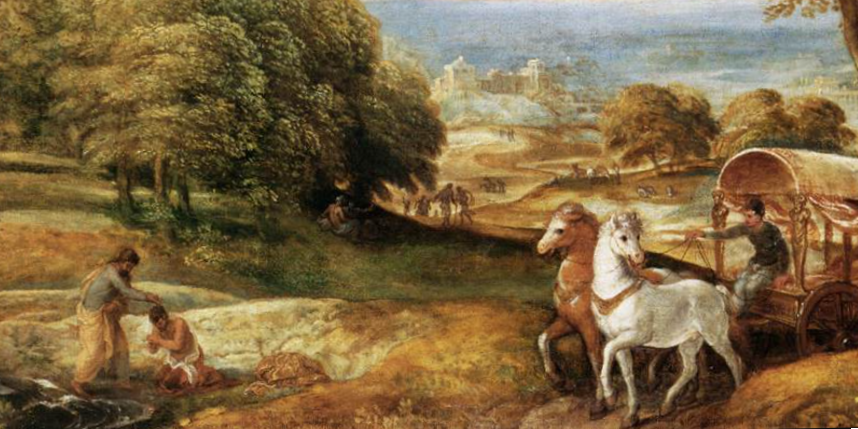
Philip then encountered an Ethiopian eunuch travelling home from Jerusalem. Luke frames this encounter as triple divine initiative: an angel calls Philip southward; the Spirit commands him to approach the chariot; and after the baptism, the Spirit snatches Philip away.
The Ethiopian’s hunger for truth is evident in the fact that he reads the prophet Isaiah even while traveling in his chariot. St. John Chrysostom said, “Consider, I ask you, what a great effort it was not to neglect reading even while on a journey, and especially while seated in a chariot. Let this be heeded by those people who do not even deign to do it at home but rather think reading the Scriptures is a waste of time.” Saint Josemaría Escrivá wrote, “Don’t neglect your spiritual reading. Reading has made many saints.”
The eunuch is reading Isaiah 53, the prophecy of the Suffering Servant led like a lamb to the slaughter. Yet he does not understand it. His humble response to Philip is one of the most edifying lines in Acts: “How can I, unless someone guides me?” (Acts 8:31).
The Fathers saw in this verse a testimony to the Church’s role in interpreting Scripture. St. Jerome famously warned that without a guide one cannot safely enter the sacred writings. The eunuch’s humility becomes the doorway to understanding. As Chrysostom says, “He shows his wound to the doctor.”
Philip began with Isaiah and proclaimed Jesus Christ. When they come upon water, the eunuch asks joyfully: “What is to prevent my being baptized?” St. John Chrysostom comments: “Notice again his modesty. He does not say, ‘Baptize me,’ or keep quiet, but he utters something halfway between eagerness and reverent fear, saying, ‘What is to prevent me?’”
After baptism, the eunuch goes on his way rejoicing. Tradition sees him as one of the first heralds of Christianity in Africa. Acts 8 therefore reveals the unstoppable power of God’s Word. Persecution becomes evangelization. Outsiders become disciples. The Spirit guides the Church into new territory.
Your voice matters! Join the conversation by submitting a Letter to the Editor here.
迫害反成使命
宗徒大事錄第8章在聖斯德望殉道的陰影下展開。耶路撒冷的教會遭受嚴厲迫害,信徒四散到猶太和撒瑪黎雅各地。從人的角度看,這似乎是一場災難;然而路加卻把這描寫為基督在宗徒大事錄1:8 所吩咐的使命開始實現的方式:「你們要在耶路撒冷及全猶太和撒瑪黎雅,並直到地極,為我作證人。」
路加同時強調掃祿—後來的聖保祿—的暴烈熱忱。奧赫里德的特敖斐拉托指出掃祿怒火的強烈:他幾乎是單槍匹馬,以律法的熱心吞噬自己。然而,即使在此時,恩寵已在無形中運作。斯德望臨終的祈禱—「主,不要向他們算這罪債」—為掃祿日後的皈依預備了道路。
本章的中心人物是斐理伯,他是宗徒大事錄第6章所選出的七位執事之一。他前往撒瑪黎雅,在那裡宣講基督。納瓦爾聖經註釋指出路加對撒瑪黎雅人有特別的關注:在四部福音中,只有路加記載了「善心的撒瑪黎雅人」的比喻,以及那位回來感恩的撒瑪黎雅癩病人。
可敬的聖伯達評論說:「本章以及撒瑪黎雅婦人的故事,證明這些人的心靈已準備好並願意相信。」
在這樣的背景下,路加引入了術士西滿—一位以邪術使撒瑪黎雅的百姓驚服、並稱自己是一位大人物。他與斐理伯形成鮮明對比。金口聖若望仔細區分真正的奇蹟與邪術:真正的奇蹟帶來自由與治癒,而邪術則使人受制與受騙。斐理伯的行動指向基督;西滿則追求權力與自我榮耀。
當伯多祿和若望從耶路撒冷來到撒瑪黎雅時,他們為當地信徒祈禱,使他們能領受聖神。這一幕揭示了後來被稱為「買賣聖職罪」(Simony)的嚴重罪行。天主教教理說:
「買賣聖職或聖物罪是指收買或出售屬靈的事物。有一個名叫西滿的術士,見到在宗徒身上成就的事業,就有意購買屬靈的能力,伯多祿回答說:「願你的銀錢與你一起喪亡!因為你想天主的恩賜可以用銀錢買得。」(宗 8:20) 這與耶穌的話正相吻合:「你們無條件得來的,也要無條件分施。」(瑪 10:8) 屬靈財富是不能佔為己有的,誰也不能自認為屬靈財富的擁有者或主人,因為這些財富均來自天主。人只能從天主的手中無條件地領受。(#2121)
然而伯多祿的斥責並非絕望的宣判。聖盎博羅削指出:伯多祿仍呼喚西滿悔改。即使是嚴重的靈性腐敗,只要真心回頭,也不會使他落在天主慈悲之外。
接著,斐理伯遇見一位從耶路撒冷返國的厄提約丕雅太監。路加把這次相遇描寫為三次神聖的介入:天使指示斐理伯往南行;聖神催促他走近一輛馬車;而在洗禮後,聖神又把斐理伯提去。
這位厄提約丕雅人對真理的渴求十分明顯—他甚至在旅途中仍閱讀「依撒意亞先知書」。金口聖若望說:「想想看,在旅途中、甚至坐在車上仍不放棄讀經,是多麼大的努力!那些連在家裡都不願讀經、甚至認為讀經是浪費時間的人,應當引以為戒。」聖施禮華也寫道:「不要忽略你的神修閱讀。閱讀造就了許多聖人。」
太監所讀的是依撒意亞書第53章—受苦僕人的預言:「他如同被牽去待宰的羔羊」。然而他不明白其意義。他謙遜地對斐理伯說出宗徒大事錄中最令人敬佩的一句話:「若沒有人指教我,怎麼能夠?」(宗 8:31)
教父們在這句話中看見教會在解釋聖經上的角色。聖熱羅尼莫曾警告,若無人在你前方指路,你便不能進入聖經。太監的謙遜是開放接受教導的第一步。金口聖若望說:「他向醫生顯示自己的傷口。」
斐理伯從這段經文開始,給他宣講了耶穌的福音。來到了一個有水的地方,太監欣喜地問:「還有什麼阻擋我受洗呢?」金口聖若望評論說:「注意他的謙遜。他沒有說『給我施洗』,也沒有沉默,而是說出一個介於熱切與敬畏之間的句子:『有什麼阻擋我受洗呢?』」
受洗後,太監喜喜歡歡地繼續前行。傳統認為他成為非洲第一位傳教者,播下了信仰的種子。因此,宗徒大事錄第8章展現了天主聖言不可阻擋的力量:迫害反成福傳;外邦人成為門徒;聖神引領教會走向新的疆域。
Your voice matters! Join the conversation by submitting a Letter to the Editor here.







