

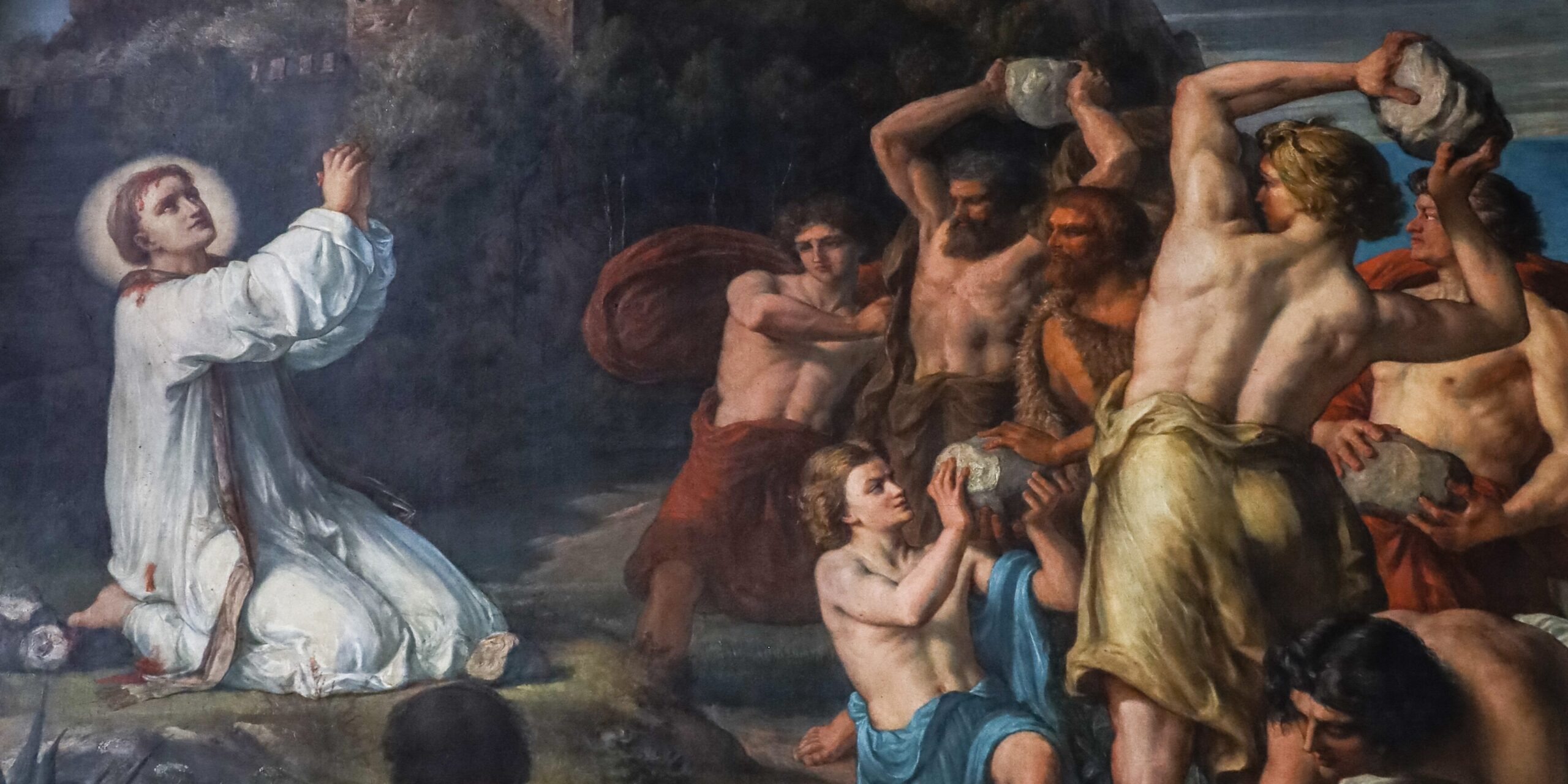

Chapter 7 of the Acts of the Apostles contains the longest speech in the book. Standing before the Sanhedrin, the deacon Stephen does far more than defend himself against accusations of blasphemy. he retells the whole history of Israel as a history of God’s faithful initiative and humanity’s repeated resistance to his messengers. Through Abraham, Joseph, Moses, the tabernacle, and the prophets, Stephen demonstrates that all salvation history points toward Jesus Christ.
Stephen begins by addressing God as “the God of glory” (Acts 7:2). This opening is significant. God revealed himself to Abraham not in Jerusalem, not in the temple, but in Mesopotamia. Before there was circumcision, sacrifice, or the Mosaic Law, there was already divine revelation. St. John Chrysostom emphasizes that Stephen thereby shows that God’s promises preceded all later institutions. The land, the law, and the temple were gifts, not absolutes.
Joseph is presented as a type of Christ. Rejected and sold by his brothers, Joseph later becomes the very instrument of their salvation. Chrysostom beautifully observes that “the victims of plots became the authors of salvation to those plotting against them.” Joseph’s brothers failed to recognize him the first time they encountered him in Egypt, but recognized him on the second encounter. Stephen’s implication is clear: Israel rejected Jesus during his earthly ministry, but now, through the preaching of the apostles and the power of the Holy Spirit, they are being granted another opportunity to recognize him.
The central portion of Stephen’s speech concerns Moses. This is especially important because Stephen had been accused of speaking against Moses. Instead, he honours Moses deeply, presenting him as a divinely chosen deliverer and a prophetic figure pointing toward Christ.
Moses attempted to rescue his fellow Hebrews at the age of forty, but they rejected him with the words: “Who made you a ruler and a judge over us?” (Acts 7:27). The Fathers immediately recognized the parallel with Christ, who likewise came to his own and was rejected.
After forty years in exile, Moses encounters God in the burning bush. Again, Stephen emphasizes that this revelation occurred outside Jerusalem and outside the temple. The wilderness itself became holy ground because God was present there.
After receiving the Law, the chosen people still turned to idolatry in the episode of the golden calf. Stephen quotes the prophet Amos to show that outward worship often concealed inward rebellion. As Chrysostom remarks, Israel repeatedly resisted God’s will, whether he commanded sacrifice or forbade it. Their hearts continually “turned back to Egypt.”
Having established this historical pattern, Stephen addresses the temple itself. he does not deny its importance, but he insists on its provisional character. God first commanded the construction of the tabernacle, a movable tent accompanying his people through the wilderness. St. Bede the Venerable notes that the tent symbolized the temporary nature of the old covenant. Just as the tabernacle gave way to the temple, so too the temple would give way to a greater reality.
Stephen then cites Isaiah 66: “Heaven is my throne, and the earth is my footstool” (Acts 7:49). God cannot be confined to buildings made by human hands. The true dwelling place of God is the humble and obedient heart. Bede interprets “heaven” spiritually as the saints in whom God dwells, while “the earth” signifies those still bound to sin.
At this point Stephen turns directly to his accusers with prophetic boldness: “You stiff-necked people, uncircumcised in heart and ears, you always resist the Holy Spirit” (Acts 7:51). St. Augustine describes Stephen as both flame and dove — fervent in truth yet free from hatred. his severity springs not from anger but from sorrow and love.
As the crowd erupts in fury, Stephen receives a heavenly vision. he sees “the Son of Man standing at the right hand of God” (Acts 7:56). Bede explains that Christ stands as one who comes to help his servant; St. Ambrose says he stands ready to crown his martyr.
Stephen’s death mirrors the Passion of Christ in striking detail. Like Jesus, he is cast outside the city. Like Jesus, he entrusts his spirit to God. Like Jesus, he prays for his executioners: “Lord, do not hold this sin against them” (Acts 7:60).
St. Augustine wrote: “If Stephen had not prayed, the Church would not have had Paul.” The young Saul, who watches over the garments of the executioners, will one day become the Apostle Paul through the power of grace and intercession.
Your voice matters! Join the conversation by submitting a Letter to the Editor here.
火焰與鴿子:聖斯德望的最後見證
宗徒大事錄第7章記載了全書最長的一篇講論。執事斯德望站在公議會前,不僅為自己辯護,反駁褻瀆天主的指控,更重新講述了整個以色列的歷史—一部天主忠信主動臨在,而人類卻一再抗拒祂使者的歷史。透過亞巴郎、若瑟、梅瑟、會幕與先知們,斯德望指出整個救恩史都指向耶穌基督。
斯德望以「榮耀的天主」(宗 7:2)開始他的講話,這個開端極具意義。天主向亞巴郎顯現時,不是在耶路撒冷,也不是在聖殿,而是在美索不達米亞。早在割損、祭獻或梅瑟法律之前,天主已經開始啟示祂自己。金口聖若望指出,斯德望藉此表明:天主的許諾先於一切後來的制度;土地、法律與聖殿都是天主的恩賜,而非絕對。
若瑟是基督的預像。他被兄弟們棄絕、賣掉,卻反而成為拯救他們的工具。金口聖師美妙地指出:「那些被圖謀陷害的人,反而成了圖謀者的救援者。」若瑟的兄弟第一次在埃及見到他時不認得他,第二次才認出他來。斯德望的暗示十分清楚:以色列人在耶穌在世時拒絕了祂,但如今,藉著宗徒們的宣講與聖神的力量,他們再次被賜予認出祂的機會。
斯德望講話的核心部分集中在梅瑟身上,這尤其重要,因為他曾被控告「改革梅瑟給我們傳下的常例」。然而斯德望並沒有貶低梅瑟,反而深深尊崇他,呈現他是天主所揀選的救援者,以及預示基督的先知性人物。
梅瑟四十歲時試圖拯救自己的同胞,卻被拒絕,對他說:「誰立了你做我們的首領和判官?」(宗 7:27)教父們立刻看出這與基督的平行:基督來到自己的子民中間,也同樣被拒絕。
四十年後,梅瑟在曠野遇見燃燒的荊棘。斯德望再次強調:這啟示不是在耶路撒冷,也不是在聖殿,而是在曠野。因為天主臨在,曠野本身就成了聖地。
在領受法律後,天主的選民仍然陷入偶像崇拜,鑄造金牛。斯德望引用先知亞毛斯的話指出:外在的敬禮往往掩蓋內心的背叛。金口聖師評論說:以色列無論天主命令祭獻或禁止祭獻,他們都一再抗拒祂的旨意;他們的心「不斷回頭向埃及」。
在建立這段歷史模式後,斯德望談到聖殿。他並沒有否認聖殿的重要性,但強調其暫時性。天主首先命令建造的是會幕—一個可移動的帳棚,陪伴子民走過曠野。可敬者聖伯達指出,會幕象徵舊約的暫時性;正如會幕讓位於聖殿,聖殿也將讓位於更偉大的實體。
斯德望接著引用依撒意亞 66 章:「天是我的寶座,地是我的腳凳。」(宗 7:49)天主不能被限制在人的建築物中。天主真正的居所,是謙遜順服的心。聖伯達將「天」詮釋為天主居住的聖者,而「地」則象徵仍被罪束縛的人。
此時斯德望以先知般的勇氣直接面向控告他的人:「執拗和心耳未受割損的人啊!你們時常反抗聖神。」(宗 7:51)聖奧斯定形容斯德望既是火焰,也是鴿子—在真理上熱切如火,卻沒有仇恨,如鴿子般溫和。他的嚴厲不是出於憤怒,而是出於悲痛與愛。
當群眾怒不可遏時,斯德望得到天上的異象:他看見「人子站在天主的右邊」。(宗 7:56)聖伯達解釋說:基督站立,是因為祂前來扶助祂的僕人;聖安博則說:祂站著,是準備為祂的殉道者加冕。
斯德望的死亡在許多細節上與基督的苦難相似:像耶穌一樣,他被帶到城外;像耶穌一樣,他把自己的靈魂交託給天主;像耶穌一樣,他為迫害他的人祈禱:「主,不要向他們算這罪債!」(宗 7:60)
聖奧斯定寫道:「若非斯德望祈禱,教會就不會有保祿。」那位看守行刑者衣服的青年掃祿(Saul),將在恩寵與代禱的力量下,成為日後的宗徒保祿。
Your voice matters! Join the conversation by submitting a Letter to the Editor here.







