

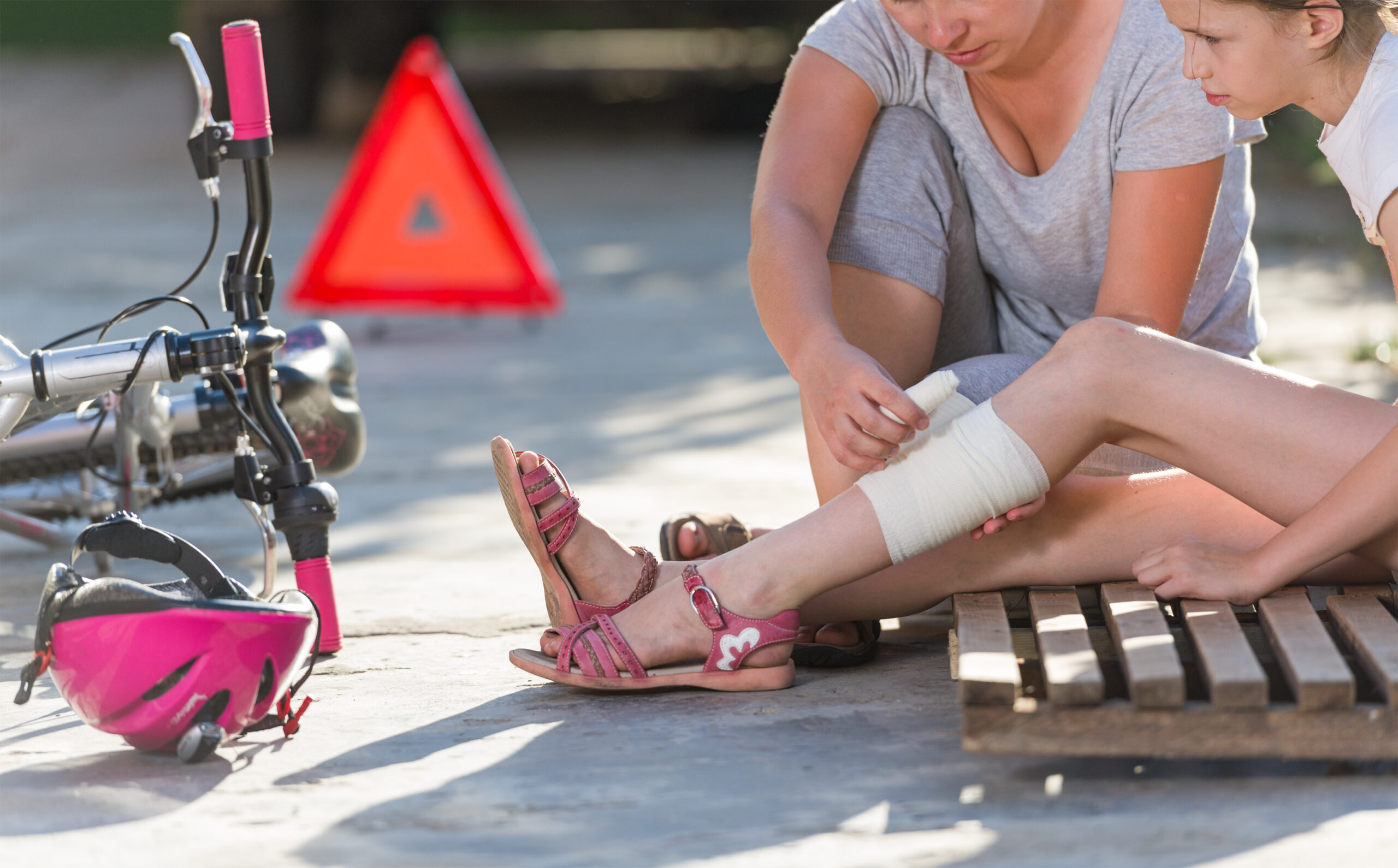

My three young children and I were out for a walk when the handlebar of my four-year-old’s scooter clipped a shrub and she went flying onto the pavement.
Her hands took most of the damage but her knees and dignity were scraped up too. As she lay on the ground screaming, I locked the wheels on the double stroller and removed the scooter so we could sit facing each other.
As our neighbours manoeuvred around the huge obstacle we were creating on the sidewalk, I gently pulled open her closed fists to look at her hands. No blood. Good.
“Do you want me to kiss them?”
She gave a sad nod. I kissed her palms and helped her stand when she was ready to move again.
Scenes like this play on repeat every day in our home. Between an active four-year-old and twin toddlers, there are plenty of daily bumps, bruises, scrapes, falls, slaps, and bites. There are visible wounds from misjudging the distance from the couch to the floor, and invisible ones,like betrayal and wounded pride. Many times every day, I am responding to ouchies with hugs, kisses, and eye contact that says “I’m with you. I see you.”
Compassion literally means “to suffer with.” Compassion means kissing ouchies, or in other ways acknowledging them and the person afflicted by them, not dismissing pain.
I have been shocked and disturbed with news published in this newspaper that elderly people are not being offered this suffering-together compassion. Rather, when a priest goes into hospital for a hip injury or an elderly woman struggles with lung cancer, they are approached and offered assisted suicide, even after making clear they are opposed to it.
“I felt sad that instead of offering hope for me, she wanted me gone,” said Pat Gray, the woman facing lung cancer.
My kids haven’t hurt themselves badly enough to need surgery or suffered from an incurable illness, but does level of injury or age make someone less deserving of compassion?
The parents and grandparents who kissed our ouchies away are now struggling themselves. Who is kissing them?
Consider the photo of the late Pope Francis meeting Vinicio Riva. Headlines described him as a “disfigured man,” whose face and entire body is covered in tumors and sores due to a rare illness. Pope Francis held Riva in a long embrace, his hand gently placed on the side of his head. You couldn’t see the image without feeling the Pope’s compassion. Gentle. Seeing. Loving.
“He didn’t have any fear of my illness,” Riva told CNN. “He embraced me without speaking … I quivered. I felt a great warmth.”
Riva went home after the short encounter completely changed. “I felt I was returning home 10 years younger, as if a load had been lifted.”
St. Damien offered one of the best examples of compassion we have. He volunteered to work among the lepers deported to a colony on the island of Molokai, Hawaii. Despite knowing he would probably get the disease (he died of leprosy at age 49) he built houses, churches and orphanages, imposed order, dug graves, and when time came to give up his post for another volunteer to take his place, he requested to stay.
While the government deported the sick to keep them away, St. Damien lived with them, ate with them, and offered true dignity and compassion. I imagine if he lived today and was sent to serve at a care home or hospice, he would move in. He would have meals, push wheelchairs, open doors, set up TVs and video calls, play Bingo, and talk with everybody one on one, seing each person’s suffering and sitting in it with them.
A knee scrape isn’t the same as a cancer diagnosis, and nor is a bruise a hip replacement. But the same person who needed their ouchies kissed at four years old needs compassion, warmth, and a sense that they are not alone at 90 years old.
Your voice matters! Join the conversation by submitting a Letter to the Editor here.







