

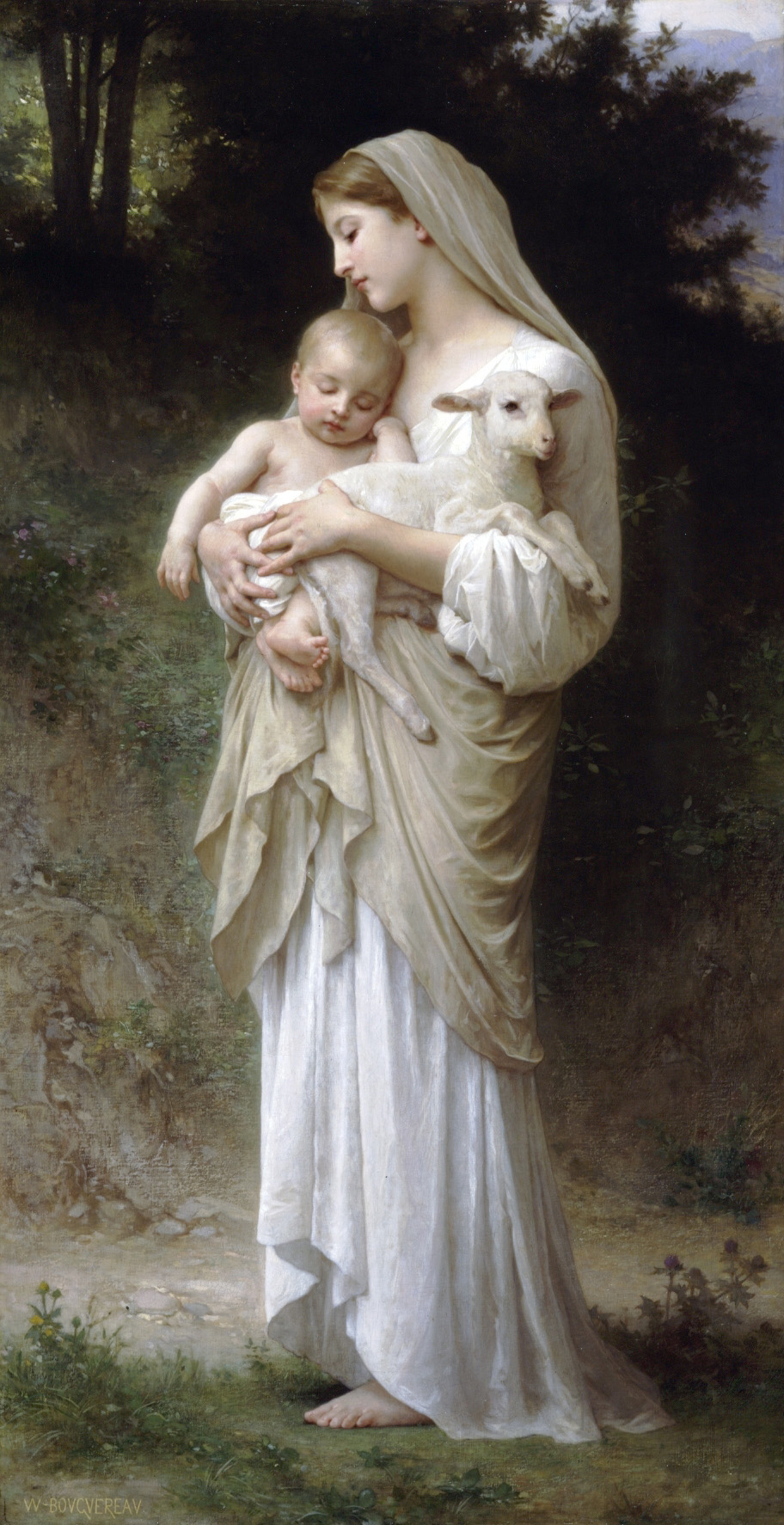

During May, the month dedicated to Mary and to mothers, we are given an opportunity to reflect on love in a particular way, recognizing what St. John Paul II described as the feminine genius, a sensitivity for the human person that can ensure attention to human beings in every circumstance. In this time of loneliness and social fragmentation, this self-gift has the power to draw people out of isolation and into relationship.
In his Theology of the Body, he taught that love is meant to be both given and received. A woman’s sensitivity for the human person reflects this capacity to attend to and receive the other.
The following pieces reflect on Mary’s embodiment of this form of love, revealing in her as Mother a presence that remains close even in suffering.
Mary and the gift of accompaniment
By Jen Spicer
“Jesus is in the business of making us safe for others.”
That statement, made years ago by my former counsellor, has stayed with me. Since then, I have wondered what it means to be “safe” for others.
To be safe is to be so grounded in my identity in the eyes of God, and so healed from my own wounds, that I can—if only for a moment—set myself aside in order to be present to the suffering of another.
As human beings created in the image of a relational God, we are wired for connection—the kind that allows us to feel safe, seen, soothed, and secure. This is not a superficial connection, but a deep “being with” that our culture, focused on doing and independence, often neglects. With this lens, I can appreciate all the more why, in the story of Martha and Mary, Jesus says that “Mary has chosen the better part” (Luke 10:42)—a posture of presence that finds its fullest expression in the motherhood of Mary.
This kind of connection is not optional. It is something we are made for. When it is missing, we see the effects in the emptiness and suffering around us. What if many of the struggles we carry could be made more bearable through real, attentive presence—through being with one another in love?
Jesus is in the business of making us safe for others. He is making us safe first for ourselves, and then for those entrusted to our care.
But there is a hard truth at the centre of this: if I am not experiencing that kind of safety myself, I cannot offer it to others. If my own need for safety is unmet, I will struggle to be present, to bear burdens, to extend mercy, or to endure suffering alongside another. We cannot give what we do not have.
If connection is the lending of safety from one person to another, then it is the art of being with. And if Jesus is making us safe, then he is teaching us how to be with—first with him, and then with others.
Scripture reveals this clearly.
Jesus wept with Martha and Mary over Lazarus. Before raising Lazarus, he entered into their grief. his presence met them in their suffering.
In the Garden of Gethsemane, Jesus asked his disciples to remain with him in his anguish. When they slept, his suffering deepened in isolation.
Simon of Cyrene carried the cross with Jesus. Veronica wiped his face. Each, in their own way, shared in his suffering by being present.
At the Cross, Jesus said to his mother, “Woman, behold your son,” and to John, “Behold your mother.” In that moment, he entrusted his followers to one another in their suffering, inviting them into a relationship of presence and care—and giving his mother to us as one who remains with us.
What these moments reveal is the difference between the consolation of being with and the desolation of being alone.
“It is not good for man to be alone.” We are made to be with one another.
Attachment theory helps illuminate this truth. A child develops through the experience of a “safe haven” and a “secure base”—a caregiver whose presence provides safety and stability. Over time, these experiences are internalized, forming the foundation for the child’s own sense of security.
We remain relational and interdependent throughout our lives. Yet our culture often promotes independence in a way that works against our nature. We are told to self-soothe and self-regulate, but without having first received steady, loving presence, this is not truly possible.
God, however, does not leave us without that presence. In Father, Son, and Holy Spirit, we are given a constant source of safety and security. And in his generosity, God also gives us his Mother and the Communion of Saints—those who accompany us in ways that are real, even if unseen.
We are not left to discover this way of being with one another on our own. In the life of the Church, we are given concrete examples of what this love looks like when it is lived fully and faithfully.
Mary stands at the heart of this.
At the Cross, she remains. She does not turn away. She does not control or intervene. She is present in suffering—fully, faithfully, and without withdrawing.
When Jesus says, “Behold your mother,” he gives her to us not only as an example, but as one who accompanies us. She is invited into our lives as one who knows how to be with us in sorrow and in hope.
Her presence reflects the same kind of love we are made for: a love that is steady, attentive, and enduring.
We are first called to receive that presence—to allow God, and those around us, to be with us in our own need. Only then can we grow into the capacity to be with others.
Though the circumstances of our suffering may not always change, they can become more bearable when we are not alone.
From that place, we begin to offer to others what we ourselves have received: presence, patience, and a love that remains.
This is what it means to be made safe—for ourselves, and for others.
This article is adapted from a five-part series. To request the full version, readers may contact the author at belovedandbecomingreal@gmail.com.
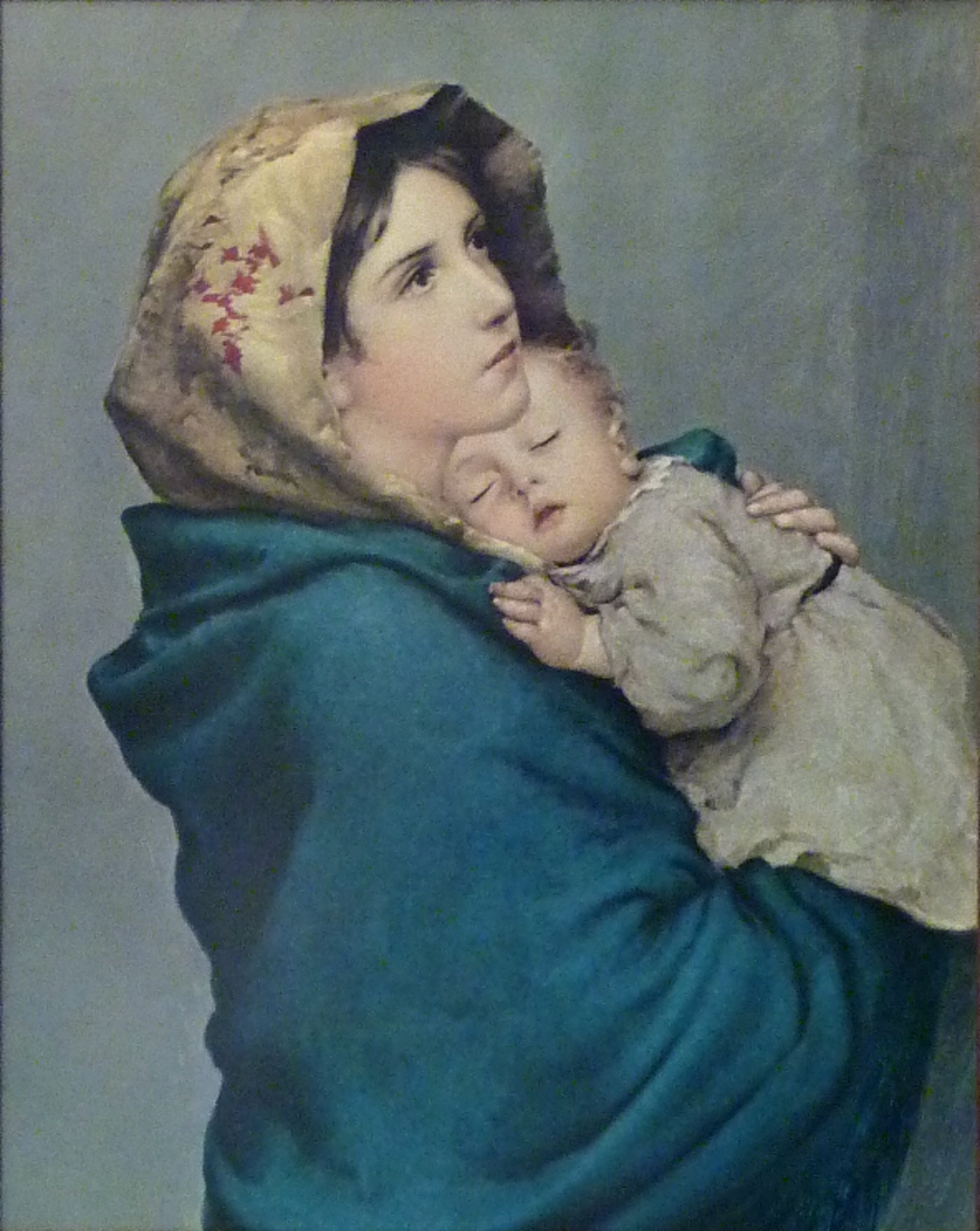
Roberto Ferruzzi’s Madonna of the Streets, illustrating Mary’s protective embrace of the Christ Child. (Wikipedia)
Mary as a model of secure love
By Anna Loch
A year and a half ago my youngest sister gave birth to a lovely baby girl, and witnessing my sister’s transformation and bond with her little one has been such a gift.
Her daughter is happy, full of energy, and loves people and life. Her mama often tells her and shows her, in her words, presence, and gentle touch, that she is loved, wanted, safe, seen, and heard.
These experiences form the foundation of something essential—secure attachment. In attachment psychology, the consistent experience of being welcomed, delighted in, and emotionally attuned to creates a sense of internal safety and worth in a child. And it’s often mothers—though not exclusively—who become the first mirror of God’s unconditional love.
In this month of May, we turn to Mary, who, as the perfect mother, embodied the essence of secure attachment in her relationship with Jesus. She is a mother who loves passionately, but never possessively; who provides deep connection without clinging.
From Jesus’ earliest days, she created a safe, nurturing environment where he was deeply known and unconditionally loved.
Yet her love was also spacious. She did not fear Jesus’ independence or his unique mission—instead, she made room for it. At the temple, she sought him with concern but accepted his growing self-awareness.
At Cana, she nudged him forward, yet yielded to his decision. Even at the foot of the Cross, Mary remained present without control, allowing him to fulfill the Father’s will, even when it broke her heart. Mary teaches mothers that secure love is not about holding tighter, but about holding wisely—rooted in trust, open to growth, and always oriented toward the good of the beloved.
Mary is a model for all mothers and caregivers. Building secure attachment in children is such an important task. The experiences of those first years of life tremendously influence children’s future well-being and relationships.
As meaningful as motherhood and secure attachment is, especially in the first years of life, it’s not always seen or supported in the way it should be—especially today.
Many pregnant and new mothers are more isolated than ever. Without the extended family networks or close-knit communities that once surrounded women through pregnancy and postpartum, many moms feel like they’re navigating this monumental life change alone. Even Mother Mary reached out to her cousin Elizabeth to offer and receive support. She didn’t do motherhood alone.
Loneliness in early motherhood is real, and it can take a toll—not only on the mother’s well-being, but on her ability to be emotionally available to her child. And this matters deeply. According to attachment theory, babies learn to regulate stress, feel secure, and eventually form healthy relationships when they are emotionally connected to a caregiver who is attuned, responsive, and emotionally present.
But when a mother is exhausted, anxious, or unsupported, it becomes harder to offer that steady presence. This isn’t a failure—it’s a signal that mothers need mothering, too.
So how can we support the mothers around us? Here are a couple of tips that I’ve heard from the many moms I know:
• Reach out regularly: A quick text, a short call, or a drop-in visit (with her consent) can make a huge difference. Let her know she’s not alone.
• Offer practical help: Bring a meal, hold the baby while she showers or naps, or do a load of laundry. These small acts are powerful. Some communities offer meal trains or visiting schedules.
• Affirm her role: Tell her she’s doing holy work. Tell her what you see in her parenting that is beautiful, strong, or inspiring.
• Be a safe place emotionally: Let her speak honestly without fear of judgment. Early motherhood can bring unexpected emotions—joy, grief, identity shifts—and she needs space for all of it.
• Encourage her connection with God: Remind her that Mary walks with her. That even in the hidden, thankless moments, she is seen and accompanied.
In this month of May, we turn especially to Mary, the mother par excellence. Her motherhood was not without suffering—she knew the loneliness of bearing a hidden pregnancy, the hardship of fleeing with a newborn, and the heartbreak of watching her Son die. But through all of it, she remained faithful, loving, and present. Mary is not only a model for mothers—she is their companion and refuge.
Mother Mary’s love for us is real, fierce, and active. When she appeared to Juan Diego as Our Lady of Guadalupe, she said:
“I am your merciful mother … I will listen to their laments and remedy all their miseries, afflictions, and sorrows.”
Let us ask Mary to intercede for all mothers—those who are thriving, those who are grieving, and those who are simply trying to get through the day. May we learn from her how to love with strength, tenderness, and hope. And may we, as a community, learn again how to hold and honour the hearts that hold the world.
Your voice matters! Join the conversation by submitting a Letter to the Editor here.







