


In the beginning of Chapter 5 of the Acts of the Apostles, St. Luke places the story of Ananias and Sapphira immediately after St. Barnabas, who enacted the community ideal of generosity by selling a field and laying all the proceeds at the apostles’ feet (Acts 4:36-37).
The contrast is jarring. The sin of Ananias and Sapphira does not lie in holding back money, but in doing so while claiming otherwise. They were under no obligation to sell their property or give all the proceeds; their crime was deceit and hypocrisy. Sapphira’s equal guilt is stressed by Luke’s double mention of her complicity.
The severity of the judgment is meant to be a mercy. St. John Chrysostom writes that the sin “like gangrene had to be cut out,” so that the community might be purified and the rest made more vigilant. St. Bede sees this as a foreshadowing of future “weeds” that would adulterate the Church’s simplicity.
The third summary of the early community (Acts 5:12-16) focuses on the Holy Spirit’s power through “many signs and wonders” at the hands of the apostles. The first summary (Acts 2:42-47) shows the early Christians devoted to the apostles’ teaching, prayer, and the breaking of bread, living in joyful unity and sharing their goods so that everyone’s needs were met. The second summary (Acts 4:32-35) deepens this picture, emphasizing their complete unity of heart and soul, their radical generosity, and the powerful witness of the apostles to the resurrection.
Chrysostom captures the atmosphere: “Earth was becoming like heaven, for their way of life, boldness of speech, wonders, for all besides. Like angels were they looked upon with wonder.” Origen argues that without miracles the disciples could not have led people to leave their traditional religion for the new faith.
St. Bede reflects: “At that time Peter visibly relieved the infirm by the shadow of his body. Now he does not cease to strengthen the infirm among the faithful by the invisible screen of his intercession. And because Peter is a type of the Church, it is beautifully appropriate that he himself walked upright, but by his accompanying shadow he raised up those who were lying down.”
The pattern of Acts is dejection and joy interwoven. Chrysostom observes: “Look how their life is woven. First there was dejection because Christ was taken from them; then came joy through the descent of the Spirit; then dejection again because of the scoffers; then joy because of the believers and the sign; then dejection again because of the imprisonment, followed by joy in the result of their defense.” This mirrors the paschal mystery itself.
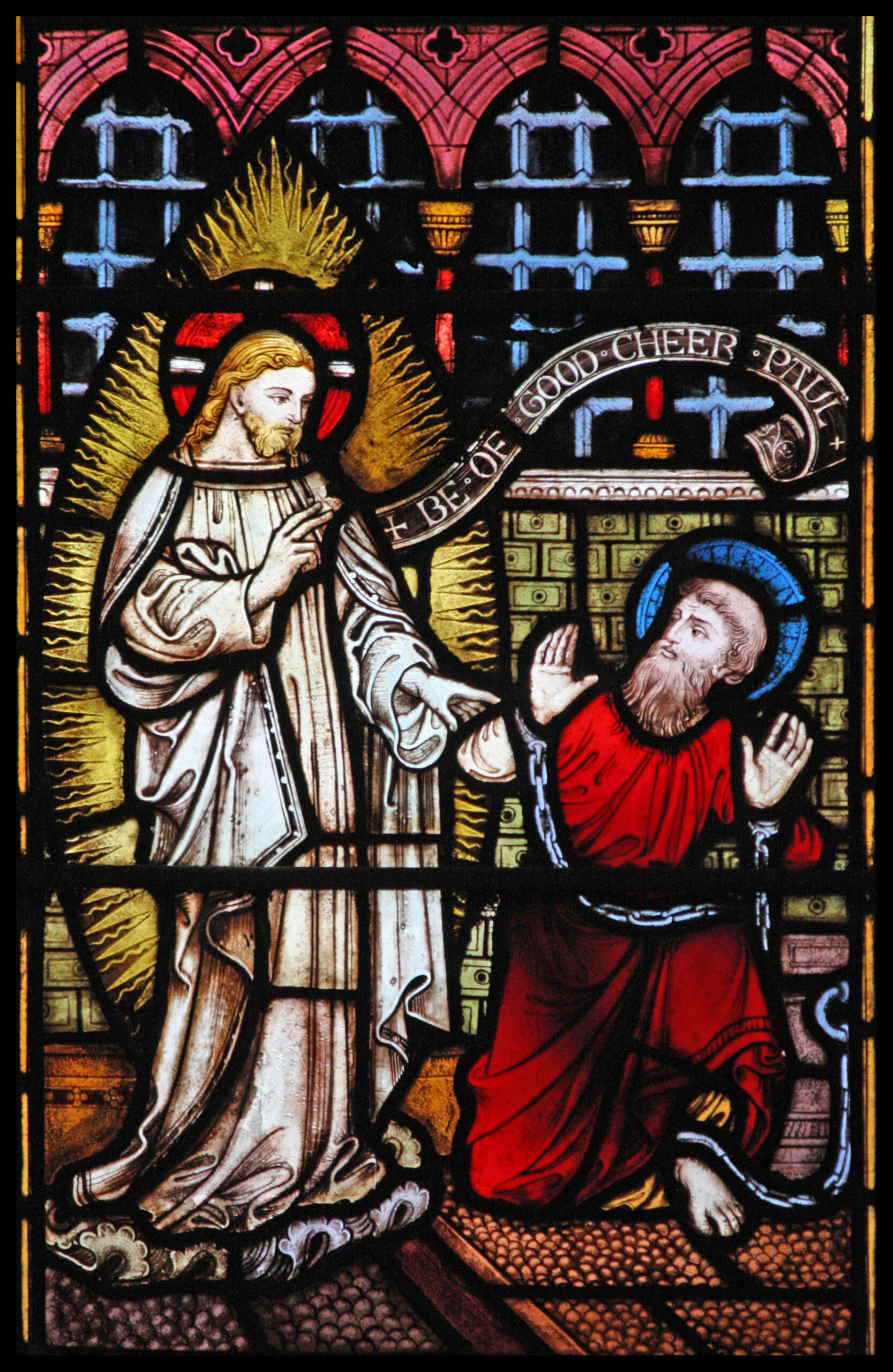
The apostles are jailed by the high priest and the Sadducees, who are “filled with jealousy.” In the night, “the angel of the Lord opened the doors of the prison, led them out, and said, ‘Go and take your place in the temple area, and tell the people everything about this life’” (Acts 5:17-20). Chrysostom explains that the miracle is meant to strengthen the disciples and to confront the leaders with an empty prison, much like the empty tomb that confirmed the resurrection.
When the apostles again stand before the Sanhedrin, Peter declares: “We must obey God rather than men” (Acts 5:29). The Navarre Bible sees this as the fullness of Christian conscience: obedience to God comes first; the apostles are more concerned for their judges’ spiritual health than for their own safety. Father William S. Kurz, S.J., notes that Peter’s words have become “a rallying cry in many situations in which people are pressured to violate their consciences by human laws or commands.”
Peter continues: “The God of our fathers raised Jesus, whom you killed by hanging him on a tree” (Acts 5:30). Chrysostom observes a pattern in their preaching: “Every time they mention the crime, they add the mention of forgiveness, showing that what had been done was worthy of death but what was given was offered as if to benefactors.” Their aim is not condemnation but conversion.
The chapter turns to Gamaliel, who warns the council: “If this endeavour or this activity is of human origin, it will destroy itself. But if it comes from God, you will not be able to destroy them; you may even find yourselves fighting against God” (Acts 5:38-39). The Navarre Bible comments that Gamaliel’s intervention shows that a person with good will can discern God’s action in events, or at least investigate without prejudice.
After recalling the apostles, the Sanhedrin has them flogged, orders them to stop speaking in the name of Jesus, and dismisses them. “So they left the presence of the Sanhedrin, rejoicing that they had been found worthy to suffer dishonour for the sake of the name” (Acts 5:41). St. Polycarp echoes this spirit: “If we suffer for his name’s sake, let us glorify him.”
Your voice matters! Join the conversation by submitting a Letter to the Editor here.
沮喪與喜樂交織
在「宗徒大事錄」第5章開端,聖路加把亞納尼雅和撒斐辣的故事,緊接在巴爾納伯之後。巴爾納伯實踐了團體慷慨的理想,賣掉田地,把銀錢放在宗徒腳前(宗 4:36–37)。
這對比十分強烈。亞納尼雅和撒斐辣的罪,不在於保留部分金錢,而在於一邊保留、一邊假裝全部奉獻。他們並沒有義務賣掉財產,也沒有義務把全部銀錢捐出;他們的罪是欺騙與虛偽。路加兩度強調撒斐辣的共謀,突顯她與丈夫同負其罪責。
嚴厲的懲罰其實是出於慈悲。金口聖若望說,這罪「如同壞疽,必須割除」,好使團體得以潔淨,其他人也更加警醒。聖伯達視此為預示日後會有「雜草」混入,破壞教會原初的純樸。
接著的第三段關於初期教會的總結(宗 5:12–16),強調聖神藉宗徒之手所行的「許多奇蹟」。第一段總結(宗 2:42–47)描述初期基督徒專心聽宗徒的訓誨、祈禱、擘餅,在歡樂的合一中生活;並彼此分享財物,使人人所需都得到滿足。第二段總結(宗 4:32–35)更深化此圖像,強調他們心靈的完全一心一意、徹底的慷慨分享,及宗徒作證主耶穌的復活。
金口聖師如此描寫當時的氛圍:「大地彷彿成了天堂,他們的生活方式、講話的勇氣、奇蹟,以及其他一切,使人驚嘆如天使一般。」奧利振則認為,若沒有奇蹟,門徒們不可能使人離開傳統宗教而接受新信仰。
聖伯達反思說:「那時伯多祿以身影治癒病人;如今他仍以看不見的代禱之蔭庇扶持信友中的病弱者。因為伯多祿是教會的預像,他自己挺身而行,而他的影子卻扶起那些倒下的人,這是極為美善而合乎天主旨意。」
「宗徒大事錄」的敘事模式是沮喪與喜樂交織。金口聖師指出:「看他們的生活如何交織:先是因基督被奪去而沮喪,接著因聖神降臨而喜樂;然後因譏笑者而再度沮喪,又因信徒與神蹟而喜樂;再因被囚而沮喪,最後因辯護的結果而喜樂。」這正反映逾越奧蹟本身的節奏。
大司祭和撒杜塞人因「嫉恨填胸」而逮捕宗徒,把他們關進監獄。「夜間,有上主的天使打開了監獄的門,領他們出來說:『你們去,站在聖殿裏,把一切有關生命的話,講給百姓聽。』」(宗 5:17–20)金口聖師解釋,這奇蹟是為堅固門徒,也為使領袖面對空無一人的監獄,就像空墳墓證實了復活一樣。
宗徒再次站在公議會前時,伯多祿宣告:「聽天主的命應勝過聽人的命。」(宗 5:29)納瓦爾聖經(Navarre Bible)指出,這句話展現基督徒良心的圓滿:服從天主優先於一切;宗徒們關心的不是自己的安危,而是審判者的靈性益處。庫爾茲神父(William S. Kurz, S.J.)也指出,伯多祿的話已成為許多情況中的「號召」,當人們被迫為法律或命令而違背良心時,這句話成了力量。
伯多祿接著說:「我們祖先的天主復活了你們下毒手懸在木架上的耶穌。」(宗 5:30)金口聖師觀察到他們宣講的模式:「他們都同時提及寬恕,顯示所做的,的確該死,但天主所賜的卻如同給恩人一般。」他們的目的不是定罪,而是使人悔改。
本章接著提到加瑪里耳,他警告公議會:「若是這計劃或工作是由人來的,必要消散;但若是從天主來的,你們不但不能消滅他們,恐怕你們反而成了與天主作對的人。」(宗 5:38–39)納瓦爾聖經評論說,加瑪里耳的介入顯示,一個懷有善意的人能在事件中辨識天主的作為,或至少不帶偏見地加以查驗。
公議會把宗徒們叫來,鞭打了以後,命他們不可再因耶穌的名字講道,遂釋放了他們。「他們喜喜歡歡地由公議會前出來,因為他們配為這名字受侮辱。」(宗 5:41)聖玻里加也呼應這精神:「若我們因他的名而受苦,就讓我們光榮他。」
Your voice matters! Join the conversation by submitting a Letter to the Editor here.







