

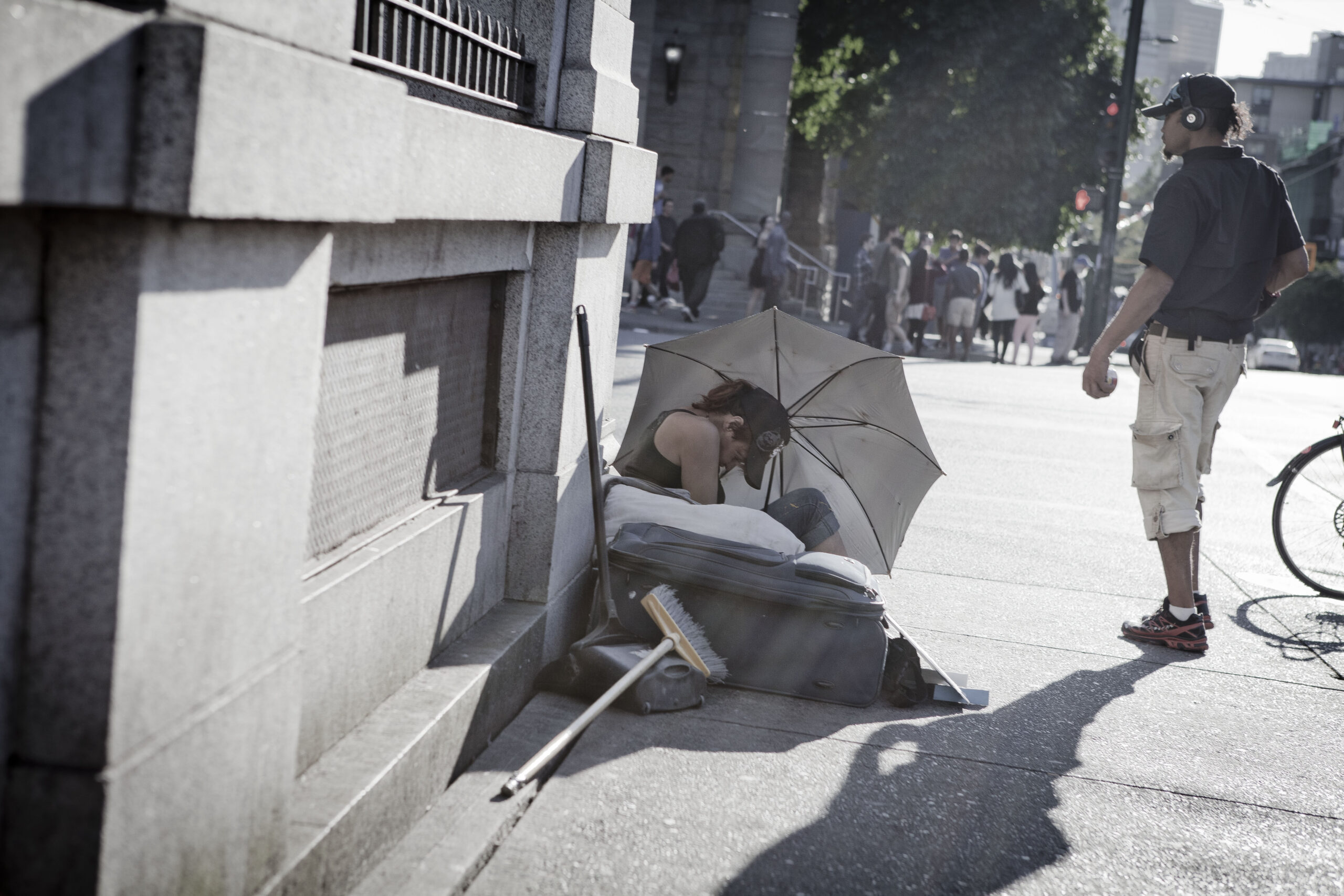

Jesus told us that how we treat others is how we treat him. We are obligated to carry out works of mercy, to help the poor, the downtrodden, the sick…and, sometimes, the inebriated young partygoer?
We live in a university town with lots of student housing close by. It’s not unusual for us to see and/or hear parties in the neighbourhood and beyond. So, while the sight of intoxicated young adults is not unusual, the presence of one on our doorstep at 10:30 on a recent Friday night it out of the ordinary.
While my husband tried to explain to the swaying young man that he, in fact, did not live at our house, it quickly became clear that this guy needed assistance. Our first instinct was to call him a cab, but we abandoned that idea when he told us he had no wallet, had lost his phone, and was not sure where he really did live.
After talking with him for awhile and making sure he didn’t fall off our front step, he came up with an address across town that we could take him to. My husband got in the back seat of our vehicle with him while our 17-year-old son drove and our 15-year-old rode co-pilot. Our hope was that they could find this guy a place to sober up, perhaps reunite him with someone who knew him, and avoid him wandering around on a -12 degree night.
It turned out the suggested address was also not his, resulting in calls to the police by both the terrified couple in the house and my husband.
Fortunately, the RCMP showed up quickly, just as the drunken fellow was getting belligerent. What was interesting was the reaction of the police.
The first two police officers were puzzled about who my husband and sons were and why they were trying to help this inebriated stranger. When all was explained, they considered it a reasonable response to a person in need.
The third officer, however, told them they had been foolish and put themselves in danger by helping this guy try to find a safe place, which in the end turned out to be a night in a jail cell. It was probably the best outcome for him, but we rested easier that night knowing we had tried our best to look after this youth, who was roughly the same age as our oldest son.
It’s not always clear how to help someone you see who is in distress. What are we called to do? Do we give them money knowing they will likely use it to feed an addiction? Is it our concern what they do with the money we freely give them? Do we put ourselves in harm’s way and try to physically reach out to people on the street who are in desperate need of human connection?
We often hear that sometimes all it takes to make someone’s day better is a simple smile, which can be true, but what happens if we stop there? Smiles don’t feed hungry people. Smiles don’t erase the pain of loss and guilt that people carry. Smiles don’t convey the truth and salvation of Jesus Christ that is written in the Gospels.
Our world is suffering from a lack of face to face, human interaction. For most of us, our instinct is to look away from suffering. When we see something that makes us uncomfortable, like an unkempt homeless person, or a situation we might not approve of, like a drunk young person, it’s easy for us to shake our heads and keep walking. We think “that’s their choice” or “they got themselves into that situation” and we wash our hands of it.
Is this the response of a Christian? Would Christ keep walking?
Christ does not force himself on anyone, and we shouldn’t either. But we can be compassionate. We can offer to help, or we can offer to find someone who can help. We can carry extra food with us to give out to those who need it. We could even carry prayer cards with us and offer to pray with and for the recipient. Most importantly, whatever we do, we do in the name of Christ.
Sometimes there may be situations that are too difficult (or dangerous) to approach, and maybe the only thing we can do is pray. But we must never forget that no matter what someone’s problems are, or how messy their situation is, they are still human, made in the image and likeness of the same God we profess to love, which makes them worthy of our love and mercy as well.
Lazzuri writes from her home in Nova Scotia, where she lives with her husband, three of her six children, and her mom. She can be reached at clarelazzuri@gmail.com.
Your voice matters! Join the conversation by submitting a Letter to the Editor here.







