

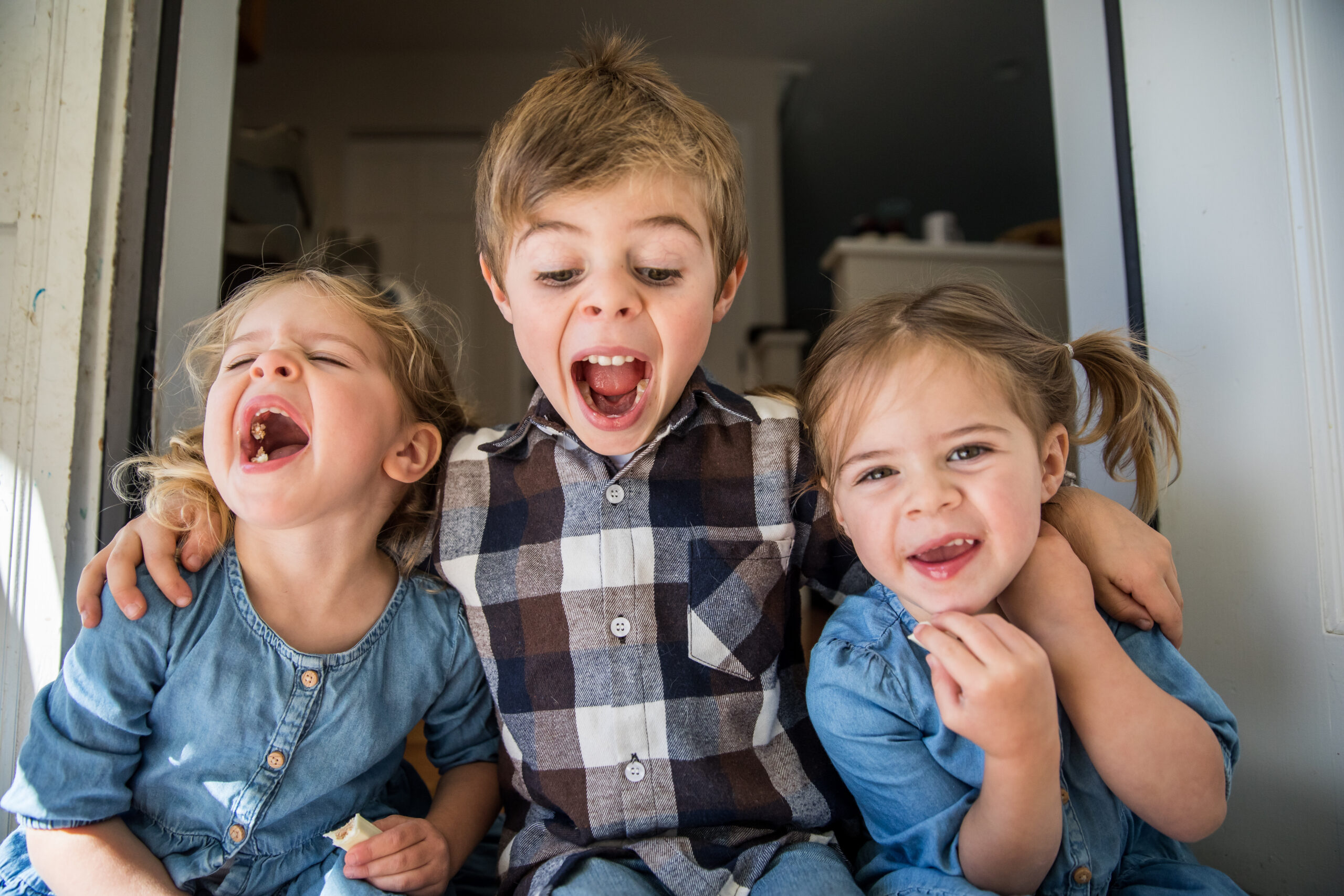

With three kids aged four and under, we are the family that is squeezing in late and, despite our best efforts, not subtle about it. We have books, markers, and snacks in crinkly wrappers. We have squirmy children and no more magical powers than anybody else in the church to keep them all lined up, silent, and seated for the duration of Mass.
As much as we would like to hear everything and pray uninterrupted, going to church is often a whirlwind event that ends with my husband and me turning to each other and saying, “Well, we survived that one.” If we made it to the end, of course. Did we hear the homily between the multiple bathroom breaks of tiny children? Surely not. Did we make it to the front for Communion? Well, we did our best.
But for all the things you see, when you see a young, loud family shuffle in looking for more space than is available with a bag full of snacks and toys, there is much more going on below the surface.
We could use the crying room or stand at the back of the church. But we choose someplace near the front so our kids can see, and in seeing, have the opportunity to engage in what’s happening.
We could leave the snacks at home (and do make sure they have eaten beforehand whenever possible). But maybe someone threw a tantrum over breakfast that morning, or we missed our usual Mass time and the one we arrived for happens to be at a time our children are accustomed to eating. It’s hard to pay attention when your tummy is grumbling.
We could pull a child out of the sanctuary every time they squeak. But in urging them to sit with us as long as possible, we are attempting to teach them the skill of sitting, listening, and being aware that some things going on are much bigger than they are.
We could avoid sitting in the pews until our kids are old enough to sit still. But we care too much about their souls to do that.
Children are distracting—more to their parents than anyone else. But we are hoping by consistency, practice, and love, our values will rub off on them. We hope the prayers and songs they hear every week will become part of their routine and then their personal prayer lives. We’re hoping they meet Jesus here.
Every time you learn something new, you have to start at the bottom. Here we are on step one of a very tall staircase, with our fruit bars and squeaky voices, inviting our children to become saints.
Justin Whitmel Earley, father of four boys and author of Habits of the Household, imagines what it may have looked like when Jesus was teaching and welcomed children to his side.
“I’m not sure about first‑century kids, but my best guess is that they are like the regular ones we have now. They probably wanted to crawl on Jesus and pull his hair, maybe his earlobe,” he writes.
“God loves messy things. Really. He loves broken people. He loves earnest half‑efforts that don’t look right to everyone else. God is crazy about loud children (and self‑conscious adults) who don’t exactly know how to do the worship thing right but come and give it a shot anyway, because they know that some little bit of God is better than the nothing they have.”
Earley writes about the deep and powerful value of embracing family meals, prayer, and Bible study, with all of the chaos of raising four young boys. Is it messy? Definitely. Does it take a colossal effort to get them all to sit long enough to pray together? Absolutely.
But it’s also so, so worth it.
The habits our children grow up with daily are the foundations of what they will consider normal as they grow up. We all have habits, and consciously chosen or not, they are teaching our children what we enjoy, value, and worship.
“I used to think I needed to get the day‑to‑day stuff done and out of the way to get to the real spiritual work of parenting… But now I see that the magic of God’s grace abounds in the places I need it most: in the normal routines,” he writes.
What you see when a young family struggles through Mass is just a slice of their efforts to bring their children to Jesus. They probably face equal struggles in getting them to sit for family prayers, go to PREP classes, or read a Bible story together.
I’m not throwing shade on the parents whose kids, by training or calm personality, do sit quietly at Mass. I look forward to the day mine have practised this skill long enough to let me hear an entire homily uninterrupted! No hate for crying rooms or the back row, either; we use them too.
But, suggests Earley, “we need to be comfortable with the mess if we’re going to be serious about spiritual formation. The fact is, in family, if you’re adverse to messy prayers, then you’re adverse to prayer. If you can’t tolerate spills, you’ll avoid eating with kids. If you don’t like conflict in relationship, you’re not going to like relationship… If you can’t stomach awkward moments, you won’t much like the conversation that leads to the great moments.”
What’s your experience of bringing littles to Mass? I’d love to hear from you!
Aruck@rcav.org
Your voice matters! Join the conversation by submitting a Letter to the Editor here.







