


From Chapters 8 to 11 of Path to Paradise or Inward Peace, Lorenzo Scupoli teaches the path to genuine spiritual tranquility by addressing the soul’s perseverance against spiritual inconstancy, disordered desires, interior disturbances, and diabolical interference.
Chapter 8 reminds us that the Most Holy Eucharist is the indispensable source and centre of the interior life. Scupoli exhorts us to deepen our faith in this mystery daily. The Catechism of the Catholic Church reaffirms this teaching, calling the Eucharist “the source and summit of the Christian life,” in which “the whole Christ is truly, really, and substantially contained” (CCC 1324, 1374).
Flowing from this Eucharistic foundation, Scupoli calls the soul to embrace suffering, sickness, and spiritual dryness in union with Christ’s Passion. As St. Paul teaches, “I rejoice in my sufferings for your sake, and in my flesh I complete what is lacking in Christ’s afflictions for the sake of his body, that is, the Church” (Col 1:24).
Pope Pius XII likewise taught that Christians share in Christ’s redemptive work through patient acceptance of suffering and through voluntary mortification united with him.
Chapter 8 also warns against spiritual inconstancy—the tendency to desire different things on different days—stressing the importance of fidelity to the present duty rather than projecting restless desires into the future. St. John Chrysostom frequently reminded his listeners that the crown belongs not to the one who begins well, but to the one who perseveres to the end.
Chapter 9 counsels radical detachment from pleasure, comfortable friendships, and everything that gratifies the self, presenting this as the condition for interior freedom, which Scupoli describes as “the great kingdom within us.”
St. John of the Cross expresses this principle with characteristic clarity: “To reach satisfaction in all, desire satisfaction in nothing.” (Ascent of Mount Carmel, I.13) He also illustrates detachment with the famous image of a bird tied by a cord: even if the thread is very thin, the bird cannot fly until it is completely free.
St. Francis de Sales likewise emphasized detachment not only from external things but also from oneself, teaching that the soul should rely not on its own prudence or strength but on the grace and mercy of God.
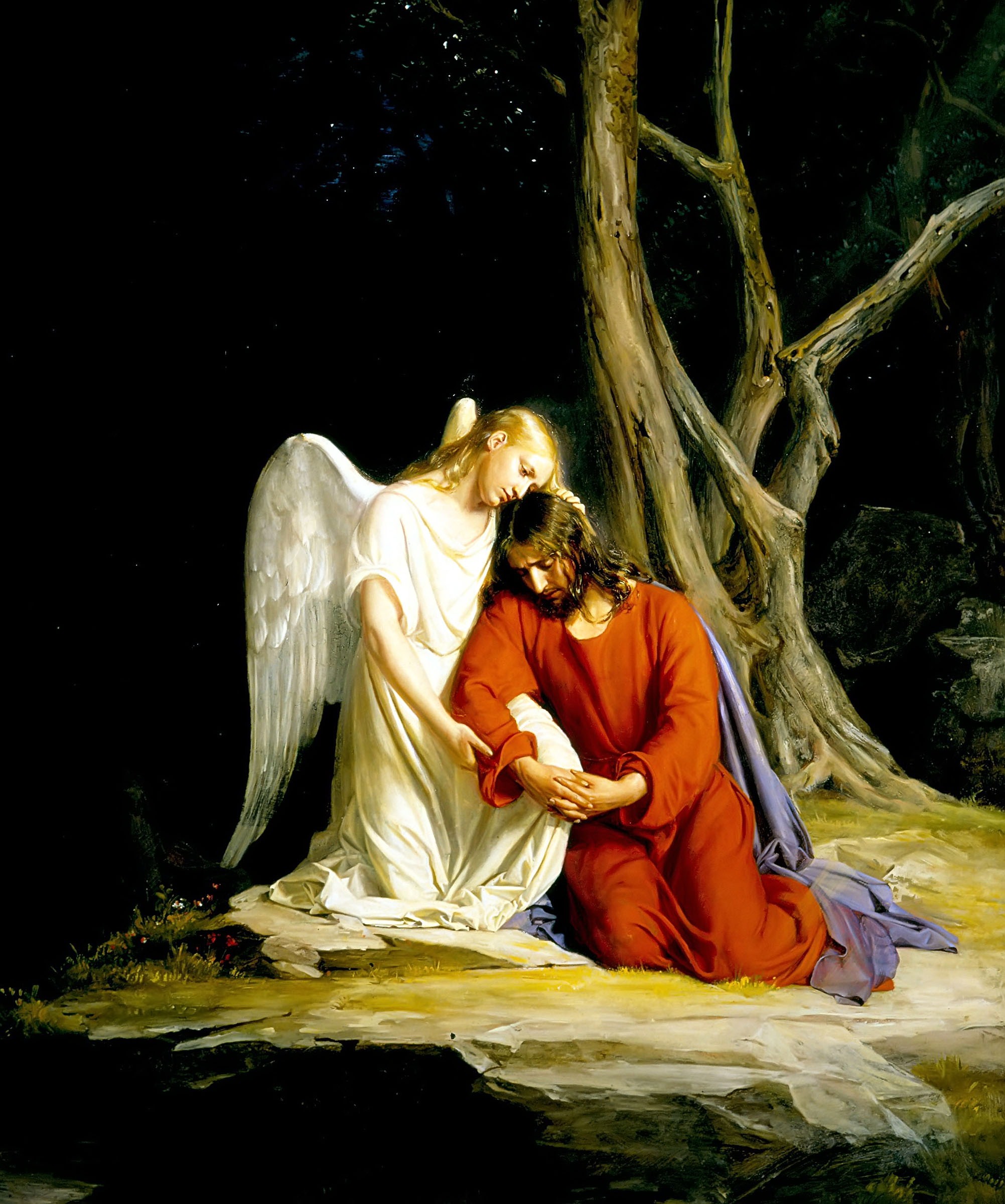
Chapter 10 presents Christ’s agony in Gethsemane as the definitive model for the soul’s response to failure and interior disturbance. Despite his human shrinking from suffering, Christ surrendered His will entirely: “Father, if thou be willing, remove this cup from me: nevertheless not my will, but thine, be done.” (Lk 22:42)
St. Bernard of Clairvaux saw Christ’s prayer in the garden as the pattern for every Christian prayer, in which the believer learns to unite his will to God’s by repeating with Christ: “Not my will, but thine be done.”
Chapter 11 provides Scupoli’s crucial rule for discernment: any thought that discourages the soul and diminishes its trust in God does not come from the Holy Spirit. Scripture itself exhorts us to “believe not every spirit, but try the spirits whether they are of God” (1 John 4:1), and reminds us that “God hath not given us the spirit of fear; but of power, and of love, and of a sound mind.” (2 Tim 1:7)
In the Spiritual Exercises, Ignatius of Loyola gives classic rules for discernment. He teaches that the evil spirit typically brings sadness, confusion, and obstacles through false reasoning, troubling the soul, while the good Spirit gives courage, strength, spiritual consolation, inspirations, and peace.
He further observes that in souls striving to progress in the spiritual life, the evil spirit seeks to disturb them with anxiety and discouragement, while the good spirit strengthens and encourages them in their pursuit of God.
Chapter 11 concludes with the paradox of fruitful desolation. Father Thomas Dubay distinguishes between dryness caused by negligence and the purifying “night” permitted by God for deeper transformation. In this purification, God may seem absent, yet this very stripping away of consolations leads the soul to a purer love of him.
Scupoli also identifies pride as one of the devil’s most effective strategies: tempting the soul to attribute its spiritual progress to its own diligence rather than to grace, which eventually leads to contempt of others.
Taken together, these chapters present a clear and time-tested path: anchored in the Eucharist, shaped by Christ’s Passion, persevering through dryness, and guided by humble discernment. In this way the soul finds a peace rooted not in changing feelings, but in God alone.
Your voice matters! Join the conversation by submitting a Letter to the Editor here.







