


Sixth Sunday of Ordinary Time, Year A
First reading: Sir 15:15–20
Second reading: 1 Cor 2:6–10
Gospel reading: Mt 5:17–20
Humans are created, not self-existent, so we have “insurmountable limits” that we “must freely recognize and respect with trust,” says the Catechism of the Catholic Church.
First, our bodies have limitations, described by scientists. Second, our souls have limitations: the moral laws, or the laws of right and wrong.
The moral laws differ from the physical laws in some very fundamental ways.
First: the physical laws describe how inanimate objects actually do behave, while the moral laws prescribe how humans ought to behave.
Second: the physical laws are not logically necessary; it is not impossible or unthinkable that God can, and sometimes does, do things differently. However, the moral laws could not possibly be different, for they reflect God’s nature, and therefore human nature, made in his image.
Third: we do not have the option of disobeying the physical laws, but we do have the option of disobeying the moral laws.
In other ways, moral laws are like physical laws. For example, both must be learned; we cannot invent or abolish either. If we know them, we can act freely within them, but if we do not, or if we ignore them, we can be destroyed or damaged, soul or body.
The moral law is not beyond human reason. From the beginning, God implanted it in our hearts. But when Adam and Eve fell, our reason became obscured. In our fallen state, we had to be reminded of the moral law and have it explained. Accordingly, God gave us the Ten Commandments.
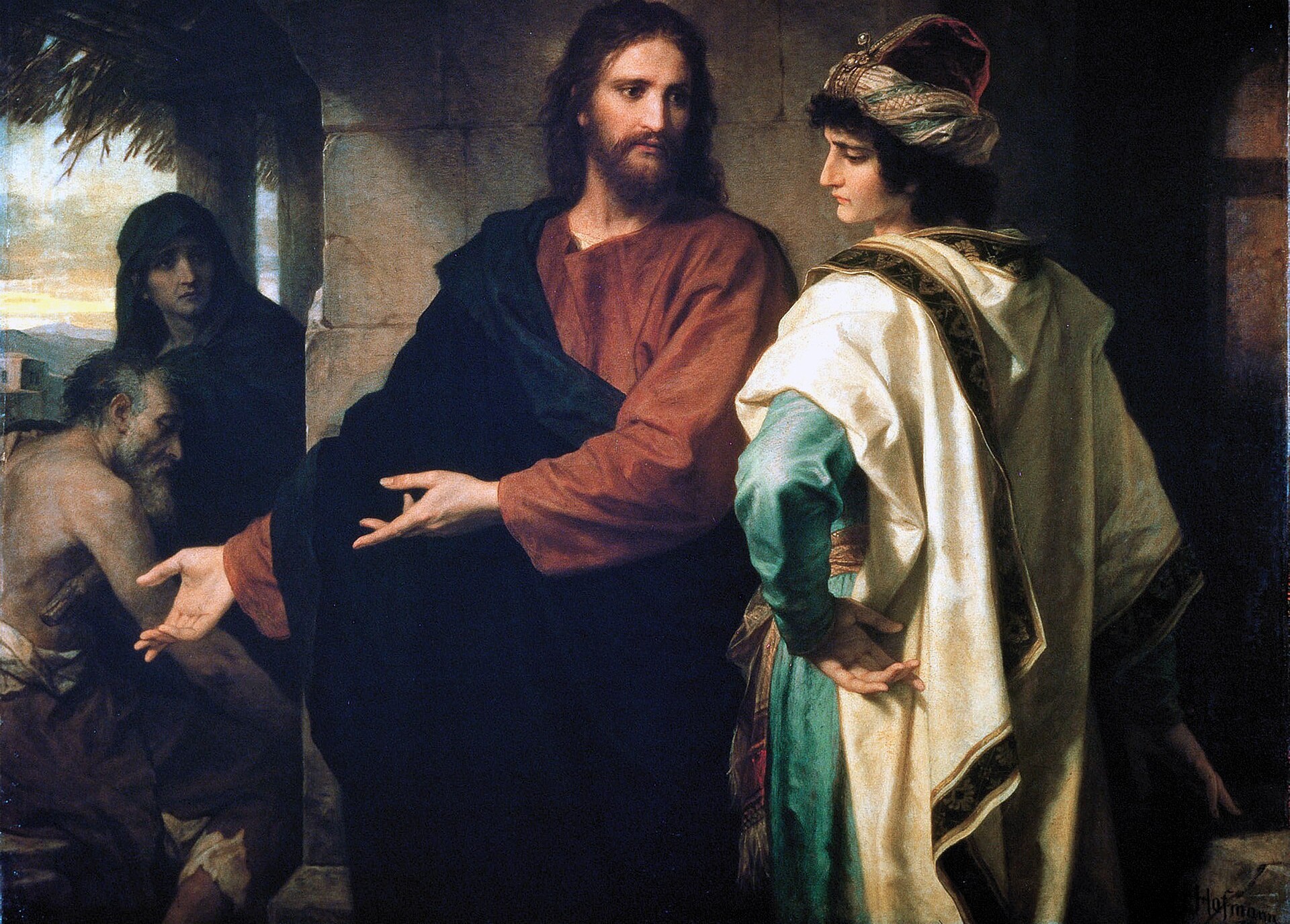
When a man asked what he must do to gain everlasting life, Jesus answered by quoting from these commandments. Moreover, he unfolded all their demands, as we hear in the Gospel reading.
However, Jesus also revealed their purpose: to teach us to love. Asked which law was the greatest, he replied, “You shall love the Lord your God with your whole heart, with your whole soul, and with all your mind”; and the second greatest, he said, is like it: “You shall love your neighbour as yourself.”
These words, spoken by Jesus, empower us to obey the commandments, just as his words to the paralytic empowered the man to pick up his mat and walk. “If you choose, you can keep the commandments,” we hear in the first reading.
The Ten Commandments are binding: no one can change them or excuse us from obeying them. They apply always, everywhere, and to everyone, Catholic or non-Catholic.
We sometimes feel that universal obedience to the commandments — often disparaged as “blind” — is beneath our dignity. We even suspect that disobedience “is part of being truly human,” said Pope Benedict XVI; “that only thus can we be fully ourselves.” We think we need evil, “at least a little, in order to experience the fullness of being,” and so we keep “a little freedom against God.”
We sometimes resent the commandments, like teenagers who see a speed limit as an arbitrary restriction on their freedom, not realizing that its purpose is to make travel as quick and safe as possible.
“You puzzle me,” someone told me once. “On the surface, you uphold Church teaching, but underneath, you really are compassionate.” He could not see that I uphold Church teaching because of my compassion, not in spite of it.
The truth is that we are “blessed,” for “what pleases God is known to us!” as the prophet Baruch said.
The commandments are God’s gift to us. They tell us how to be free, rather than slaves to sin; how to live a fully human life, in friendship with God and harmony with our neighbours. They make it possible for us to enjoy God’s creation to the full, as God intended.
Accordingly, obedience is our proper response. In fact, Pope Benedict said, obedience makes our lives “broad and light, not boring but filled with infinite surprises, for God’s infinite goodness is never depleted!”
Father Hawkswell is again teaching The Catholic Faith in Plain English with new insights, in print and YouTube form at beholdvancouver.org/catholic-faith-course. He is also teaching the course in person on Sundays (2–4 p.m. at the John Paul II Pastoral Centre, 4885 Saint John Paul II Way, 33rd Avenue and Willow Street, Vancouver) and Mondays (10 a.m.–noon in St. Anthony’s Church Hall, 2347 Inglewood Avenue, West Vancouver). The title of next week’s talk is Divisions Among Christians.
Your voice matters! Join the conversation by submitting a Letter to the Editor here.







