


5th Sunday of Ordinary Time, Year A
First Reading: Is 58:6-10
Second Reading: 1 Cor 2:1-5
Gospel Reading: Jn 8:12
“You are the salt of the earth,” Jesus told his disciples, “but if salt has lost its taste, how can its saltiness be restored?”
God became man to free us from slavery to the devil, through whom death had entered the world, and to bring us supernatural life. “I came that they might have life, and have it to the full,” he said.
Jesus himself has supernatural life, divine life, God’s life, by nature, because he is begotten by God the Father, who himself has this life by nature. We, who do not have this life by nature, can get it from him by becoming a member of his mystical body, or by being grafted on to him like a branch on to a vine.
That is what happened at our baptism, by the power of God: we were regenerated, or reborn, with supernatural life. Since then, Jesus has nourished this life with his body and blood.
However, we still suffer concupiscence: the disorder and rebellion among our natural powers that we inherit from Adam and Eve. We do not have the integrity, or wholeness, that they had before their fall; we are fragmented, for our natural desires war with our supernatural desires and even among themselves.
In our struggle to keep our supernatural life healthy, we sometimes fall. Then we have to make a sacramental confession: acknowledge what we have done wrong, tell God we are sorry, promise not to do it again, and make reparation, as far as we can. We also have to nourish our supernatural life by receiving communion frequently.
However, it is not good to eat heavily without exercising. If we do not seriously exercise our supernatural life, it will fall ill and die.
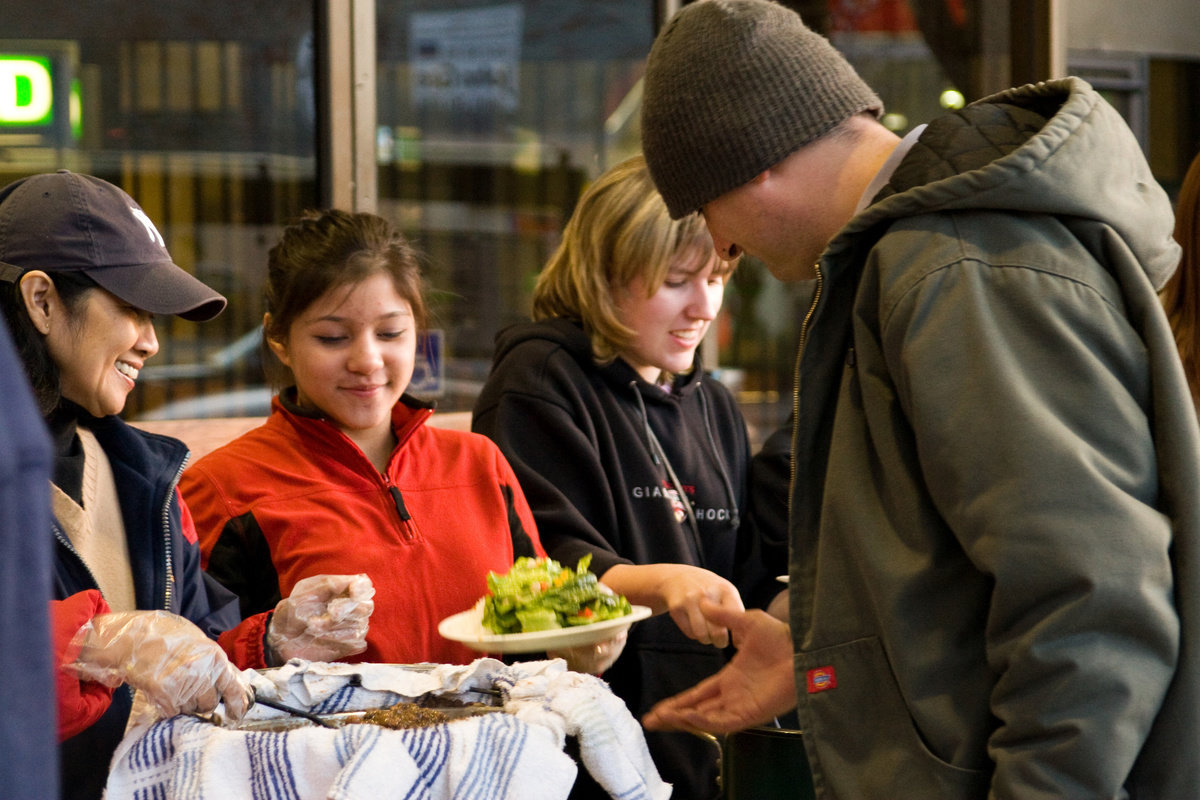
This Sunday’s first reading outlines some of the things we have to do: “to loose the bonds of injustice, to undo the thongs of the yoke, to let the oppressed go free, and to break every yoke.” We must also share our bread with the hungry, shelter the homeless poor, cover the naked, and refrain from speaking evil and judging others.
Then our “light shall break forth like the dawn,” and our “healing shall spring up quickly”; our “vindicator” shall go before us, “the glory of the Lord” shall be our rearguard. Then we can call, and the Lord will answer; we can cry for help, and he will say, “Here I am.”
Then, by the power of God, we will be able to co-operate (“work together”) with Christ in the salvation of the world: in our own flesh we will “fill up what is lacking in the sufferings of Christ for the sake of his body, the Church,” as St. Paul said. Then we will share in Christ’s light so as to become, with him, the light of the world.
If anyone asks us the reason for our faith and hope, we should always be ready to reply, St. Peter said. That means that we should know what we believe. We should study it so as to know it better.
However, ultimately, our faith rests not on human wisdom, but on the power of God, St. Paul says in this Sunday’s second reading. If we remain members of Christ’s mystical body, attached to him like branches to a vine, we will convince the world “not with plausible words of wisdom, but with a demonstration of the [Holy] Spirit and of power.”
Accordingly, we need not hesitate to “let our light shine” before others; we need not apologize for asserting the truth. We are the salt the world lacks.
Our witness “makes an extraordinarily valuable contribution” to society, Pope St. John Paul II said in his encyclical Veritatis Splendor (“The Splendour of Truth”), for it helps to ward off “a headlong plunge into the most dangerous crisis” which can afflict the world: namely a “confusion between good and evil.”
Father Hawkswell is again teaching The Catholic Faith in Plain English with new insights, in print and YouTube form at beholdvancouver.org/catholic-faith-course. He is also teaching the course in person on Sundays (2–4 p.m. at the John Paul II Pastoral Centre, 4885 Saint John Paul II Way, 33rd Avenue and Willow Street, Vancouver) and Mondays (10 a.m.–noon in St. Anthony’s Church Hall, 2347 Inglewood Avenue, West Vancouver). The title of next week’s talk is Death and the End of the World.
Your voice matters! Join the conversation by submitting a Letter to the Editor here.







