


A colleague and I recently chatted about the “lows” of the post-Christmas season. We had both taken down our Christmas decorations and were discussing the ways in which our energy and moods can easily be affected by this time of year. For those with Seasonal Affective Disorder, the lack of daylight and sunlight in winter can be unbearable. I think that most people, however, are affected on various levels by the post-Christmas blues.
When daylight hours begin to decrease in fall, Christmas lights soon begin to appear in neighbourhoods and homes. The music we hear in stores and on radio stations becomes brighter, and no matter what lows we face in our lives, we tend to recognize little signs of hope in tangible ways. As people of faith, we likewise recognize the reality of Advent. We live life preparing for Christ’s second coming, just as our ancestors waited in darkness for the Light of salvation.
By contrast, after Christmas, as the twinkling lights dim and eventually extinguish, and Ordinary Time resumes, signs of hope are not as obvious. Schedules resume, bills need to be paid, inclement weather can force us to remain indoors longer than preferred, and the consequences of cheese and chocolate consumed over the holidays can make us feel uncomfortable in our own skin. Moreover, the world around us is physically colder and darker as we enter the depths of winter.
During the Christmas season, we ponder the fact that God entered our world in the humblest of circumstances. he took on a human body and the suffering accompanying the human experience. Additionally, he was born in a lowly stable and lived the modest life of a carpenter. Then, even though he is God, Jesus was baptized.
On the Feast of the Baptism of the Lord, Bishop Robert Barron clarified that the Jordan is not a pristine body of water. It is a muddy, roiling river. Chris Stefanick also highlighted the fact that the Jordan River, where John the Baptist was at work, is the lowest point in the world. God Incarnate, once born in a tiny town and laid to rest in a trough used for animals, went to a muddy river at the lowest point on earth to invite us into relationship.
Bishop Barron reflected on the fact that a mechanic cannot fix a car by looking at it, nor can a surgeon heal an organ by merely glancing at a person on the outside. A mechanic must bend down and go under a car regardless of the grease and struggle that may ensue, and a doctor must go beneath the surface of a body, entering the blood and mess of surgery to help a patient. Similarly, God needed to enter the world – in its messiness and at its lowest points – to save us.
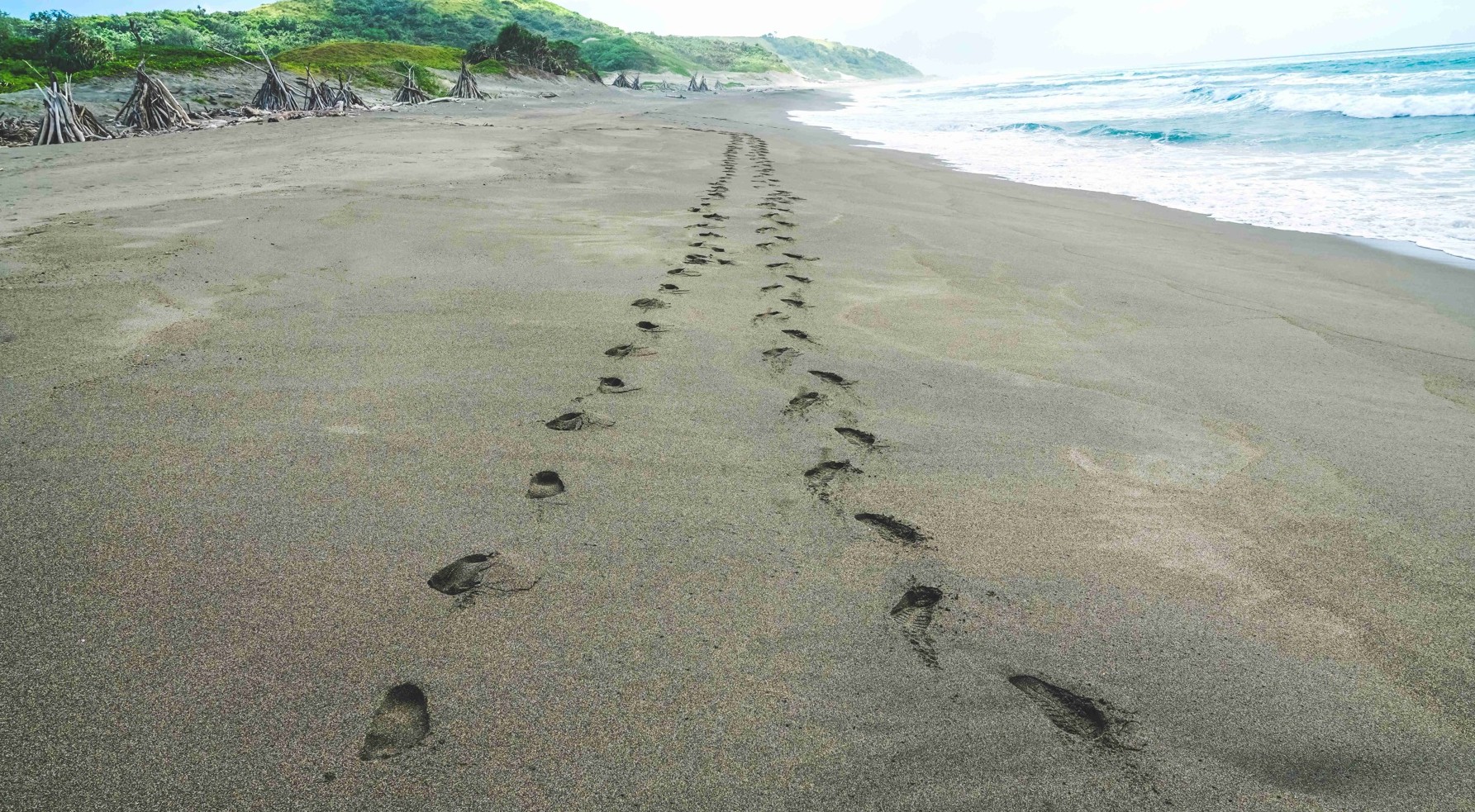
At this time of year, I love to revisit the poem my teacher shared with our class when we left elementary school. Often titled Footprints in the Sand, this familiar piece has appeared in different versions, sometimes attributed to Mary Stevenson and other times credited to Margaret Fishback Powers. Regardless of the source, it writing reminds us that God is there in our low points. It ends with the words of the Lord: “When you saw only one set of footprints, it was then that I carried you.”
These early weeks of Ordinary Time are low in light, energy, and spirit. It is in these times, however, that God is most present. In the darkness, the mud, the mire, and our lowest lows, Jesus doesn’t always simply walk beside us. Sometimes, he carries us.
Your voice matters! Join the conversation by submitting a Letter to the Editor here.







