

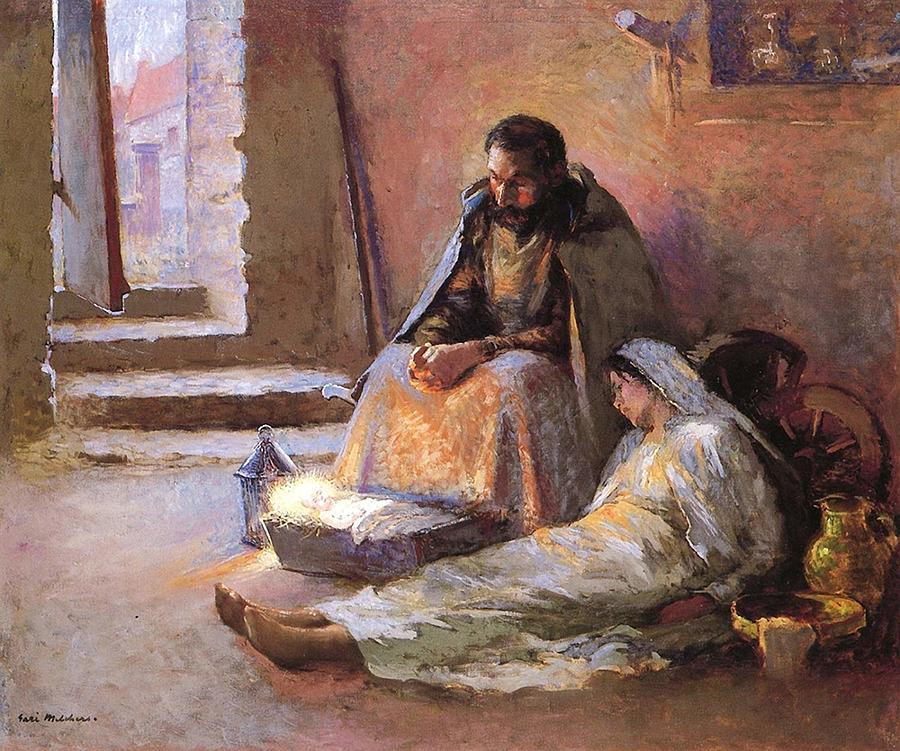

In our Catholic Church, we are blessed with seasons. Unlike in the secular world (where Christmas begins in the weeks of Advent and then basically becomes a one-day, food-present-decoration extravaganza), for Catholics, Christmas endures.
Part of our celebrations include the Christmas Octave, as we continue to celebrate the feast of Christmas for eight days, from Christmas Day until the Solemnity of Mary, the Mother of God on New Year’s Day.
We also have the season of Christmas which begins with our vigil Masses on Christmas Eve and ends with the Feast of the Baptism of the Lord, this year on Sunday, Jan. 11. After this time, we resume Ordinary Time until the season of Lent.
As I have mentioned before however Ordinary Time can never truly be ordinary in terms of the common definitions of this word. How can one who has considered and celebrated the coming of a Saviour into the world ever look at anything in life as commonplace or regular ever again?
As writer Megan Hjelmstad reflects, “The Word made flesh – he is truly here, among us. The whole light of heaven, contained in one tiny Person. The Author of the eternal, now robed in the finite. He takes on our limited flesh, that we might be clothed in his expansive divinity. He submits to mortality, that we might gain eternal life. He allows himself to cry human tears, that we might experience heavenly joy. He leaves the vastness of paradise for earthly exile, to lead us out of exile – and show us the way himself. He lights up every darkness, and even the darkest shadows quake.”
On Christmas Eve our homilist Father John Kuriakose reflected on the fact that many people think they have to fix their lives to be worthy of God. Indeed during seasons such as Advent we focus on preparing for the second coming and making our hearts as ready as possible for Jesus. Yet, God entered a dark and troubled world in a messy stable, and in doing so, he showed us that he is willing to enter the messiness of our broken, sinful lives.
Will we ever be worthy of God? No. God has bestowed upon us the gift of eternal life through Jesus’ birth, life, death and resurrection, but he entered the world as a vulnerable baby so that we would not be afraid of him, in our unworthiness. As a tiny baby, we can accept and adore Emmanuel: God with us.
On the Feast of the Holy Family, Bishop Barron reminded us that the swaddling clothes foreshadowed burial cloths, and the manger – a trough for livestock – was the bed for the One who would be slaughtered and become the Eucharistic Mass for the entire world. At Christmas and always, we must recall these humble beginnings and how the story unfolded, allowing that Child to be born in our hearts every single day.
As Chris Stefanick writes, “If you want to prepare room in your life for Jesus, some of the things in your life have to be cleared out. That means change. Repentance. Conversion … ‘For God did not send his Son to condemn the world but to save the world’ (Jn 3:17).” Let us continue to work on repenting and changing ourselves to live as Christian witnesses.
God came as a tiny, vulnerable infant because babies are not intimidating. Babies need us, and God wants us to admit our need of him, too. God gives us everything and paid the ultimate price for our salvation. This love does not only present itself in our Christmas celebrations; it exists continually, and must show forth in our daily lives and actions.
To spread the true Light of Christmas, we must give thanks for the length of the season and then embody Christmas joy, long after the decorations are put away. We must actively make room for Jesus to live permanently within our hearts, for as Venerable Archbishop Fulton J. Sheen once stated, “… when finally the scrolls of history are completed down to the last word of time, the saddest line of all will be: ‘There was no room in the inn.’”
Your voice matters! Join the conversation by submitting a Letter to the Editor here.







