


“Bible reading is an education in itself.” — Alfred, Lord Tennyson
The Bible may be without error, but that didn’t prevent nine mistakes from finding their way into the Saint John’s Bible — a masterpiece 12 years in the making.
But its creators simply handled the errata with a nod to tradition, echoing the medieval monks who corrected slips not by hiding them but by illuminating them with playful marginalia: a bird here, a bee there, even a lemur tugging a missing line back into place.
Those nine tiny blunders aren’t flaws so much as fingerprints — reminders that while Scripture is flawless, its transcription is the work of human hands, with all the gifts and limitations that brings. And that very humanity is part of what makes the Saint John’s Bible so beloved wherever it travels.
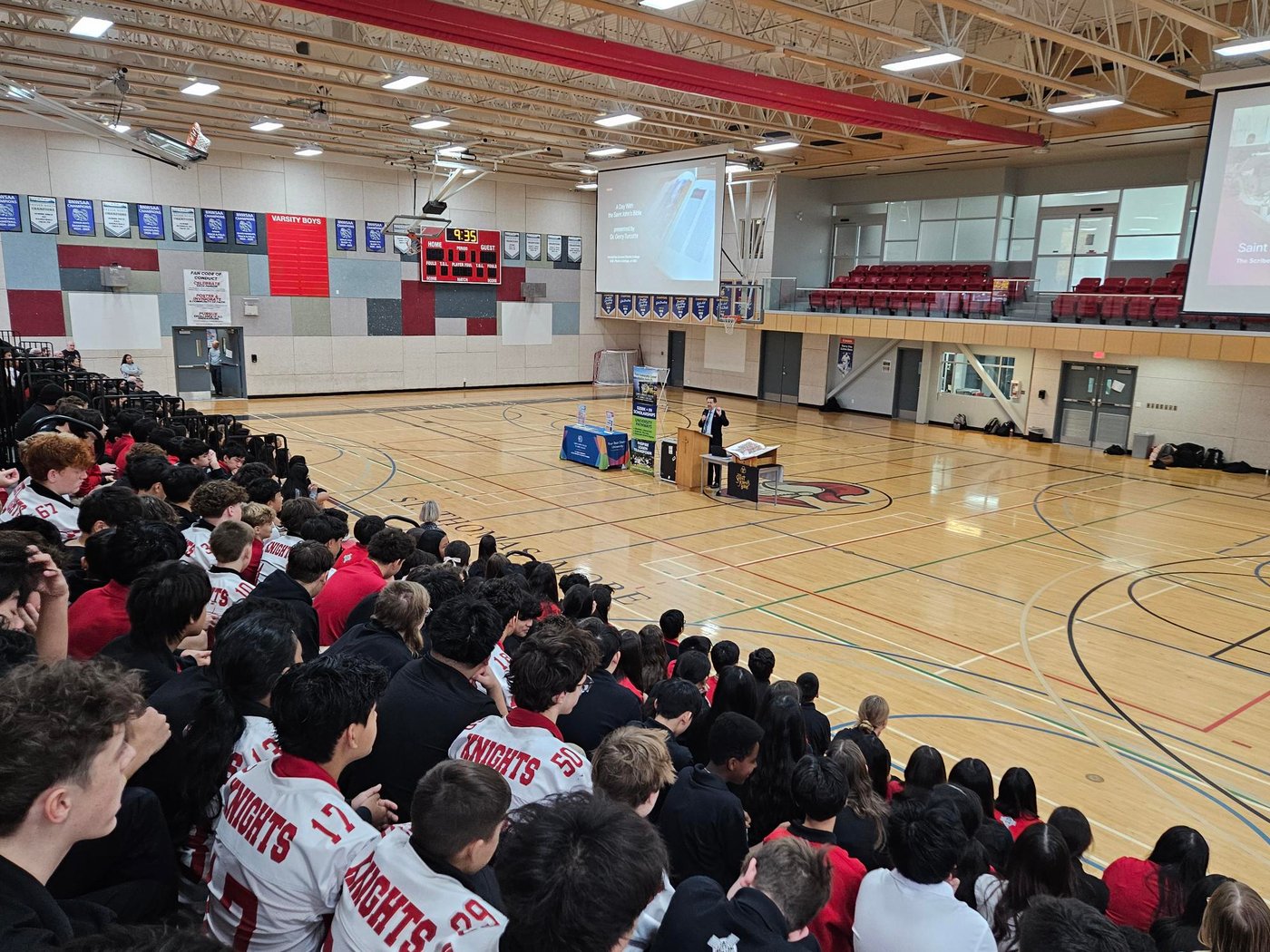
This fall, coinciding with St. Mark’s College’s 70th anniversary and Corpus Christi College’s 25th, the colleges hosted one of the Bible’s most sought-after volumes — Gospels and Acts — for a three-month residency.
On Sept. 17, the colleges marked its arrival with an event featuring Brad Neary, director of The Saint John’s Bible project, who captivated a large audience of students, faculty, and community members with the story of the Bible’s remarkable creation.
As someone who has worked with the Saint John’s Bible for well over a decade and with virtually all its scribes and artists, one of my favourite roles has been taking the volume out into the community: schools, parishes, and gatherings large and small. By the end of its time with us, I had presented the Bible up close to more than 800 people across some 70 individual showings.
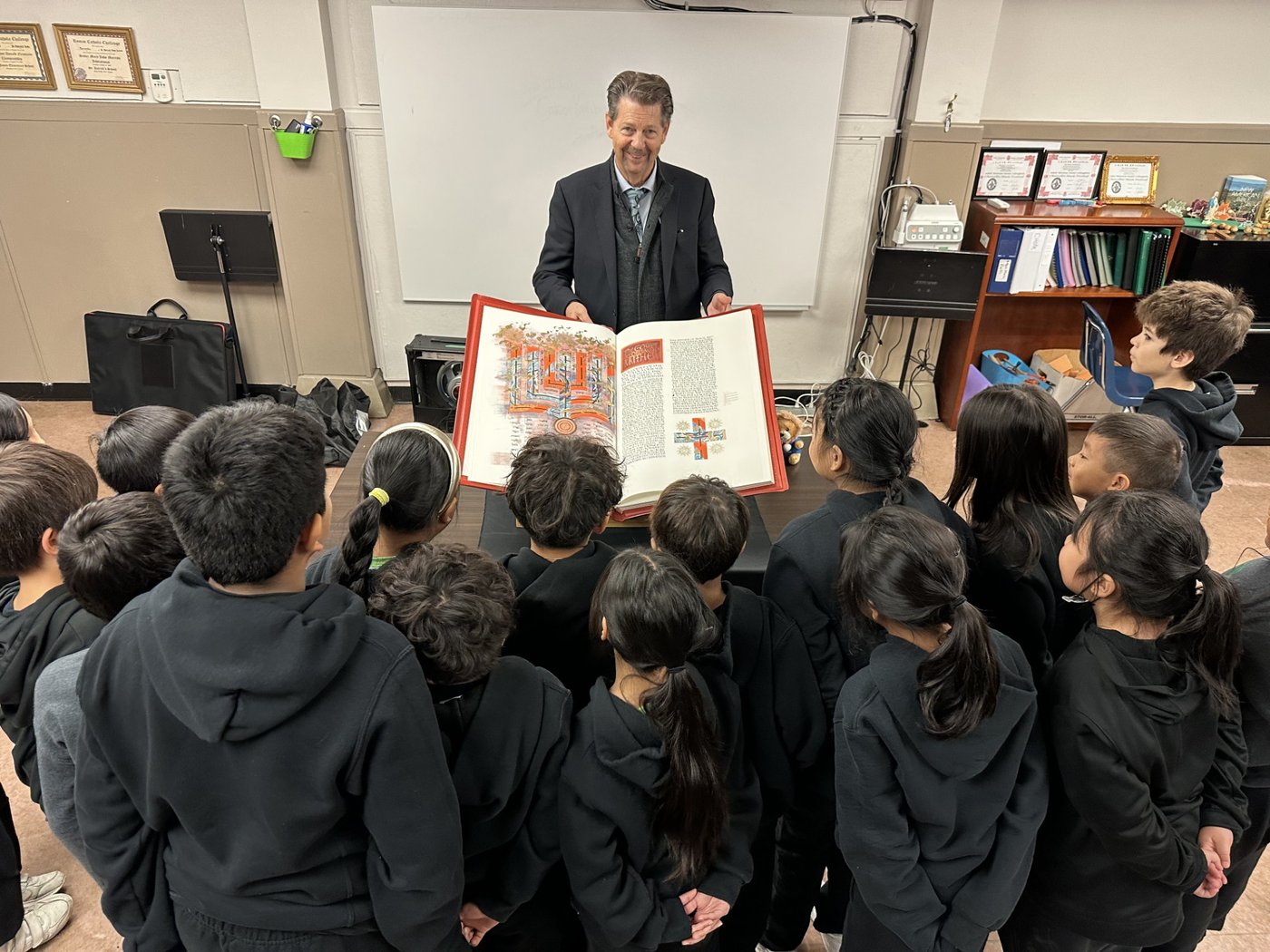
These visits included everything from kindergarten and primary classrooms at St. Patrick’s Elementary, to senior high students at St. Thomas More Collegiate and St. Thomas Aquinas; Grade 8 and 12 classes at Little Flower Academy and Notre Dame; and staff and students at John Paul II Academy. Virtually all religious education students at Vancouver College — along with their teachers and staff — also had the chance to encounter the volume.
Parishes welcomed it warmly as well, especially St. Matthew’s in Surrey, St. Mary’s in Vancouver, and a closing presentation to the Catholic Women’s League at St. Peter’s in New Westminster.
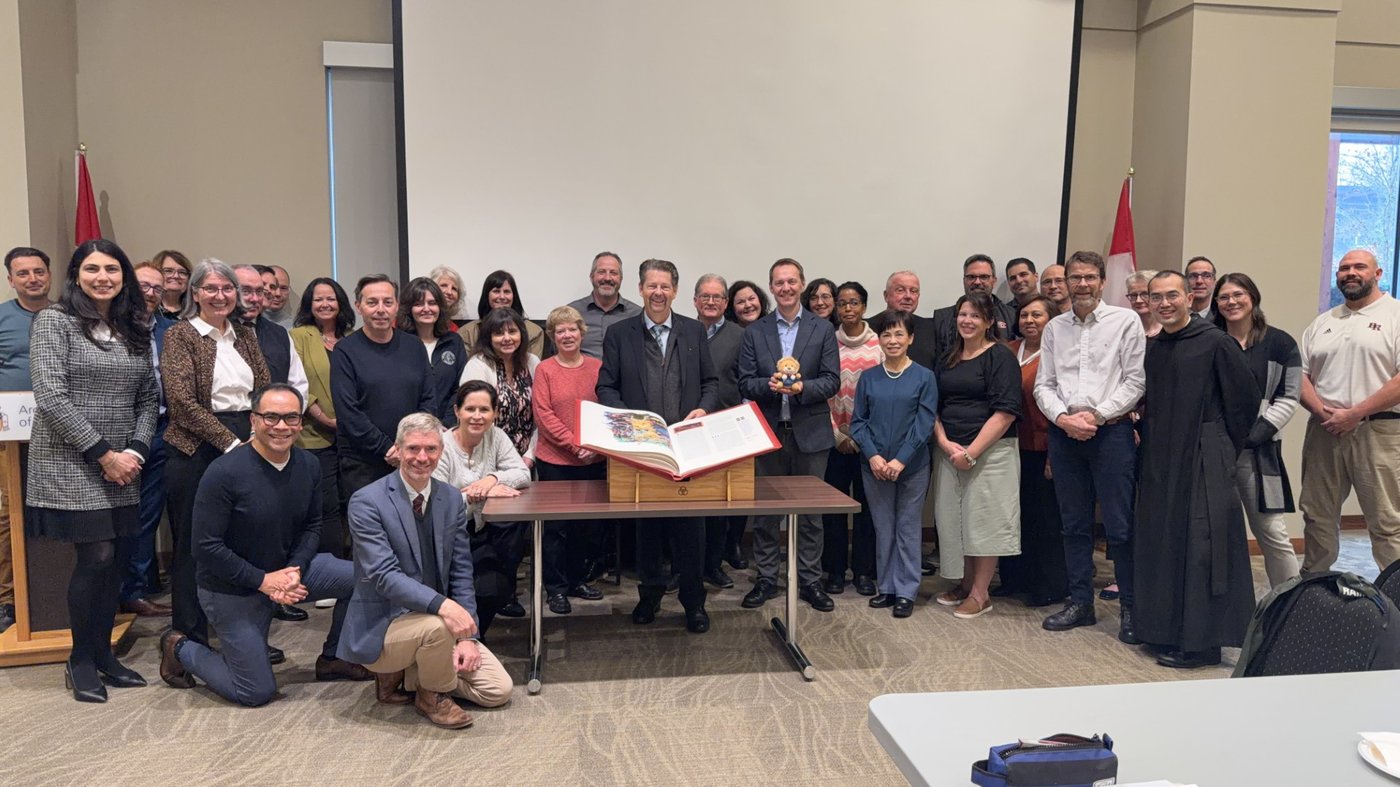
The Bible visited the JPII Centre twice: first for Archdiocesan staff, then for Catholic principals at a regular meeting. On campus, it was presented to graduates of St. Mark’s College’s graduate school of education and to parishioners of St. Mark’s Parish.
Handwritten in seven volumes under the artistic direction of Donald Jackson — one of the world’s greatest calligraphers and former Senior Scribe to Her Majesty Queen Elizabeth’s Crown Office — the Saint John’s Bible brought together some of the most remarkable artists working today.
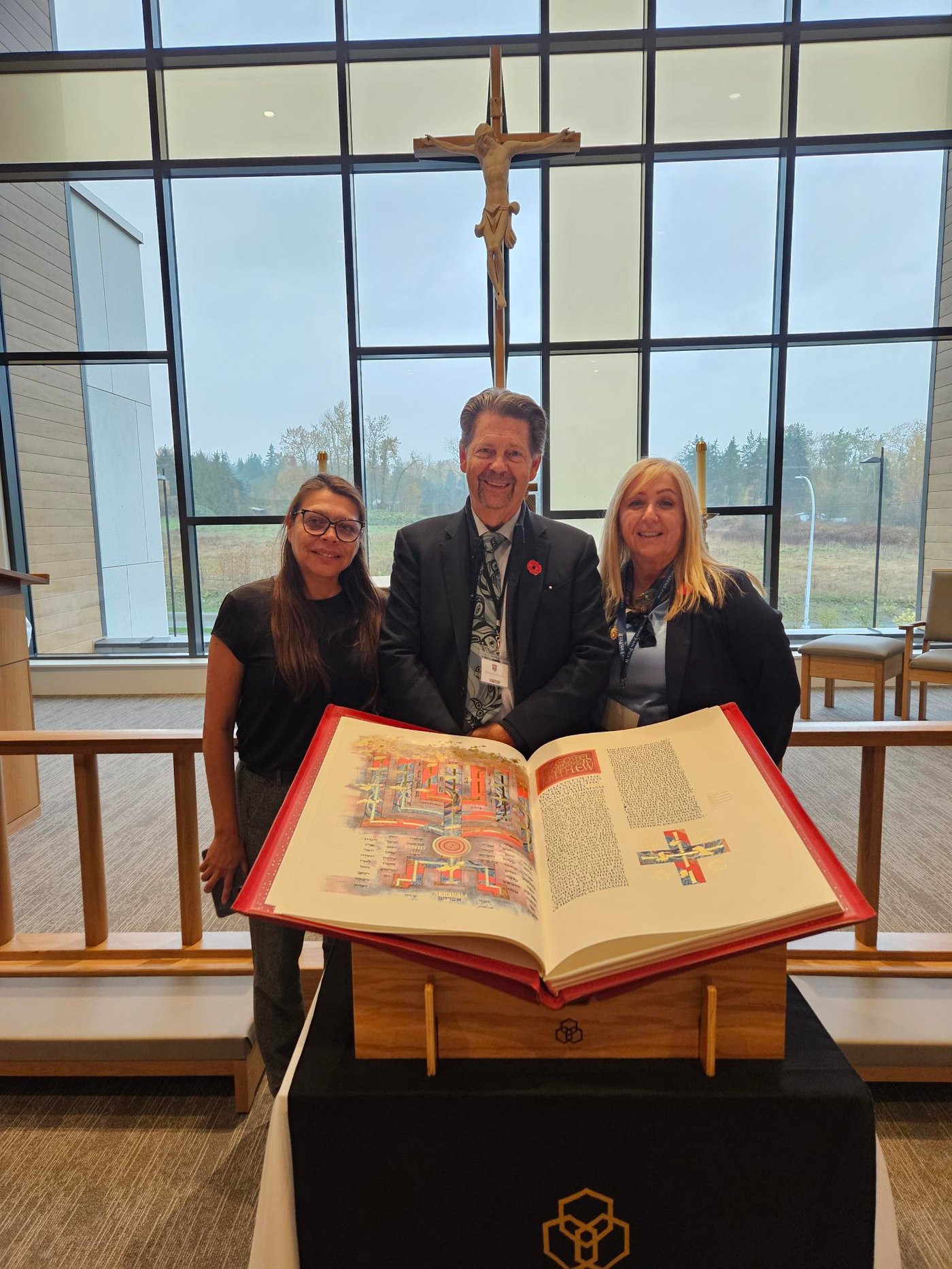
The original manuscript, commissioned by Saint John’s University in Minnesota, is written on vellum. Only 299 fine-art facsimiles were produced, each hand-finished with gold and platinum leaf, ensuring no two copies — each more than three feet tall and two feet wide — are exactly alike.
While the importance of the Bible for Christian and non-Christian communities alike cannot be overstated, the Saint John’s Bible is distinctive because of its size, scope, and accessibility. Unlike the Book of Kells, it is meant to be seen in bright light, experienced up close, and appreciated as a living testament to the word of God.
Significant translations of Scripture through the centuries have shaped human art, writing, and culture. Some were masterpieces; others were less successful. The infamous “Wicked Bible” of 1631, riddled with printing errors, rendered one of the commandments as “Thou shalt commit adultery.” The printers were fined and stripped of their licence — a reminder that human hands have always hovered perilously close to holy text.
When Pope Benedict XVI was presented with the Saint John’s Bible, he said: “This is a work of art, a great work of art … a work for eternity.”
Bringing together all 73 books of the Old and New Testaments, based on the New Revised Standard Version, the Saint John’s Bible does more than illuminate Scripture. It brings people together. Through that encounter, it fosters grace, wonder, and a sense of communion for all concerned and for all eternity, errors and all.
Dr. Gerry Turcotte is principal of St. Mark’s College and Corpus Christi College at the University of British Columbia.
Your voice matters! Join the conversation by submitting a Letter to the Editor here.







