

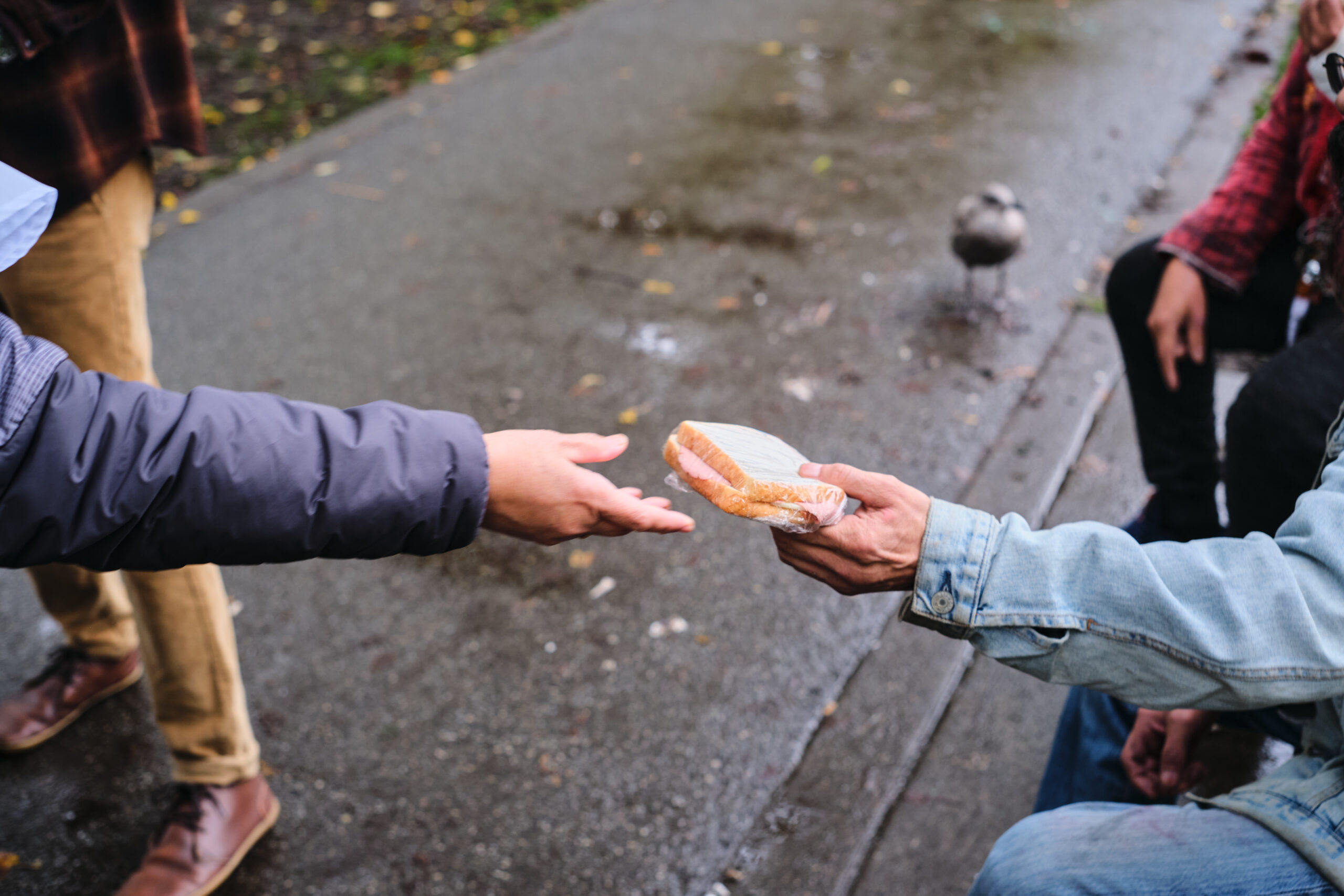

This is an excerpt from Our Daily Bread: Food Security and the Call to Solidarity, a pastoral letter released on Nov. 16, 2025, World Day of the Poor, by the Canadian Conference of Catholic Bishops through its Episcopal Commission for Justice and Peace. The letter reflects on food security as a Gospel-rooted call to solidarity and shared responsibility for “our daily bread” amid rising food insecurity in Canada and what UN agencies describe as the largest global food crisis in modern history.
Solidarity “is a firm and persevering determination to commit oneself to the common good. That is to say to the good of all and of each individual, because we are all really responsible for all.”
It means living in supportive communion with our neighbours and in harmony with all creation, co-operating with the graces and gifts given abundantly by our Creator. Yet, sadly, it is not difficult to observe today that too often the garden of the Creator and the fruit of the earth, our daily bread, are wasted, trampled, and even stolen from the mouths of children by a consumer culture with a throwaway mentality.
As Pope Francis said in 2014 in his address to the participants in the World Meeting of Popular Movements:
“[Solidarity] is a word that means much more than an occasional gesture of generosity. It means thinking and acting in terms of community. It means that the lives of all take priority over the appropriation of goods by a few. It also means fighting against the structural causes of poverty and inequality; of the lack of work, land and housing; and of the denial of social and labour rights. It means confronting the destructive effects of the empire of money: forced dislocation, painful emigration, human trafficking, drugs, war, violence and all those realities that many of you suffer and that we are all called upon to transform.”
When it comes to food security, the change we may be called to can take different forms. One example could be simplifying our food purchases or consumption and reducing food waste so that others may eat.
We could also choose locally grown produce rather than more exotic fruits and vegetables.
We can also envision changes to government policy for the common good of food security that would help to give all fellow citizens the basic ability to have their daily bread. These could include taking measures to assure a just living wage to afford the increased cost of food, not forgetting the vital necessity for the farmers, fishers, and others who produce the food.
According to PROOF, an interdisciplinary research program based at the University of Toronto that studies effective policy approaches to reduce food insecurity:
“Research has repeatedly shown that household food insecurity can be reduced by policy interventions that improve the financial circumstances of households at the bottom of the income spectrum. When food-insecure households receive additional income, they spend it in ways that improve their food security.”
Food security for many in our country is made more difficult by the related problem of housing affordability. Both of these challenges are directly connected to the concept of what the social doctrine of the Church calls a “just wage,” as St. John Paul II clearly states in his 1981 encyclical Laborem Exercens:
“A just wage is the concrete means of verifying the justice of the whole socioeconomic system and, in any case, of checking that it is functioning justly. It is not the only means of checking, but it is a particularly important one and, in a sense, the key means.”
At the international level, we can see that when food security is lost, there is often a lack of peace and stability, the growth of war and conflict, and an escalation of the arms trade. When human actions lead to the desertification of certain parts of the earth, the destruction of the biodiversity of an area due to unsustainable forestry practices, or mega-projects of resource extraction or power production, the result is often conflict and an increase in displaced persons, migrants, and refugees.
As Pope Francis said in 2023 in his greeting to participants in an international conference on food security:
“This challenge is a pressing one, as all too often situations marked by natural disasters, as well as by armed conflict, … political or economic corruption and exploitation of the earth, our common home, hinder food production, undermine the resilience of agricultural systems and dangerously threaten the nutritional supply of entire populations.”
Many Indigenous people in Canada and throughout the world still obtain a significant portion of their diet directly from the land. For them, food security is directly linked to their ability to access their lands and waters, which provide sustenance and well-being.
Factors such as climate change and industrial development have the potential to disrupt the delicate balance that provides food security for people whose existence is directly interconnected with where they live on the land.
Your voice matters! Join the conversation by submitting a Letter to the Editor here.







