


4th
Sunday of Advent, Year B
First
Reading: 2 Sm
7:1-5, 8b-12, 14a, 16
Second
Reading: Rom
16:25-27
Gospel
Reading: Lk
1:26-38
In this Sunday’s liturgy, we hear how King David plans to build a house for God. It seems like a good idea, and the prophet Nathan supports him.
However, God rebukes them for their presumption. “You propose to make a place among you for me?” he says, in effect. “On the contrary, it is I who have made a place in the world for you.”
God is “almighty in Heaven and on earth” because he made them, says the Catechism of the Catholic Church. He is “lord of the universe, whose order he established and which remains wholly subject to him and at his disposal;” he is “master of history, governing hearts and events in keeping with his will.” How can we humans, who are things he has made, like everything else in the universe, presume to offer him a place in his own creation?
Nevertheless, this same God actually asked Mary to make a place for him in her body. “O virgin mother of God, the universe cannot hold him, and yet, becoming man, he confined himself in your womb,” the Church marvels in one of her prayers.
For much of his life, however, Jesus had no place of his own. When he was born, Mary had to lay him “in a manger,” in a stable, “because there was no room for them in the place where travellers lodged.” Jesus himself said, “Foxes have lairs, the birds in the sky have nests, but the Son of Man has nowhere to lay his head.” His own people had no place for him in their society, their religion, or their hearts. He even had to be buried in a borrowed tomb.
God, who made the world and everything in it, could not find a place in the world when he came down into it as a man. “To his own he came, yet his own did not accept him,” St. John says.
God wants to be our guest. The place he wants us to prepare for him is our hearts. Our hearts are “the “place of truth, where we choose life or death,” the “place of encounter” with God, the Catechism says.
“Anyone who loves me will be true to my word, and my Father will love him; we will come to him and make our dwelling place with him,” Jesus promised. “Here I stand, knocking at the door,” God says. “If anyone hears me calling and opens the door, I will enter his house and have supper with him, and he with me.”
“When has Jesus ever knocked at our door and asked to be our guest?” we ask, like the people in the parable. The answer is the same as the one they got: as often as anyone, even the least among us, has done it, Jesus has done it.
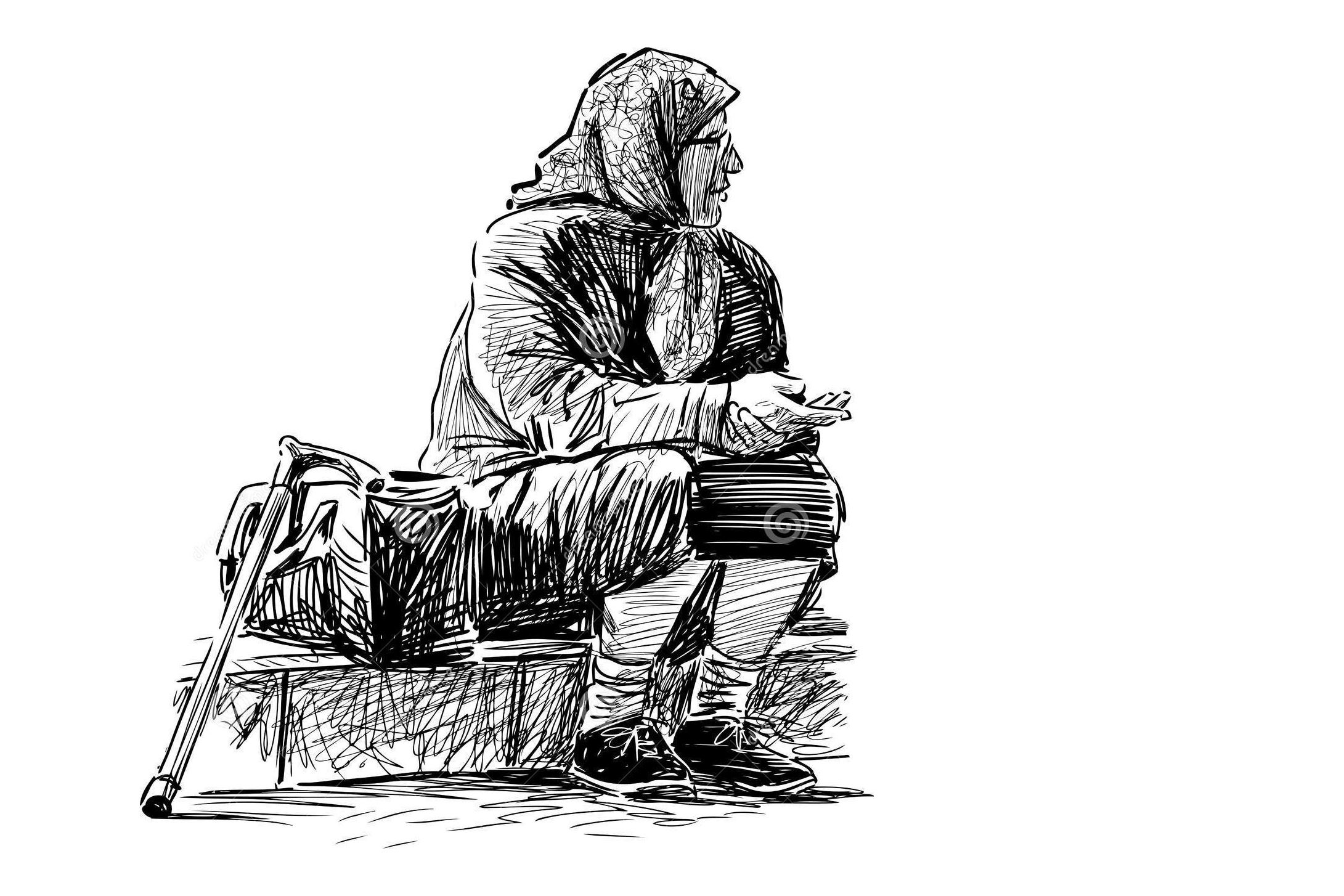
There are many people among us who have no place in the world. Nowadays we called them “marginalized.” By giving them a place in our hearts, in our homes, or at our tables, especially at Christmas, we give Christ a place in our hearts, as Mary gave him a place in her womb. Both require what St. Paul calls “the obedience of faith.”
“Only faith can embrace the mysterious ways of God’s almighty power,” the Catechism says. “This faith glories in its weakness in order to draw to itself Christ’s power. The Virgin Mary is the supreme model of this faith, for she believed ‘nothing will be impossible with God’ and was able to magnify the Lord: ‘For he who is mighty has done great things for me, and holy is his name.’”
We have only one day left to prepare for Christ at Christmas, but it is not too late. In the words of the hymn: “Make your house fair as you are able; trim the hearth, and set the table; love, the guest, is on the way.”







