


By Monica Perry
Special to The
B.C. Catholic
All good teachers use analogies to drive their lessons home. They use the familiar to teach the unfamiliar.
Because the more difficult realities are often beyond our experience, a good teacher casts about for common things within a student’s experience which are “kind of like” the more difficult realities he or she is trying to teach.
Analogies are comparisons which are useful, but not perfect. At a certain point, all analogies break down.
Jesus did not use analogies, but parables.
What is the difference?
As the word suggests, parables are also comparisons. In one parable, Jesus compares himself to a vine. In another, he compares his Kingdom to a mustard seed, etc.
But Jesus is a teacher who “taught with authority.” He was not casting about for things that were “kind of like” the lessons he wished us to learn. He was the author of the very things to which he compared himself and his kingdom.
Jesus created the grapevine, and the mustard seed, and sheep, and all the other natural objects referenced in his parables. From all eternity, he planned and designed these things to reflect greater realities.
Jesus is the teacher who came before the lessons to be taught; “Through him all things were made; without him nothing was made that has been made.”
To unpack the parables of Jesus, it is therefore helpful to have firsthand experience of God’s creation. Jesus said, “I am the vine, and you are the branches, he who abides in me, he it is who bears much fruit.” Therefore, to know about grapevines – what makes their branches flourish and bear much fruit – is to know something of God and what our relationship with him should be.
Unlike analogies, parables don’t break down. Reflecting on God’s creation can only lead us to God. It will never lead us away from him. On the contrary, the more we reflect on the parables, the deeper we are drawn into the mystery of God.
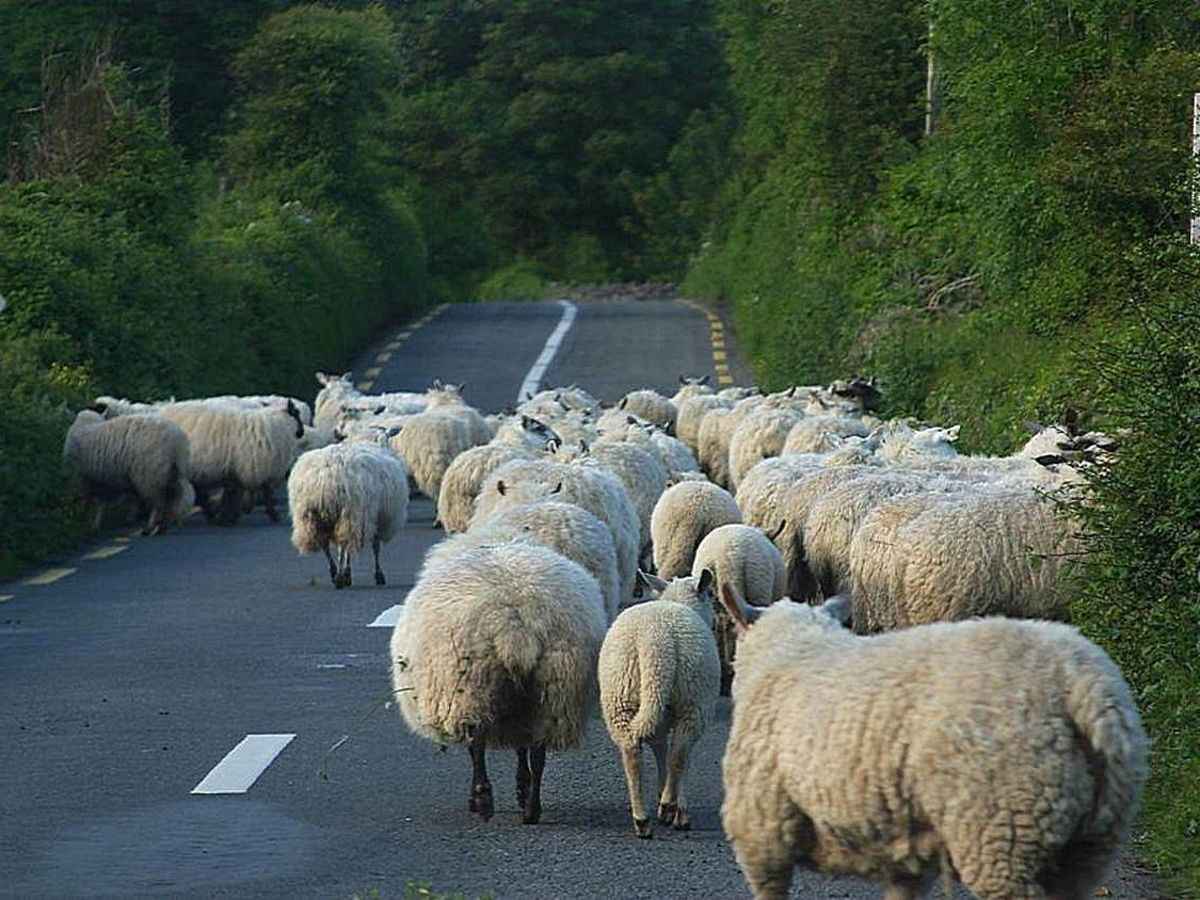
Good Shepherd Sunday (April 22 this year) gets its name from the parable of the same name which is the subject of the day’s Gospel. In anticipation of this day, dedicated to this most beloved of Christ’s parables, it seems important to learn something about … sheep.
The people to whom Jesus first proclaimed this parable probably knew a lot about sheep. The little I know has come to me second-hand from the internet and from my sister-in-law who has kept both sheep and goats.
Sheep are gregarious. This doesn’t mean that they are fun at parties, but that they thrive better when they are in a group.
Sheep have a strong flocking tendency. On one website, www.raisingsheep.org, I read that when they are kept in a good number (four or more), “they exhibit flocking dynamics which make them easier to control or when herding.” In other words, the more sheep that go one way, the more likelihood that all of them will go the same way. Interesting.
When the number of sheep dwindles below four, the same website says that this flocking behaviour may be lost and the sheep become more difficult to herd. A sheep-herding dog may then be necessary to keep the sheep in sight. Left to themselves, sheep go madly off in all directions.
Sheep need only one food: grass. If the pasture is lush and green, it may also contain all the water the sheep need. They shall not want.
“Sheep prefer a clear path,” the website says, “They do not respond well to barriers.” This is a nice way of saying that sheep are kind of lazy. To coax them on, the shepherd needs to remove the rocks in their way. He will have a hard time getting them to go over them.
Sheep are easily distracted. If they see a reflection of their shepherd, they may follow it instead. I’m not making this up.
And finally, from my sister-in-law: “Goats are intelligent, curious. Sheep run when spooked. Goats will run too, but they have a herd queen who will oppose the predator. Sheep are dumb.”
It is fairly evident that sheep need shepherds who know their sheep and how to look after them.
Good Shepherd Sunday is also World Day of Prayer for Vocations.
We, like sheep, have gone astray.
We need good shepherds. Don’t forget to pray for them.
(For prayer initiatives surrounding this year’s World Day of Prayer for Vocations, please visit www.vocationsvancouver.ca There will also be a special collection in all parishes April 22 to support the work of the RCAV Vocations and Seminarians Office.)







