


6th Sunday of Ordinary Time, Year A
First Reading: Sir 15:15-20
Second Reading: 1 Cor 2:6-10
Gospel Reading: Mt 5:17-20
“When you are offering your gift at the altar, if you remember that your brother or sister has something against you, leave your gift there before the altar and go; first be reconciled to your brother or sister, and then come and offer your gift,” Jesus says in this Sunday’s Gospel Reading.
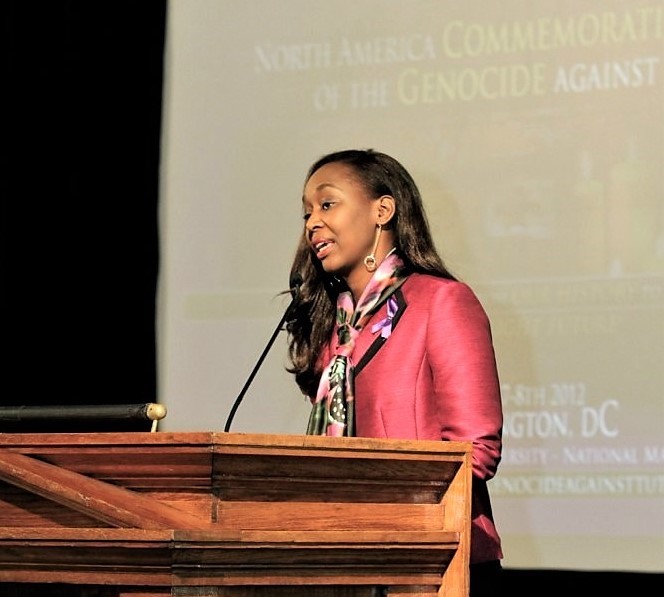
In 1994, nearly one million Rwandans were slaughtered in a few months, mainly ethnic Tutsis killed by ethnic Hutus. Immacul’e Ilibagiza, a young Catholic Tutsi woman home from college for the Easter break, spent 90 days hiding from killers with seven other women in a small bathroom. I recommend her book, Left to Tell.
She spent much of the time praying the Rosary. “Whenever I reached the part of the Lord’s Prayer that calls us to ‘forgive those who trespass against us,’ I tried not to think of the killers, because I knew that I couldn’t forgive them,” she said.
“Why do you expect the impossible from me?” she asked God. “How can I forgive people who are trying to kill me, people who may have already slaughtered my family and friends?” (In fact, both her parents and three of her four brothers were tortured and killed.)
“It isn’t logical for me to forgive these killers. Let me pray for their victims instead, for those who’ve been raped and murdered and mutilated. Let me pray for the orphans and widows … let me pray for justice. God, I will ask you to punish those wicked men, but I cannot forgive them. I just can’t.”
One night she heard screaming not far from the house, and then a baby crying. The killers had slain the mother and left her infant to die in the road. The child wailed all night; by morning its cries were feeble and by nightfall it was silent.
“I heard dogs snarling nearby and shivered to think how that baby’s life had ended,” she said. “I prayed for God to receive the child’s innocent soul, and then asked him, ‘How can I forgive people who would do such a thing to an infant?’ I heard his answer as clearly as if we’d been sitting in the same room chatting: ‘You are all my children … and the baby is with me now.’ It was such a simple sentence, but it was the answer to the prayers I’d been lost in for days.”
“In God’s eyes, the killers were part of his family, deserving of love and forgiveness. I knew that I couldn’t ask God to love me if I was unwilling to love his children. At that moment, I prayed for the killers, for their sins to be forgiven. I prayed that God would lead them to recognize the horrific error of their ways before their life on earth ended, before they were called to account for their mortal sins.
“I held on to my father’s rosary and asked God to help me, and again I heard his voice: ‘Forgive them; they know not what they do.’ That night I prayed with a clear conscience and a clean heart. For the first time since I had entered the bathroom, I slept in peace.”
“If you choose, you can keep the commandments,” says this Sunday’s First Reading. “Before each person are life and death, good and evil, and whichever one chooses, that shall be given.”
Can we forgive our enemies? Is it really possible? We have to be careful here. God does not ask us to excuse or justify or overlook or forget the evil they have done. He asks us to forgive it.
In the Lord’s Prayer, there is no comma after “forgive us our trespasses.” We will be forgiven our trespasses precisely “as we forgive those who trespass against us.”
And – let us face it – the offences against ourselves we find most difficult to forgive are probably those we are most guilty of against others.
Father Hawkswell teaches “The Catholic Faith in Plain English” free of charge every week: Sundays, 2–4 p.m. at the John Paul II Pastoral Centre (33rd and Willow, Vancouver); Mondays, 11 a.m.–1 p.m. at St. Anthony’s Parish (2347 Inglewood, West Vancouver) and 7–9 p.m. at the John Paul II Pastoral Centre; and Tuesdays, 7–9 p.m. in St. Clare’s Parish Hall (2888 Delahaye Drive, Coquitlam).







