

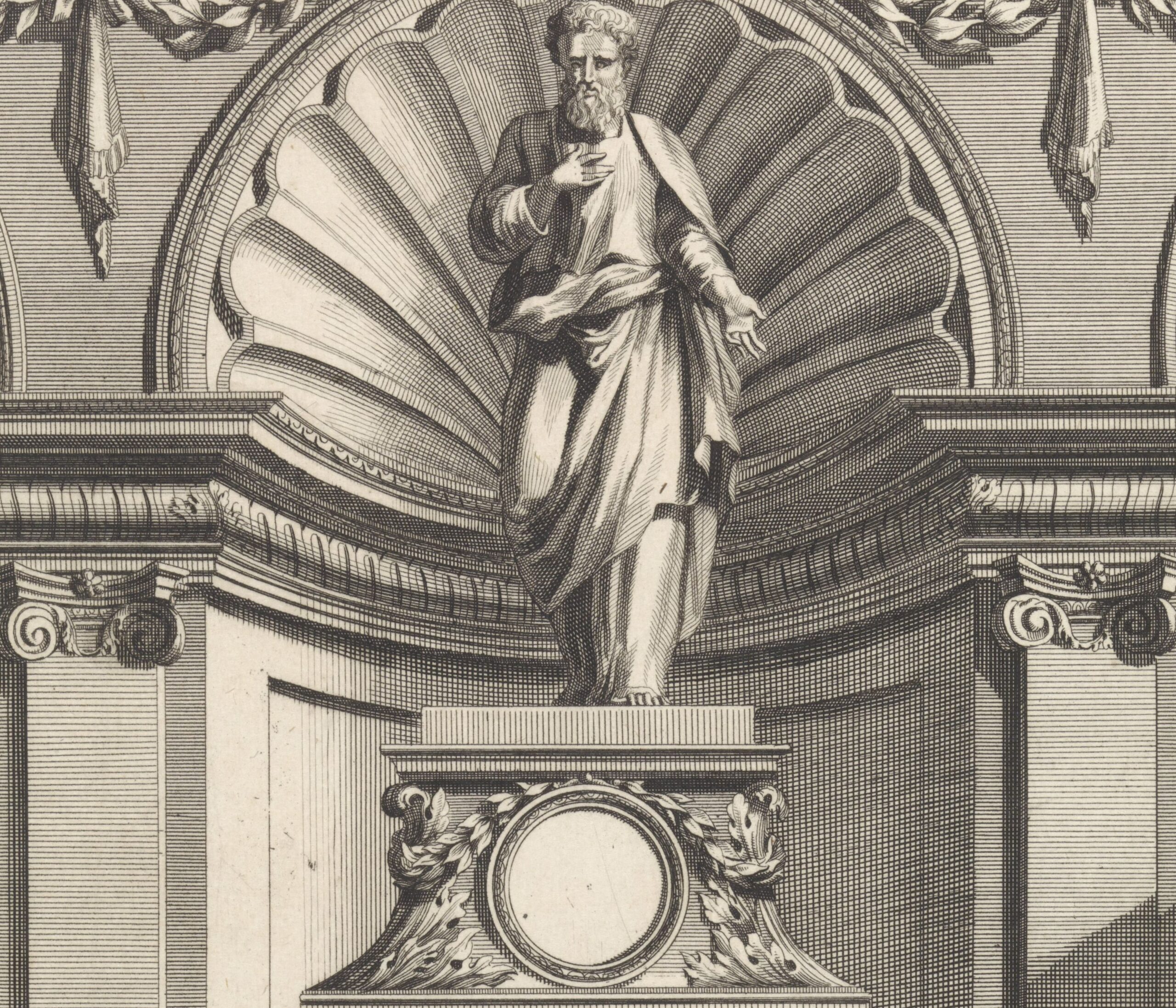

During a General Audience in 2007, Pope Benedict XVI described the life of Eusebius of Caesarea, the “father of Church history.”
The Holy Father said: “It was to Caesarea, where Eusebius was born probably in about the year 260 A.D., that Origen had fled from Alexandria. And in Caesarea, Origen founded a school and a huge library. A few decades later, the young Eusebius educated himself with these books. In 325, as Bishop of Caesarea, he played a lead role at the Council of Nicaea. He signed the Creed and the affirmation of the full divinity of the Son of God, who is consequently defined as ‘consubstantial with the Father.’ The Creed we recite every Sunday in the Holy Liturgy is practically the same.
“A sincere admirer of Constantine who had given peace to the Church, Eusebius in turn was esteemed and respected by Constantine. As well as with his works, Eusebius also celebrated the Emperor with panegyrics (public testimonials) which he delivered on the 20th and 30th anniversary of his ascendance to the throne, and upon his death in the year 337. Two or three years later, Eusebius died too.”
During the persecution, Eusebius went to Tyre and to Egypt, where he was imprisoned as a confessor, and where he witnessed the sufferings of the faithful. He described those sufferings in his famous book, Ecclesiastical History.
Eusebius wrote of the torments of the martyrs in Egypt: “We must admire those also who suffered martyrdom in their native land; where thousands of men, women, and children, despising the present life for the sake of the teaching of our Saviour, endured various deaths.
“Some of them, after scrapings and rackings and severest scourgings, and numberless other kinds of tortures, terrible even to hear of, were committed to the flames; some were drowned in the sea; some offered their heads bravely to those who cut them off; some died under their tortures, and others perished with hunger. And yet others were crucified; some according to the method commonly employed for malefactors; others yet more cruelly, being nailed to the cross with their heads downward, and being kept alive until they perished on the cross with hunger.”
Eusebius was soon released from prison and returned to Palestine thanks to Gallerius’ Edict of Tolerance of 311. Toward the end of the Ecclesiastical History, Eusebius described the peaceful time for the Church with numerous dedications of new churches.
He wrote, “After this was seen the sight which had been desired and prayed for by us all; feasts of dedication in the cities and consecrations of the newly built houses of prayer took place, bishops assembled, foreigners came together from abroad, mutual love was exhibited between people and people, the members of Christ’s body were united in complete harmony … perfect services were conducted by the prelates, the sacred rites being solemnized, and the majestic institutions of the Church observed, here with the singing of psalms and with the reading of the words committed to us by God, and there with the performance of divine and mystic services; and the mysterious symbols of the Saviour’s passion were dispensed.”
During the reign of Emperor Constantine, the Church passed from toleration to a privileged status. Eusebius wrote Life of Constantine to honour the Emperor. He described Constantine receiving baptism shortly before death. After being baptized, Constantine, “lifted his voice and poured forth a strain of thanksgiving to God; after which he added these words. ‘Now I know that I am truly blessed: now I feel assured that I am accounted worthy of immortality, and am made a partaker of Divine light.’”
歐瑟伯寫下教會的歷史
2007年6月13日的公開接見時,教宗本篤十六世教導有關「教會的歷史教父」——-凱撒肋雅的歐瑟伯。
教宗指出: 歐瑟伯出生於大概公元260年於凱撒肋雅。奧利振從亞歷山大里雅逃往凱撒肋雅。在凱撒肋雅,奧利振建立了一所學校和一個龐大的圖書館。歐瑟伯在幾個十年之後,亦從這圖書館的書籍中學習。公元325年,歐瑟伯以凱撒肋雅主教的身份,在尼西亞大公會議上,發揮領導作用。他你承認了尼西亞信經,確認天主子完全的天主性 ── 祂與聖父同性同體。跟我們每主日在聖祭中誦唸的尼西亞信經,基本上沒有分別。
歐瑟伯仰慕君士坦丁,因為他帶給了教會太平的時期;而君士坦丁亦尊重和敬佩歐瑟伯。君士坦丁登帝位的第二十年和三十年,歐瑟伯特地寫作了相關的頌辭慶賀;更在公元337年,君士坦丁逝世時,他為大帝寫下讚頌詩句。約在兩三年後,歐瑟伯亦與世長辭。
教難時,歐瑟伯到了提洛和埃及,並在當地被囚禁,亦見證信眾們的苦況;他在名箸「教會歷史」中,細述那些精忠信徒的苦痛。
提到埃及殉道者所受的折磨時,歐瑟伯寫道:「我們必需敬佩那些殉道者,成千上萬的男女老幼在自己的土地上,為了我們救主的教導,鄙視了現世的生命,承受不同方式的死刑。」
「他們有些被剮肉,有些被架起無情地鞭打,還有無數方式的苦刑,簡直駭人。有被火活活燒死的,有被拋入海裡溺斃者,也有甘願獻上頭顱被砍的人;甚至有些在受刑當中死去,亦有活活餓死的人。有些被釘死在十字架上;有些受犯罪份子一樣同等的苦刑;更殘酷的,就是被釘在十字架上時,頭顱向下,讓他們在十字架上慢慢餓死。」
幸好後來公元311年,藉所謂的加萊里烏斯容忍法令,歐瑟伯從監獄被釋放。「教會歷史」一書後部,歐瑟伯寫下教會在平靜時期,很多新聖堂被建築起來。他指出:各城舉行了聖堂奉獻慶節或最近落成的聖堂的祝聖典禮。為了這事,主教們聚在一起,教友們來訪,顯示了不同人之間的互愛,基督奧體在完全和諧中緊密結合。神長主持聖儀,既莊嚴又莊重,盡顯教會的尊威。有頌唱聖詠和朗誦天主聖言。
君士坦丁的掌權,把教會從折磨帶進特權領域。歐瑟伯為了向君士坦丁致敬,寫作了「君士坦丁的一生」;他披露大帝死前不久接受聖洗聖事,並在受洗後,高聲吐出頌謝天主的言詞;又聲稱:「我知道我確是蒙受祝福的!現在我堪當位列不朽,被成為神聖真光的參與者。」







