


Christmas, Year A
First Reading: midnight Is 9:2-4, 6-7; dawn Is 62:11-12; day Is 52:7-10
Second Reading: midnight Ti 2:11-14; dawn Ti 3:4-7; day Heb 1:1-6
Gospel Reading: midnight Lk 2:1-16; dawn Lk 2:15-20; day Jn 1:1-18
“For a child has been born for us, a son given to us.” “On earth, peace among those whom he favours!”
That, briefly, is the story of Christmas, celebrated by even the most unbelieving. The birth of a baby who will usher in an era of peace appeals to everyone.
However, the meaning of the story is not the same for non-Christians as for Christians.
For us, that baby was the Son of God – not in some mystical sense, but in the plain sense that he had no human father. God the Father, who is indirectly responsible for the begetting of every baby, was directly responsible for this one.
God the Father gave us his son as a man to buy us back from Satan, into whose power Adam and Eve had delivered the whole human race in the mistaken belief that they could become “as gods” on their own.
And God planned that when he had redeemed us, he would make us sharers in his life, so that we would live not merely our natural human lives, but also the divine life he and his son and the Holy Spirit live in the Blessed Trinity.
In our natural human lives, we would die, and, as long as we belonged to Satan, that would be the end of all happiness for us. Living God’s life, we will still die in our natural human lives, but continue to live his life in the perfect happiness he enjoys.
In fact, even our human bodies will “rise from the dead” and be rejoined to our souls, so that our human nature will be complete again. Living God’s divine life, therefore, is the only way to preserve our human lives.
Christ accomplished our redemption – the “buying back” from Satan of the entire human race, past, present, and future – by submitting to a shameful, painful death.
However, since in him God’s nature was joined to human nature, he came back to life again after he had been buried three days. Moreover, he promised that any human who becomes “grafted” on to him, like a branch on a vine, will do the same: rise from the dead, body rejoined to soul, to live forever in perfect happiness.
That is the Christian story. For believers, Christmas signals its beginning. God had not abandoned his people after the fall of Adam and Eve – for centuries, he had been gradually preparing the Jews for the Messiah. However, at Christmas, the progress of our salvation moved into high gear, so to speak.
During every Mass this Christmas – midnight, dawn, or daytime – the readings follow the same pattern.
In the First Reading, Isaiah prophesies the coming of the Messiah. “A child has been born for us, a son given to us.” “Say to daughter Zion, ‘See, your salvation comes.’” “All the ends of the earth shall see the salvation of our God.”
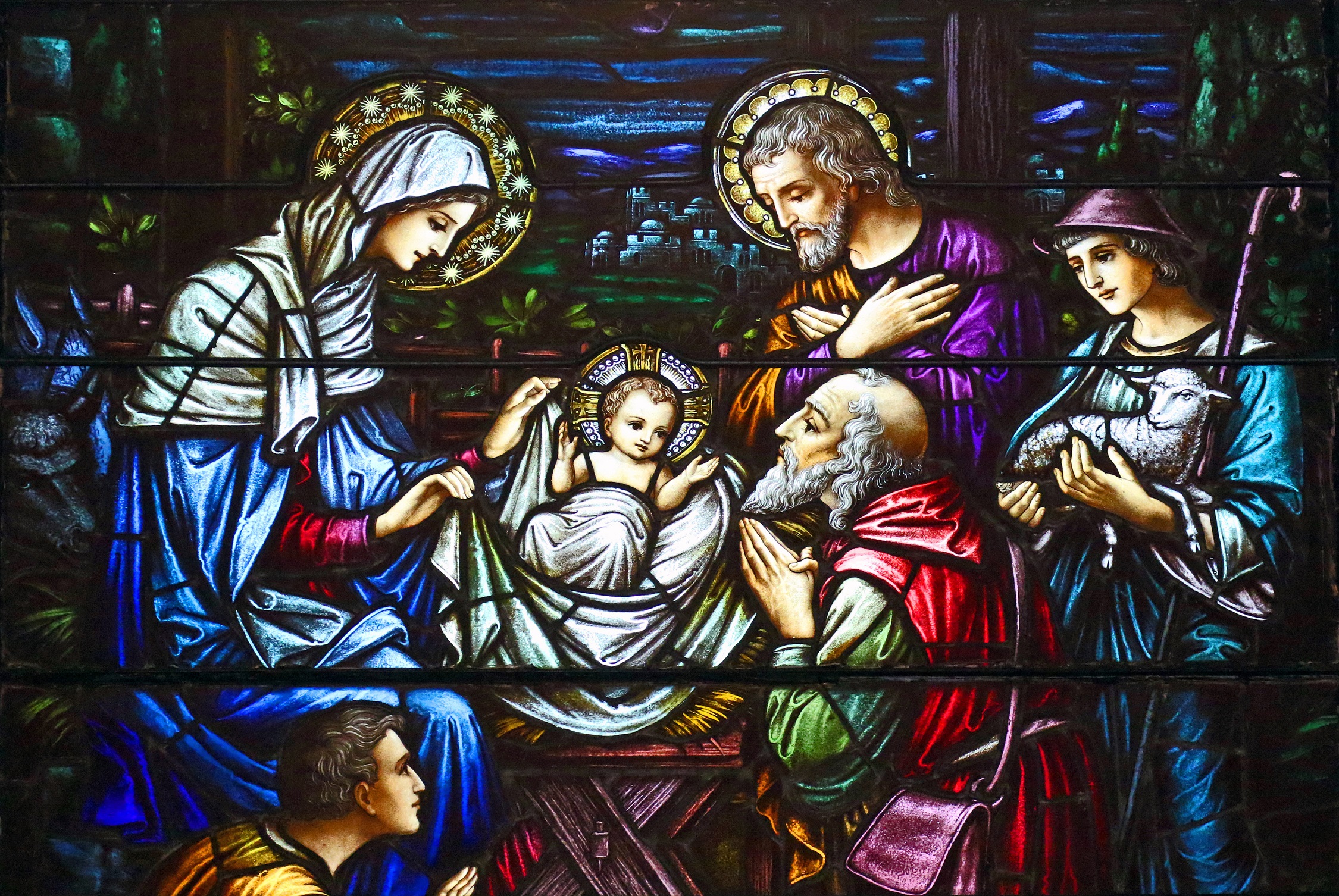
The Gospel Reading recounts the Christmas events. Mary “gave birth to her firstborn son and wrapped him in bands of cloth, and laid him in a manger, because there was no place for them in the inn.” An angel appeared to shepherds, saying, “To you is born this day in the city of David a Saviour, who is the Messiah, the Lord.” The shepherds “went with haste” and saw what the angel had described. Now the “true light, which enlightens everyone,” the one through whom the world itself had come “into being,” was “in the world” in person: “the Word became flesh and lived among us.”
The Second Reading tells us how we should respond: “renounce impiety and worldly passions” and “live lives that are self-controlled, upright, and godly,” while we wait for the final “manifestation” of Jesus Christ,” realizing that we have all the rights of a son to “eternal life.”
As we see the nativity scene this Christmas, then, let us realize its cosmic significance.







