



Audiences may wonder if films like Knives Out can ever again become a popular norm
Like many, I was saddened to hear of the recent death of the great writer Clive James, a man who was heir to the wit of Wilde and the insight of Chesterton.
I particularly like one of his many trenchant observations, when, talking about television, he observed, “All television ever did was shrink the demand for ordinary movies. The demand for extraordinary movies increased. If any one thing is wrong with the movie industry today, it is the unrelenting effort to astonish.”
When one looks at the endless parade of overblown action hero movies, replete with CGI special effects, deafening soundtracks, and violent action, all employed to tell the same tired stories of the earth being threatened by impending disaster, or crime investigators threatening everyone around them in their mad chase after crooks, it is easy to appreciate what James was talking about.
No home theatre or large screen television can hope to have the same sensual impact, which is why such films attract to theatres audiences of millions, who never seem to tire of experiencing the same material recycled in familiar format over and over again.
Not being one of the fans of such extravaganzas, I looked forward to seeing Knives Out, a refurbishment of that once familiar genre, the “whodunit.”
I recall fondly the days when we inexperienced movie-goers delighted in such simple pleasure as the 1946 black and white Green for Danger and applauded the simple joys of the 1963 Murder at the Gallop. The fact that such films starred the wonderful Alistair Sim and Margaret Rutherford merely added to the pleasure. But there is no arguing against the fact that such film fare was decidedly ordinary by today’s cinematic standards and no longer is enough to draw people from their homes. They are looking for the gigantic screen against which are plastered the latest technological marvels.
Occasionally a film comes along which manages to break the mold and return to the glories of the past, as, for example Robert Altman’s brilliant riff on the old-style “whodunit”: Gosford Park. But such homages to the simple joys of the past are rare.
This is one reason one wonders if Knives Out will attract big audiences, despite the great critical acclaim accorded to it. Even if it does persuade people to leave the comforts of their home to take it in, those audiences may well question what all the fuss is about.
In essence, Knives Out follows the classic formula of the traditional whodunit popularized above all by Agatha Christie, Elizabeth George, and P. D. James. A wealthy author is found dead with his throat cut. Was it suicide or was it murder? And if it was the latter, who among his many feuding and nasty relatives was guilty of the crime?
Clearly the answer to these questions will be provided by a rather eccentric detective – no less an actor than Daniel Craig doing his amusing best to imitate a Southern gentleman detective. He appears on the scene and starts unravelling a complex plot, plentifully complicated by all sorts of unpredictable twists and turns, a scattering of clues, leading to a surprising ending.
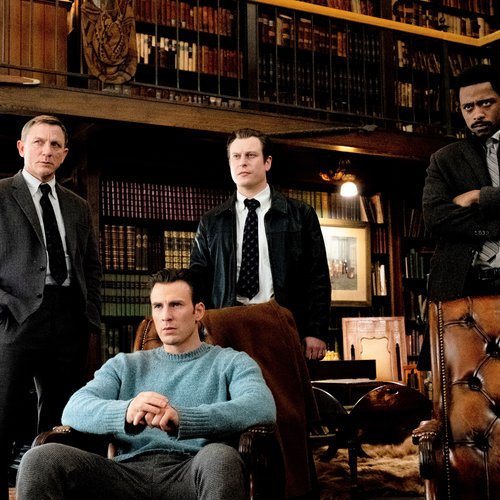
One can see why Knives Out has received critical acclaim. It boasts crackling dialogue (albeit laced with objectionable language), a multitude of dramatic confrontations, and superb acting. It even throws in some references to the current U.S. political situation.
The setting of the dead author’s neo-gothic mansion, stuffed with bizarre curios and even a throne of daggers, provides a suitably macabre setting for much of the film. However, despite the ingenuity of the plot, one wonders if audiences used to the outlandish action and eye-candy of familiar spectacles may find Knives Out rather a disappointment.
To begin with, the film is heavy on dialogue, and though it is sharp and pointed, the whole thing, particularly in the first part, becomes heavy-going.
This is not helped by the fact that much of the film consists of talking heads with almost no scenes of physical action. Though these are well played, they do become decidedly repetitive and one experiences a feeling of relief when the story-line results in the characters leaving the mansion and playing out their parts in other venues – though a rather silly car chase may only serve to remind audiences of the action-packed spectacles to which they have become accustomed.
In short, while one may welcome a break from extravagant action movies, one may well leave the theatre wondering if films like Knives Out can ever again become a popular norm.
Clive James was right, television has become the catalyst for “extraordinary” cinema movies, even if they are formulaic and reliant on fast action and stupendous locales to lend interest to their familiar story lines.
Until recently, television has become the home of the ordinary – simpler stories with simpler production values. However, even this is changing, now that Netflix and Amazon are able to command millions and produce “extraordinary” movies, made even more palatable by bigger and bigger home television screens.
In time, Knives Out may well prove to be one of the last hurrahs of “ordinary” films as the industry continues to churn out more and more over-stuffed “epics” and audiences continue to line up to see them – until they discover they can experience the same explosive visual and auditory stimulation in their home television theatres.
Are we experiencing the final days of movie houses?







