


32nd Sunday in Ordinary Time, Year C
First Reading: 2 Mc 7:1-2, 9-14
Second Reading: 2 Thes 2:16 — 3:5
Gospel Reading: Lk 20:27-38
Every Sunday we assert our belief in the resurrection of the dead and the life of the world to come. Do we believe it?
Many people believe that when we die, our soul leaves our body and continues to live, while the body decays. However, Christians live in the firm hope that our dead bodies will rise again and be reunited with our souls, no matter how we died or what happened to our bodies.
We believe this because Christ came back to life, but the belief started earlier than that. “One cannot but choose to die at the hands of mortals and to cherish the hope God gives of being raised again by him,” said one of the brothers in this Sunday’s First Reading.
In the Gospel Reading, Jesus refuted the Sadducees’ disbelief in the resurrection by quoting Moses, who said that God was “God not of the dead, but of the living.”
However, Jesus linked our resurrection to his own Person. “I am the resurrection and the life,” he said. “The man who feeds on my flesh and drinks my blood has life eternal and I will raise him up on the last day.”
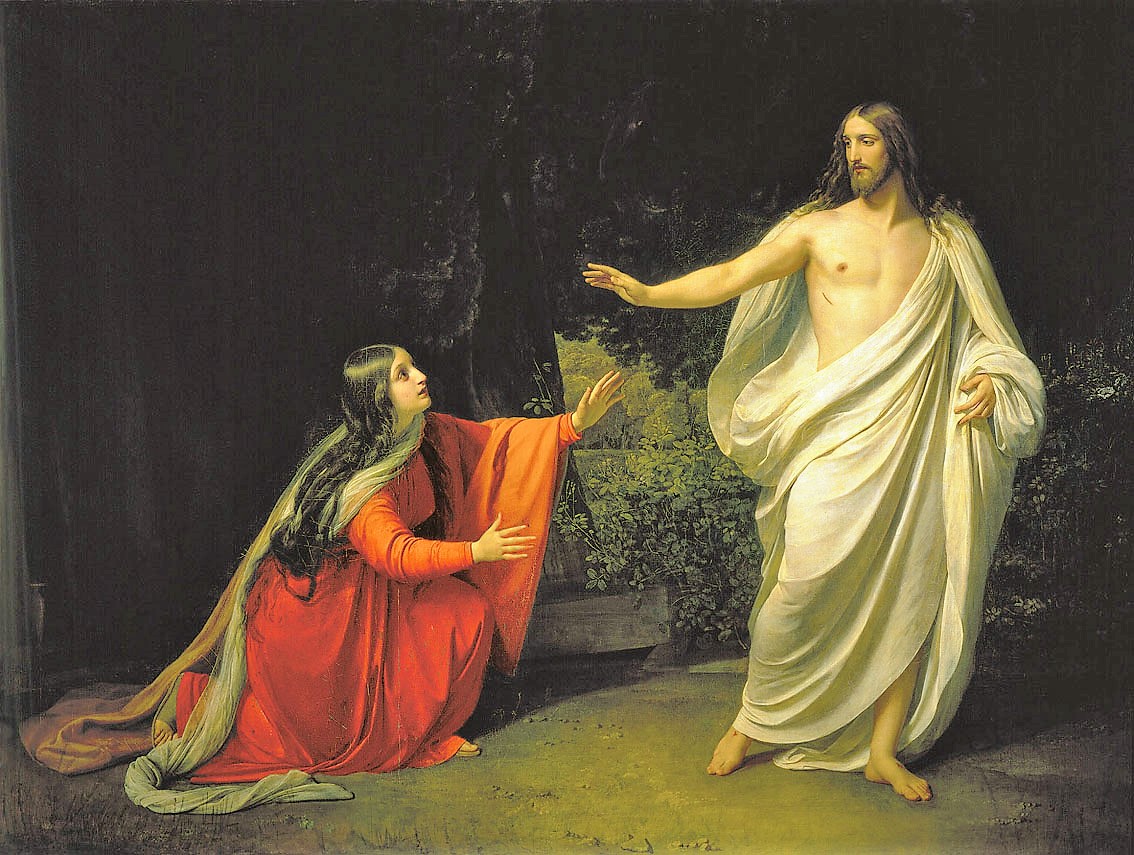
Christ rose from the dead with his own body, still bearing the marks of the nails and the spear. We, too, who are grafted on to him like branches on to a vine, who live with his life, will rise with our own bodies. “My own eyes, not another’s, shall behold him, and from my flesh I shall see God,” said Job. However, our bodies will be glorified, incorruptible, like Christ’s.
We cannot imagine, let alone understand, how it will happen, but we believe it because we trust Christ’s promise. Indeed, in a sense, as St. Paul said, we have already risen with Christ, just as we have already died with him in baptism. Therefore, we already participate, body as well as soul, in his dignity, and so we must treat our own bodies and everyone else’s with respect. “Do you not know that your bodies are members of Christ?” St. Paul asked. “So glorify God in your body.”
Death may seem natural, but it is not what God destined us for: it resulted from the sin of our first parents. However, when Christ redeemed us, he transformed death from something negative to something positive.
As we hear in the Preface at a funeral Mass, “In him who rose from the dead, our hope of resurrection dawned. The sadness of death gives way to the bright promise of immortality. Lord, for your faithful people life is changed, not ended. When the body of our earthly dwelling lies in death, we gain an everlasting dwelling place in Heaven.” As St. Therese of Lisieux said, “I am not dying; I am entering life.”
The Church encourages us to think about death and prepare for it. For example, in the Litany of the Saints we beg our Lord to deliver us “from a sudden and unforeseen death.” In the Hail Mary, we ask our Lady to pray for us “at the hour of our death.” We pray to St. Joseph, who presumably died in the arms of Jesus and Mary, to grant us a happy death.
We should not be afraid to think or talk about death. Indeed, we should always think and act as though we expect to die before the day is out, as we are advised in the Imitation of Christ.
Any one of us could be dead before next Sunday. I may never give, and you may never read, another homily. Don’t panic; you are going to live forever!
Instead, let “our Lord Jesus Christ himself and God our Father, who loved us and through grace gave us eternal comfort and good hope, comfort your hearts and strengthen them in every good work and word,” as St. Paul said in the Second Reading.
Father Hawkswell teaches “The Catholic Faith in Plain English” free of charge every week: Sundays, 2–4 p.m. at the John Paul II Pastoral Centre (33rd and Willow, Vancouver); Mondays, 11 a.m.–1 p.m. at St. Anthony’s Parish (2347 Inglewood, West Vancouver) and 7–9 p.m. at the John Paul II Pastoral Centre; and Tuesdays, 7–9 p.m. in St. Clare’s Parish Hall (2888 Delahaye Drive, Coquitlam).







