


In life we often have very difficult decisions in which we pray for God’s help in discerning our choice on important subjects such as marriage, a career change, or major purchases.
Catholic philosopher Peter Kreeft writes about this topic frequently. God does not necessarily will, he argues, one choice or another. Kreeft suggests, though, that there are many factors to consider, including prayer, Scripture, Church teaching, human reason, conscience, and our personal preferences. He believes, “God wants his chorus to sing in harmony but not in unison.”
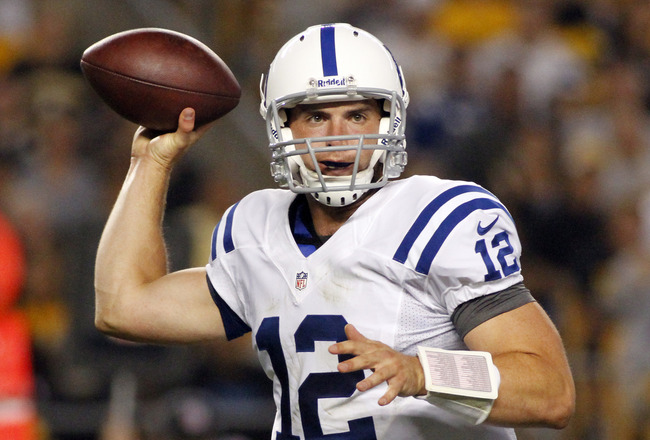
With this in mind, one can imagine the difficulty that National Football League star quarterback Andrew Luck must have had in deciding to retire in his prime this summer. He said this was the toughest decision of his life and, no doubt, prayer played a part.
At the age of 29, Luck, who is a devout Catholic, had the world at his fingertips. He had been a college football hero. When drafted by the Indianapolis Colts, he helped them instantly become contenders, winning two division titles. In retiring now, he is leaving an amazing amount of money on the table, but his decision is not surprising, given his reasons and history in acting with character.
Injuries were the big reason that Luck hung up the cleats early, even though with his contract he could have kept collecting a great paycheque on the injured list or playing as a backup. His asking God for discernment was to be expected. He considered that to continue would not be fair to the organization or the other quarterbacks, who he felt should get their opportunity.
This was not the first time Luck had shown humility and courage. These qualities were developed in his parish youth group and continued through to his National High School Scholarship Award, when he included these Catholic experiences in his bio.
In 2014, Luck gave the keynote talk at Spirit of Service, a dinner at which the Archdiocese of Indianapolis honoured volunteers. J.P. Mauro reports that Luck said then, “Anybody and everybody can serve. There is no age limit. There is no distinction of where you come from, who you are, the color of your skin. We are all called to serve. We all have an obligation to serve one another.”
Luck acknowledged receiving a lot too: “Spirit of service is a two-way street.”
He said visiting cancer patients in children’s hospitals helped him realize the issues he was dealing with would “pale in comparison to the real crises of real people in the world.” Pope St. John Paul II was Luck’s hero not only because he too was an athlete but also because he found ways to reach so many diverse groups of people.
In 2011, Luck was expected to be the #1 draft pick, but he chose to go back to Stanford for one more year to help his teammates.
He is known for congratulating opponents when they make a good tackle on him. One opponent, Ryan Kerrigan, once told the Wall Street Journal, “You want to say thank you, but then you say, ‘Wait a second –I’m not supposed to like you!’”
In an age that not only accepts egoism in sports but encourages it, it’s so refreshing to see a superstar thinking of all those other people around him and their needs. It’ll be a shame not seeing him playing anymore in a league that desperately needs him. In my coaching experience I don’t often see virtuous behaviour being taught in a significant way. I believe humility and charity in athletes need to be reemphasized, much like what Andrew Luck displays.
So, credit to him for first making a very honourable decision – no doubt, by bringing God into his discernment. Second, we congratulate this conscientious young man for thinking of others when making his decision, in serving others, and displaying humility in his career.







