
Where have all the Michelangelos gone? Where are our modern-day Leonardo da Vincis and Caravaggios? Are they lost in a sea of constant entertainment that seeks to numb the intellect rather than stimulate it? Is Super Smash Brothers reducing to smithereens the creativity of our kids? Have our thumbs been reduced to keying abbreviated texts instead of chiselling masterpieces out of marble?
This summer, we had the privilege of travelling to Italy with our six children and my husband’s whole family, courtesy of my second-generation Italian father-in-law, who wanted to take everyone to see his father’s hometown. Our group of 20 spent several days absorbing Italian culture, including a lot of sacred art.
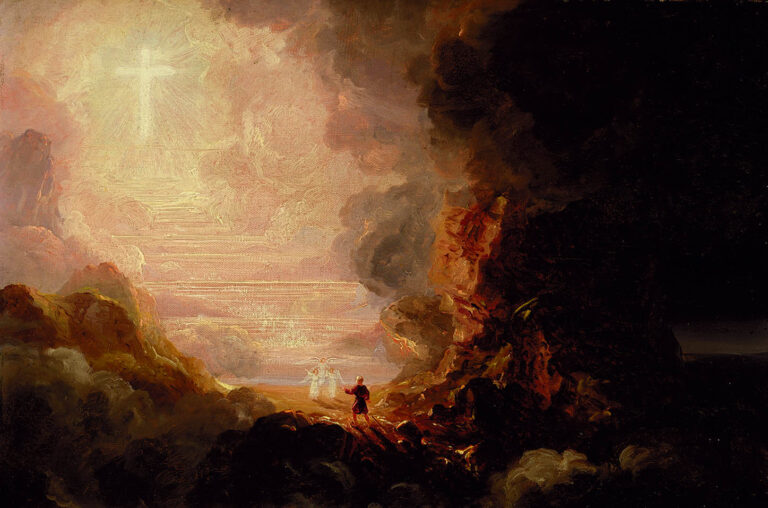
Beauty inspires. When we see something beautiful, we pause, we appreciate, we contemplate. It’s the contemplation of true beauty that has the power to bring us to God, the source of all beauty. This is the purpose of sacred art.
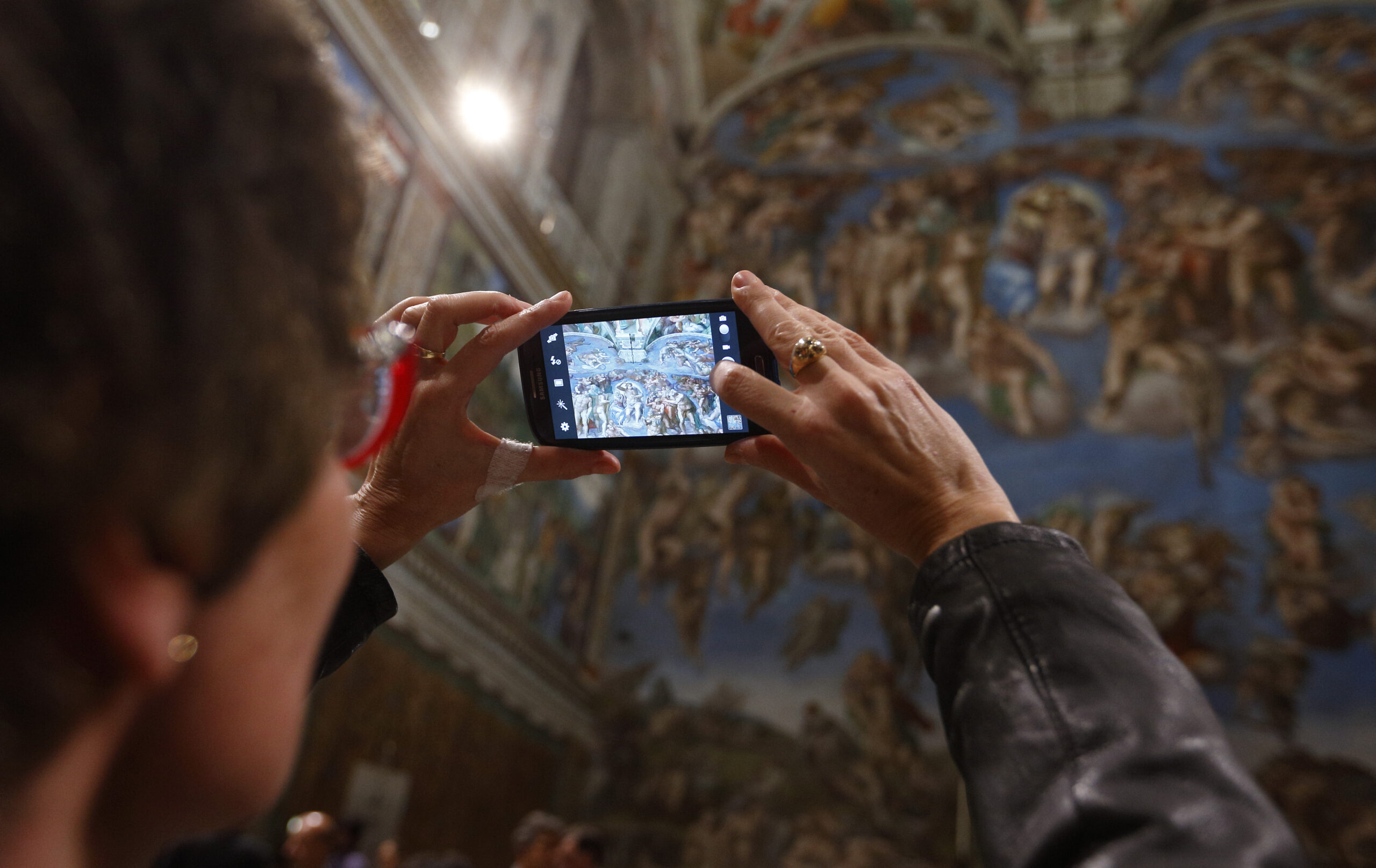
While in Italy, we experienced firsthand the power of sacred art, from the famous Sistine Chapel created by the genius of Michelangelo, to the frescoes of Giotto in the Basilica of St. Francis in Assisi, to the columns of Bernini in St. Peter’s. The mind reels with the incredible creativity of so many brilliant minds, and the best part is, their work was created for the glory of God.
The Catholic Church has always emphasized the importance of sacred art, which serves a deep purpose in the life of faith and evangelization. As the Catechism of the Catholic Church says, “Sacred art is true and beautiful when its form corresponds to its particular vocation: evoking and glorifying, in faith and adoration, the transcendent mystery of God … Genuine sacred art draws man to adoration, to prayer, and to the love of God, Creator and Savior, the Holy One and Sanctifier” (No. 2502).
With our children ranging in age from 3 to 16, I am well aware that there are various levels of appreciation of the great works of art we saw in Italy. But even if some of them don’t remember details or names, they will get an overall impression that sacred art is important. They saw the long line leading up to the Vatican Museum. (Definitely book tickets before you go!) They were part of one of the massive crowds that gets moved through the Sistine Chapel most days. They were aware they were seeing something important, something sacred, something for which a long line in hot temperatures is worth the wait.
Hopefully, my children were inspired. I think this would probably be the hope of all these famous artists as they were painstakingly completing their masterpieces so long ago. My kids might not become great artists, but they might. Or maybe next time they are hearing a story from the Book of Genesis they will be better able to picture the details thanks to Michelangelo’s depiction of creation on the ceiling of the Sistine Chapel. Perhaps a seed of vocation was planted in them when they gazed upon the life of St. Francis, depicted in the frescoes of Giotto.
When I first travelled to Rome at the age of 21, for a two-week travel-study session that was part of my liberal arts degree, I was deeply moved by the artwork I saw, which was so well-explained by my professor. I was particularly struck by Caravaggio’s The Calling of Saint Matthew, which hangs in the Church of San Luigi dei Francesi, just off the Piazza Navona.
As a master of light, Caravaggio dramatically captures his interpretation of the moment Jesus points to St. Matthew, who is at his tax-collecting desk, and calls Matthew to follow him. St. Matthew looks incredulous, as if saying, “Who, me?” As a lowly and often-despised employee of the Romans, he can’t believe Jesus would want him as a disciple. Through this painting made 400 years prior, I was able to see how Jesus calls each of us, personally, to fulfill our vocation and how He loves us enough to seek us in the darkness and call us into the light.
Michelangelo, whose painting and sculptures depict a profound understanding of Scripture and human nature, was keenly aware that we humans can waste the talents God gives us. “The greater danger for most of us lies not in setting our aim too high and falling short; but in setting our aim too low, and achieving our mark,” he said.
The good news is that in 2019 we have sacred art at our fingertips all the time. The great masterpieces that tell the story of our faith do not have to be a thing of the past or confined to European travel. Libraries and the Internet are filled with information on art and artists. And, most likely, churches in your community contain artwork that is worth contemplating with your family. Check out a post called “Pray with Sacred Art with your Kids” on the blog Peanut Butter and Grace for some practical advice and resource suggestions.
God is still inspiring in this important medium. Let’s do all we can to allow our children to be inspired by their faith – less screen time and more creative inspiration time. Let’s take Michelangelo’s advice and aim higher.
Lazzuri writes from her home in Nova Scotia, where she lives with her husband, six children, and her mom. She can be reached clarelazzuri@gmail.com