


14th Sunday of Ordinary Time, Year A
First reading: Zec 9:9-10
Second reading: Rom 8:9, 11-13
Gospel reading: Mt 11:25-30
The Catholic Church is often attacked as “authoritarian” and “undemocratic.” Even loyal Catholics feel they have to defend the Church against this charge, as if it constituted a blot on her record.
Democracy is a system of government in which we decide among our options by majority vote. However, we abandon it wherever we have a better way. For example, we settle mathematical disputes by logic, legal disputes by the sworn evidence of witnesses and the application of law, scientific disputes by experiment, historical disputes by documents and artifacts. In such matters, no one would expect to find the right answer by consensus or majority vote.
And the same is true in matters of faith, or belief, and matters of morals, or behaviour. We have a better way, for Christ, before he left us, founded his Church and endowed it with his authority.
Christ’s Church is authoritarian. She has the authority of Christ, “handed over” to him by his Father. Accordingly, her teachings are binding on anyone who wants to live “in the Spirit.”
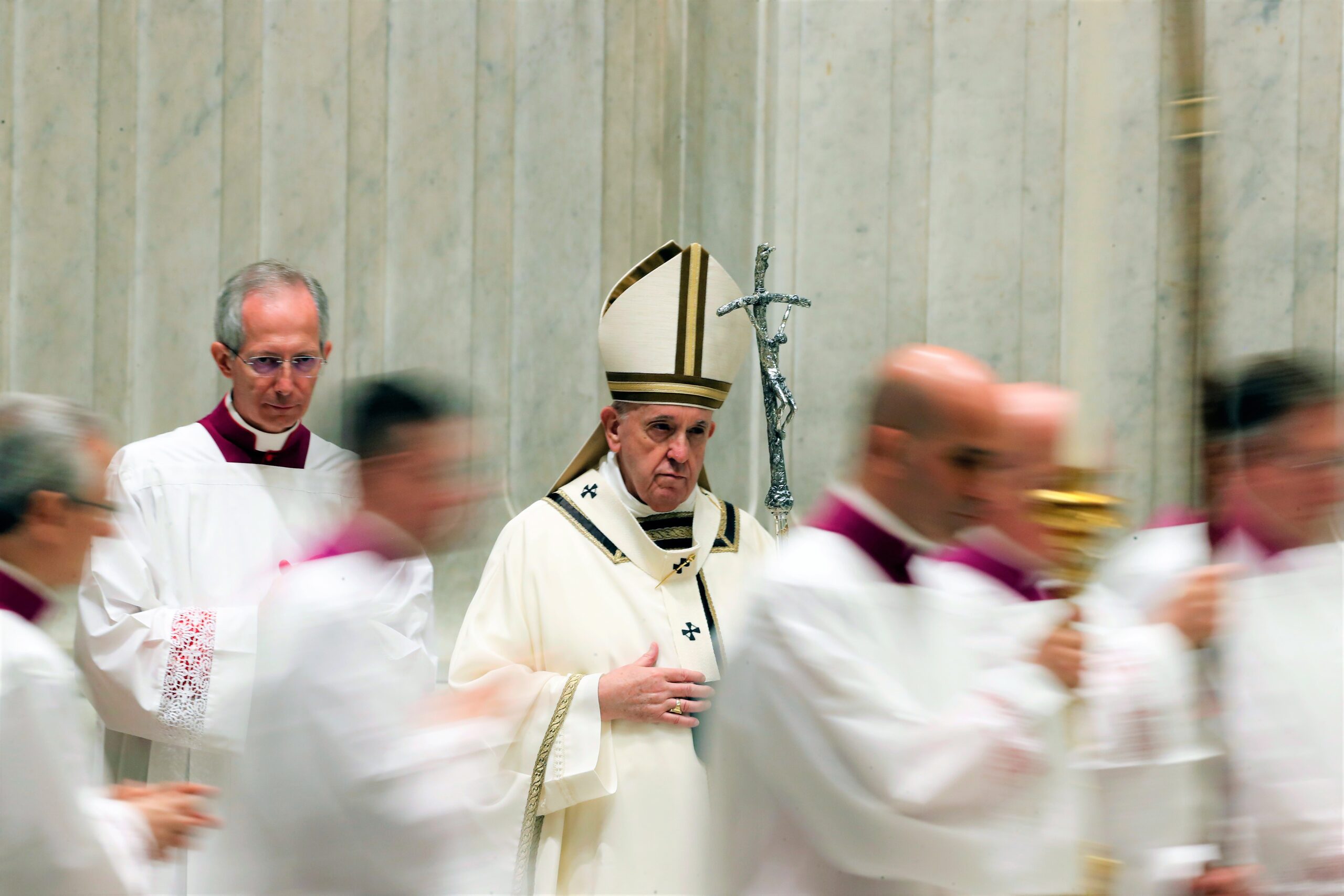
The head of the Church is a King (not a prime minister or chairman), represented on earth by a regent, or vicar. This King is “triumphant” and “victorious”: he has conquered his enemies, not merely beaten them temporarily at the polls, and now he shall “command” peace to the nations.
We could never learn about God by consensus or majority vote. In fact, we could never work it out for ourselves at all, for it is “hidden” from the “wise and the intelligent.” We learn it, like “infants,” from the Church, to which Christ “chose” to “reveal” it.
The Catholic Church accepts democracy as the preferred way of conducting political life and safeguarding human rights. It “ensures the participation of citizens in making political choices,” Pope St. John Paul II said in his 1991 encyclical Centesimus Annus. It “guarantees to the governed the possibility both of electing and holding accountable those who govern them and of replacing them through peaceful means when appropriate.”
However, there are two fundamentally different reasons for embracing democracy. Some people value it because they think we are all equally qualified to govern, others because they think that no fallen, fallible human can be trusted with absolute power over others.
The head of the Catholic Church is not a fallen, fallible human being, but Christ, God the Son, standing behind his vicar, the Pope. We can trust him implicitly: first, because he wants our eternal happiness, and, second, because he knows perfectly what will constitute it.
Jesus imposes his “yoke” on us not to prevent our happiness, but to ensure it. “Come to me, all you who are weary and are carrying heavy burdens, and I will give you rest,” he says. “Take my yoke upon you, and learn from me; for I am gentle and humble in heart, and you will find rest for your souls. For my yoke is easy, and my burden is light.”
Yes; Christ’s yoke is easy for those who accept it. We find it hard only if we try to follow him without wearing his yoke: to do his will and at the same time provide for the desires of “the flesh,” like someone trying to swim with one toe on the ground. That is not only hard, but impossible.
Benedictine Father Peter Nygren from Westminster Abbey in Mission once described such people. They say they pray all the time, but they never set time aside for it. They talk to God but are afraid to listen. They “dance” with God but want to lead, not follow. They wear steel-tipped shoes so they cannot feel him stepping on their toes.
God made us. We belong to him. He made us for happiness, and he knows best how we can attain it. If he steps on our toes, it is because we are taking the wrong steps.







