

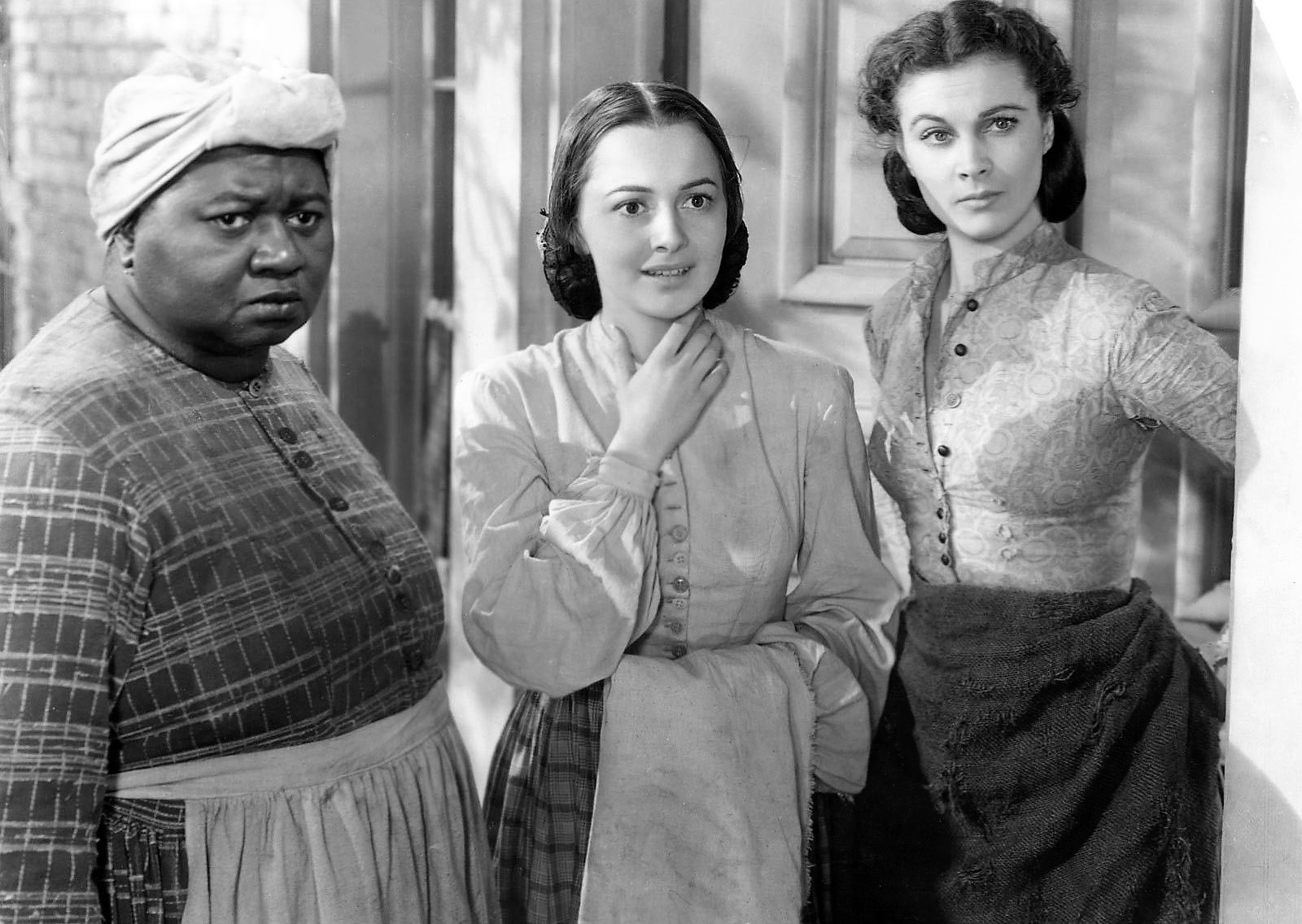

HBO has temporarily withdrawn Gone with the Wind (1939) from its list of movie offerings because the film reflects a glorification of the Old South, with its espousal of slavery. Many will regard such a move as a kind of unnecessary censorship in that one should not try to wipe out the past. Indeed, many will see the film as significant and worthy of viewing in that Hattie McDaniel was the first black woman to receive an Oscar, though it is interesting to note that at the time of the award, special arrangements had to be made for her to attend the ceremony and, even then, she was not allowed to sit with the rest of the cast. However, HBO intends later to re-present the film, perhaps framed by a discussion of its racial implications.
All of this raises the issue of the role films have played in the reflection of and formation of attitudes toward race. It is almost redundant to point out that from its earliest days Hollywood was guilty of espousing racism, as most notably reflected in The Birth of a Nation (1915). Griffith’s film overtly glorifies the Ku Klux Klan and is regarded by many as largely responsible for the rise of anti-black racism in America in the ’30s and ’40s.
Throughout that time, many films did in fact reflect a kind of condescending attitude of acceptance toward black people. Maids and butlers were depicted as charming and cute – never as equals. Even Hattie McDaniel’s character in Gone with the Wind reflected the “Aunt Jemima” approach, which allowed even the racists to feel comfortable; after all, who needs to feel threatened by a cheerful and faithful servant?
This attitude prevailed for years, including even the beguiling Lilies of the Field (1963), though that film did have the advantage of making a black actor, Sidney Poitier, accepted. This paved the way for others to follow, including most notably Morgan Freeman. Thus a film like The Shawshank Redemption (1994) actually presented a black character on the same level as a white man. Gradually films began openly to tackle the issue of racism in such disparate ways as Guess Who’s Coming to Dinner (1967) and The Defiant Ones (1958).
As a result of the stand against racism being made, led by Doctor Martin Luther King Jr, society and cinema began to change attitudes toward black people, though not always in ways that black people found acceptable. There might be a Carmen Jones (1954) or a Porgy and Bess (1959) with all-black casts, but too often films portrayed blacks as being in need of white saviours, as evidenced by such films as The Help (2011) or Glory (1989) – well-intentioned films that tried to dignify black people, but which still carried that undertone of racism that blacks could achieve their rightful place in society only with the aid of enlightened whites.
At times, Hollywood got things right, even by today’s standards. Who can forget the challenging command in In the Heat of the Night (1967), “Call me Mr. Tibbs!”
In fact, cinema could occasionally laugh at society’s prejudice, as in Mel Brooks’ Blazing Saddles (1974). But the film industry still had a long way to go, as did society as a whole, in seeing and accepting blacks as equals.
Fortunately, things have begun to change. The old attitudes of condescension continued, as in Driving Miss Daisy (1989), but slowly there evolved a change. Films such as The Color Purple (1985), 12 Years a Slave (2013), and Django Unchained (2012) attempted to reflect the tragic history of blacks more accurately, while others as widely different as Spike Lee’s Do the Right Thing (1989) and the biographical drama Hidden Figures (2016) have asserted the need to understand the realities of the black experience.
It is, of course, impossible in a brief column such as this to show the full range of the way in which blacks have been depicted in movies. Looking back at about a century of cinema, one realizes that films have reflected the prevailing and changing attitudes toward racism.
One would like to believe that art changes society – and to some extent it can. More realistically, it would appear that art tends to reflect what is going on in society. In the light of the social turmoil of recent weeks, one wonders what films may be made and how well they will reflect what is really happening in a society grappling with the issue of racism and how to counter it. In doing so, cinema may actually help publicize and perhaps even shape the noble effort of blacks to be treated simply as fellow humans in a multiracial world.







