


“Live Free or Die” is the slogan on the New Hampshire state licence plate, and during my years living there I enjoyed many a clever quip inspired by this statement of American defiance.
As with many things, however, there is more to the four words than meets the eye. When my grandmother came from Vancouver to visit, we went to the museum in Concord, the state capitol. It was there I learned the origin and context of the quote “Live free or die.”
In 1809, Gen. John Stark, New Hampshire’s most famous soldier of the American War of Independence, was too ill to accept an invitation to a reunion with his revolutionary comrades. Since he could not attend in person, he sent a letter to his friends which famously said, “Live free or die: Death is not the worst of evils.”
Today, I reflect on this bold statement, setting it up against the current uncertain atmosphere spawned by COVID-19. “Live free or die: Death is not the worst of evils.”
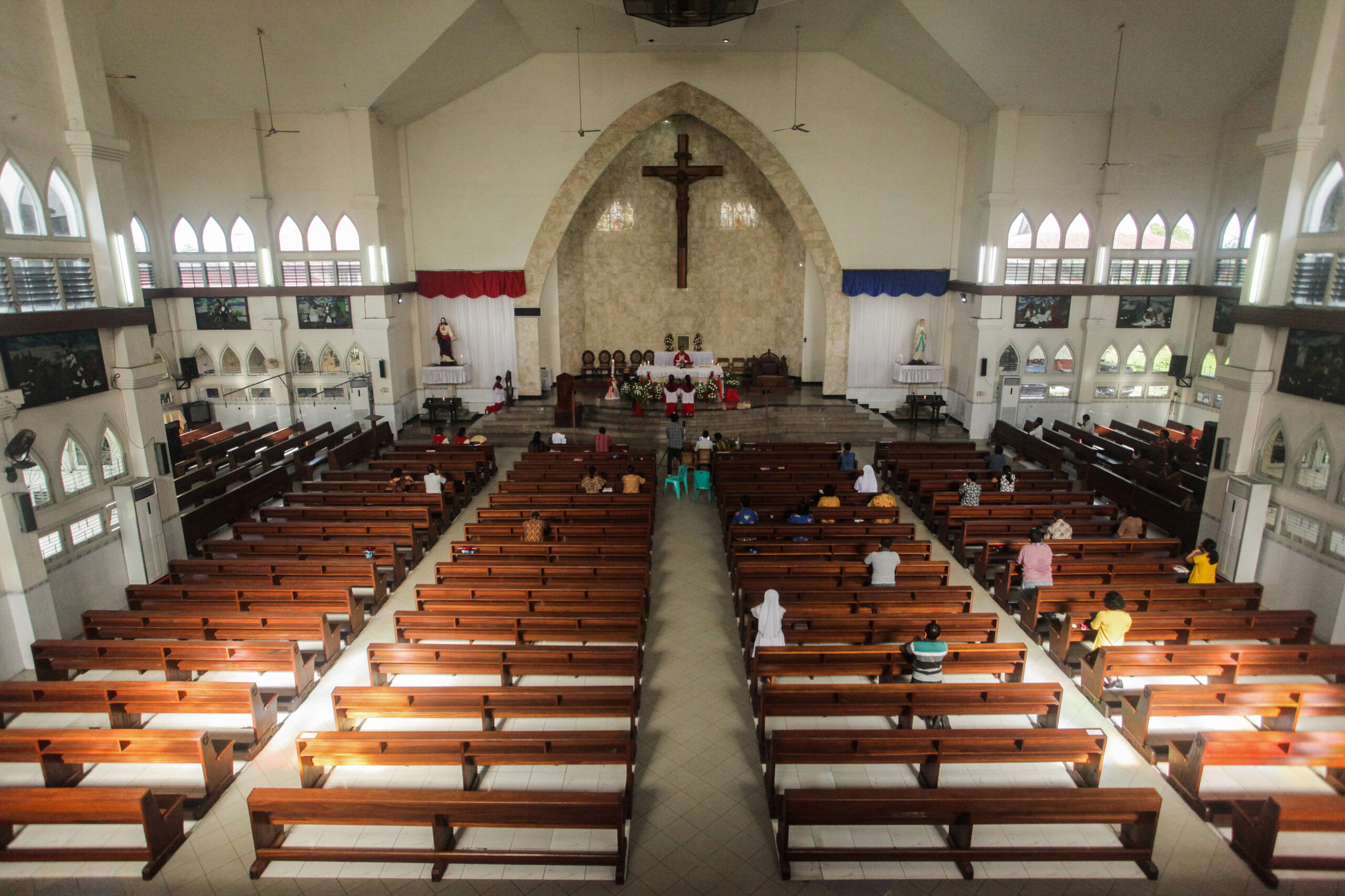
Like John Stark and his countrymen more than 300 years ago, we are experiencing a curtailing of our freedom due to a situation outside of our control: businesses have closed and income suddenly stopped. Education has been reduced to the dimensions of our computer screens. Social engagements were halted, medical procedures indefinitely postponed, and all manner of human festivity – weddings, vacations, family reunions, even funerals – cancelled. Perhaps most tragically, attendance at religious services was forbidden.
Amidst all this deprivation and stress, we have attempted to practise common sense and discern our compliance with new social norms, but are we holding onto our freedom? What does it mean to be free during a pandemic? Does the fear of death have more prominence in our mundane choices today than it did last year? In what ways can we exercise freedom during lockdown?
“Freedom,” said John Paul II, “consists not in doing what we like, but in having the right to do what we ought.”
While the globe reels in the grip of this pandemic, some people believe we ought to follow to the letter the prescriptions of Dr. Bonnie Henry et al.
Others feel each family should be allowed to decide, based on their particular circumstances and risk appetite, the degree of caution they will practise to avoid the coronavirus.
Some people come from a collectivist culture, while others come from an individualistic culture.
One person can have the perspective of an ER triage nurse who sees the human person in pain and crisis at every shift. Another person has a different viewpoint and priorities, perhaps those of the entrepreneur or schoolteacher.
At the end of the day, each person’s opinion about this moment in history is valid, and I am not interested in placing those opinions on a scale of right and wrong; I wish to consider something deeper than circumstances and more precise than opinions, the thing for which John Stark and his men fought: freedom.
In Scripture, especially in the New Testament, we frequently meet the word freedom. We have been promised “the glorious freedom of the children of God” (Rom 8:21). St Paul exhorts us, “For you were called to freedom” (Gal 5:15). And, “For freedom God has set us free” (Gal 5:1). There are countless references. But it is Jesus himself who lived freedom absolutely.
Journeying through the Easter season, we have been freshly reminded of what that looked like: passion, death, resurrection. It was not the political, circumstantial freedom for which the Jews of ancient Palestine longed.
The freedom of the children of God is not the end of COVID-19. Indeed, our freedom is located deep within and cannot be inhibited by any person, prison, persecution, or virus.
We are free to respond to God’s calls in our lives, to experience and practise an ever more profound faith, hope, and love. We are free from the fear of death, even death from the coronavirus. We are free to respond to Jesus pronouncing our names, as he did Mary Magdalene’s at the threshold of his tomb. We are free to encounter Jesus, to recognize him, be loved by him, and worship him.
Our lives lack freedom only inasmuch as we practise social distancing from Our Lord. On the other hand, if we make him one of the members of our intimate bubble, we will find our freedom, over which COVID-19 has no power.
Gemma L. Myers is a parishioner at Star of the Sea Parish in Surrey.







