Prelates meet March 28-31 to discuss their concerns
GRAND-BASSAM, Ivory Coast
(CNA/EWTN News)
The regional conference of West African bishops has commended a regional economic union for its efforts to promote peaceful transfers of power, while also noting areas of concern, including religious intolerance and youth unemployment.
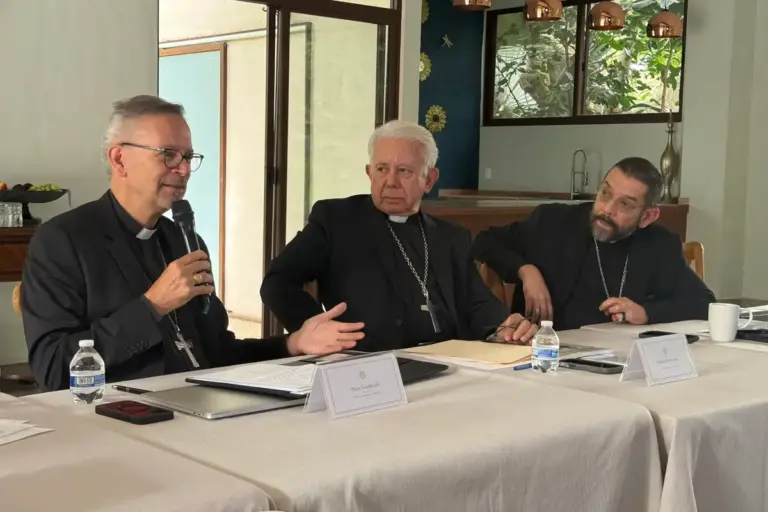
The bishops of the Regional Episcopal Conference of West Africa met March 28-31 in Ivory Coast to discuss their role in the prevention, mediation, resolution, and transformation of conflicts.
The conference includes the bishops of 15 countries, covering the Atlantic coast from Mauritania to Nigeria, as well as Cape Verde, Mali, and Burkina Faso.
The bishops sent a message to the Economic Community of West African States (ECOWAS) April 4 highlighting ways in which the two organizations can collaborate.
They noted positively the “democratic transfer of power in many of our countries and the relative peace we are witnessing in our region.”
Saying economic growth has been a boon to their citizens, the bishops added that nevertheless, “we are at pains to observe some significant challenges within our region which need to be addressed.”
The bishops listed political transition and instability as their first concern; several of the nations in West Africa have experienced coups d’etat or civil war in recent years.
“Political transitions of power in some countries are characterized by disregard for the rule of law, weak institutions, shrinking space for political participation by all, frequent human rights violations and torture,” the bishops observed.
“We are also worried about political leaders who employ extra-democratic means to remain in power for life; we appeal to our political authorities to respect the democratic tenets of their countries.”
A dangerous level of unemployment for youth also raised concern from the bishops. They said a majority of youths in the region are unemployed “and therefore highly exposed to trafficking, drug abuse, violence and forced migrations.”
Turning to religious intolerance and extremism, the bishops stated that “the desire of religious extremist groups to forcefully ‘islamize’ countries in our region poses a serious threat to the right of every citizen to freely choose and practise the religion of his or her choice.”
Most of the nations in the West African bishops’ conference have a majority- or plurality-Muslim population, and some governments or extremist groups have turned to persecution of Christians and other religious groups.
The bishops commended ECOWAS for its recent intervention in The Gambia, whose president of 22 years, Yahya Jammeh, refused to accept the results of a December 2016 election in which he was defeated.
This resulted in a constitutional crisis and a military intervention by ECOWAS to install the newly-elected president.
The bishops also noted that The Gambia had been declared an Islamic republic by Jammeh in December 2015, but that the new president, Adama Barrow, had reversed this: “we are happy that this matter has been reversed with the current leadership,” they commented. “We strongly appeal that this situation should not be repeated in any country in our region.”