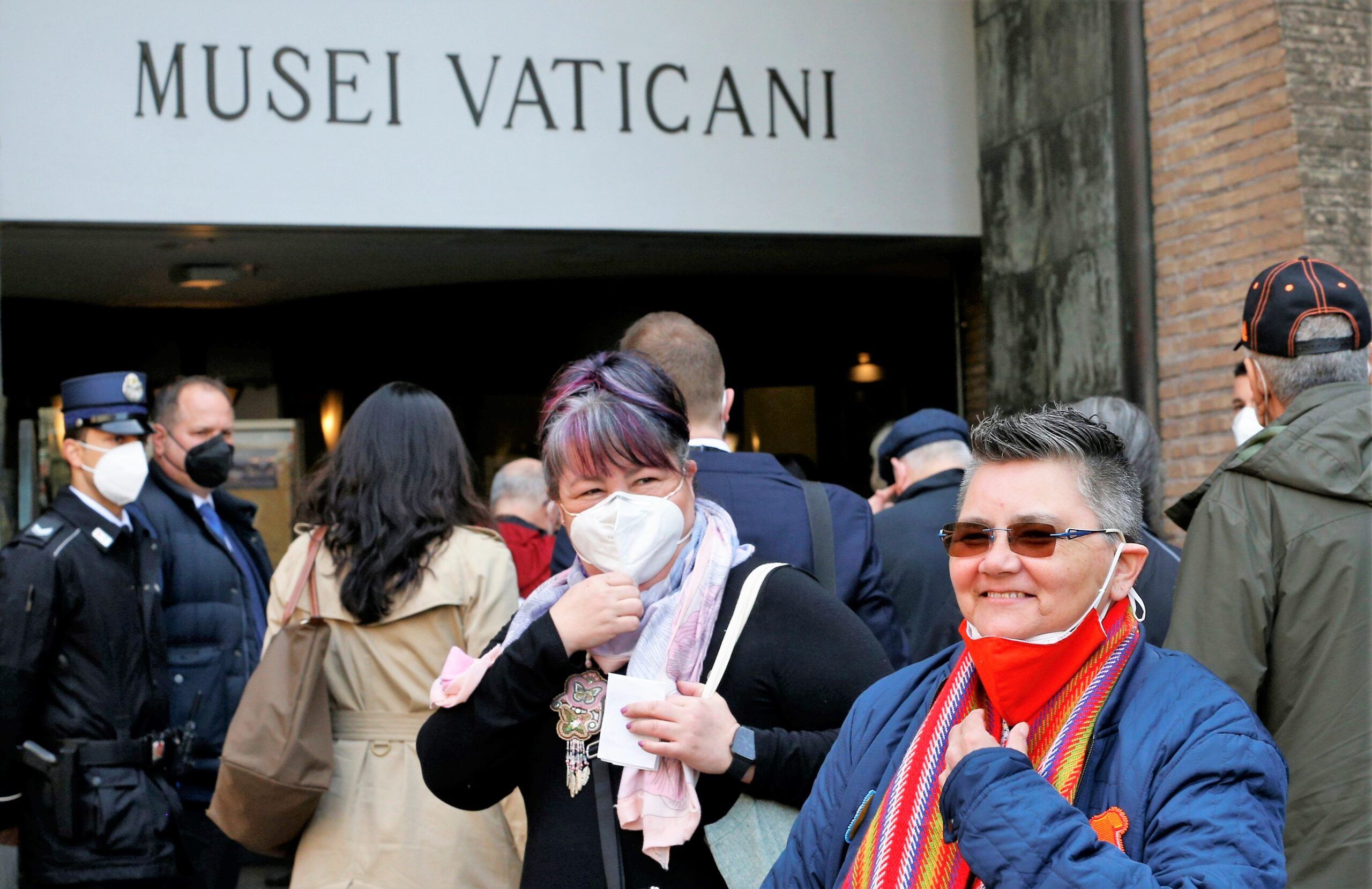

As members of all three Indigenous delegations in Rome toured the Anima Mundi collection at the Vatican Museums, there were mixed feelings. Some were in awe, while others wanted to know how these examples of Indigenous culture ended up half a world away from where they were made.
Provenance issues are plaguing museums around the world that hold Indigenous art and artifacts, and the Vatican Museums are intensely interested in discovering more about what they have in their collections and how it got there.
Not every item is controversial. Though photography at the private display put on for members of the delegations was forbidden, The Catholic Register obtained a cell phone photograph of a Madonna and Child Jesus statue by Quebec Inuit artist Tivi Ilisituk.
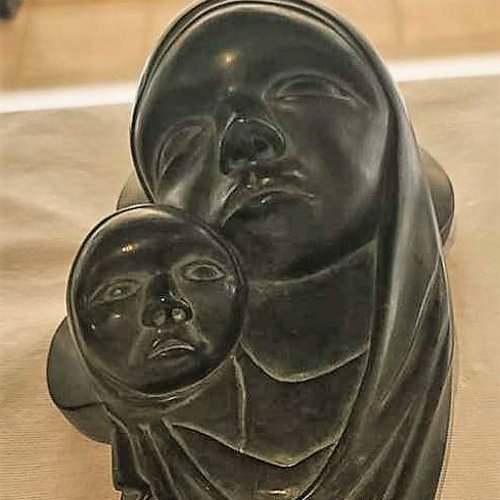
Ilisituk, one of the acknowledged masters of Inuit sculpture, was still alive when the sculpture was given to Pope Benedict XVI in Rome in 2006.
The Vatican Museums has thousands of Madonna and Child Jesus images — paintings, sculptures, prints, drawings and more — in its vast collection, from cultures spanning the globe and from every century since Mary carried her baby through the dusty streets of Bethlehem.
Ilitsuk’s image was made from the light grey stone he found by the Kovik River, which empties into Hudson’s Bay. Just as Italian masters such as Jacopo Bellini or Giotto di Bondone portrayed their Middle Eastern Jewish subjects as 14th- and 15th-century Italians, Illisituk made the Mother of God a young Inuit woman and her babe an Inuit child.
The Catholic Register