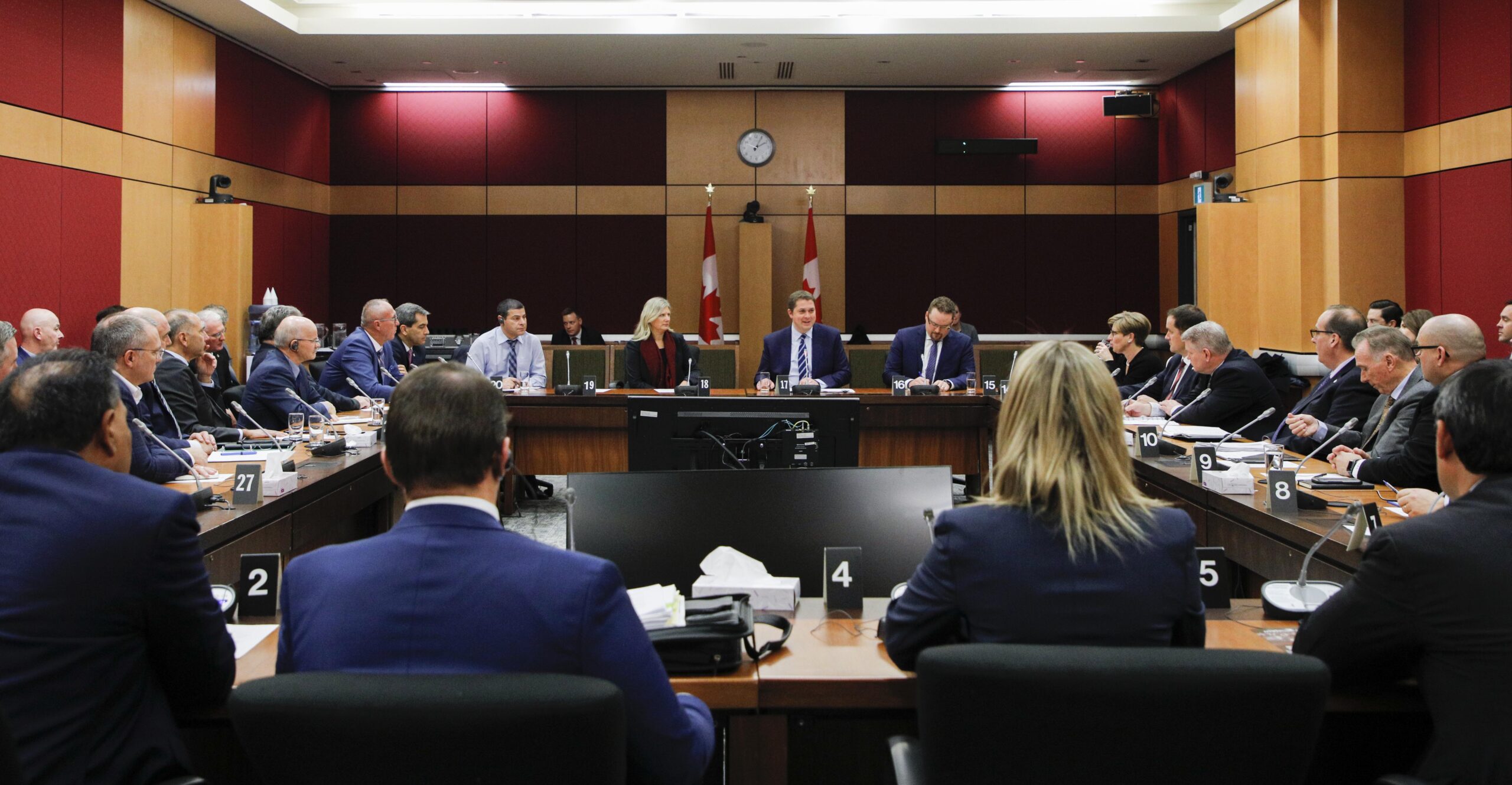

OTTAWA – Social conservatives within the federal Conservative Party are gearing up for what they say is a fight for the soul of the party.
“We are in a vicious battle for the soul of the Conservative Party,” said Jack Fonseca of the Campaign Life Coalition.
“If the Red Tories get their way, the Conservative Party as we know it will cease to exist,” he said, adding “all is not lost” since he expects strong social conservative candidates who are pro-life and pro-traditional family values will run and have an impact on the outcome of the party’s leadership race.
“We are too numerous, too large a portion of the party’s base to be ignored,” he said.
Although the federal Conservative leadership campaign is just getting underway, former Conservative cabinet minister Peter Mackay is, at this time, one of the few candidates to announce he is definitely running for the post, although he hasn’t officially launched his campaign with a formal announcement.
But other possible well-known candidates, such as former federal conservative and Quebec Liberal premier Jean Charest and former interim Conservative leader Rona Ambrose, both of whom would be considered in the Red Tory wing of the party, have decided not to pursue a leadership campaign. As well, former Conservative cabinet minister Pierre Poilievre, who many wanted to run because he is a standard-bearer for the fiscally-conservative wing of the party also announced on Jan. 23 that he will not be running either.
One candidate who is expected to run is Richard Décarie, who was former Conservative Prime Minister Stephen Harper’s deputy chief of staff when he was opposition leader. He is a self-declared social conservative who came under attack from some other members of the party when he said in a TV interview with CTV on January 22 that being gay “is a choice.”
That prompted a backlash from some senior members of the party who wrote on Twitter that their version of the Conservative Party is welcoming to people who are gay.
“Being gay is not a choice and nobody should be running for office on a platform to roll back hard-won rights,” said Mackay, while another possible leadership candidate Ontario MP Erin O’Toole called Décarie’s comment “ridiculous.” And Poilievre, before he announced his decision not to run for the leadership, also piled on as a critic of Décarie’s viewpoint.
“The comments are as unacceptable as they are ignorant. You do not speak for Conservatives — or for Canadians. Being gay is not a choice. Being ignorant is,” Poilievre said in a statement.
But the Campaign Life Coalition’s Fonseca applauds Décarie for speaking his mind, and not adopting “liberal” values as the so-called Red Tories have.
“I think government has a responsibility to encourage the traditional values that we have had for the past years. That’s the kind of so-con issues that I would bring as leader,” Décarie said in his interview with CTV.
Fonseca said Décarie’s positions such as defunding abortion services is what social conservatives want a strong leader to emphasize.
“Killing a baby is not health care that is fighting a disease, it is a lifestyle choice,” Fonseca said, adding that so-called progressive Tories are not really conservatives at all but are “half Liberals.”
“Liberal ideas are not conservative values, that is dead wrong,” Fonseca said. “Abortion is not a human right, it is murder.”
While Fonseca said he is optimistic that the base of the Conservative Party that believes in traditional family values will play a key role in choosing the next party leader, he concedes that the rules in place for the campaign that require a larger cash outlay to get into the race than has been the case in the past appears to be an effort to neutralize the social conservative wing of the party. But he believes that will backfire.
“If they are trying to push people of faith out of the party, they are not going to succeed,” Fonseca said.
Among the key dates in the Conservative leadership campaign are that by March 25 candidates must have 3,000 supportive signatures and put up $300,000, of which they will get $100,000 back after the leadership race is over and they did not break any campaigning regulations. New party members have until April 17 to join to be eligible to vote in the race and the party will hold its leadership convention in Toronto on June 27.
But while Fonseca sees the Conservative leadership campaign as a fight over the “soul” of the party, an author of a book on Conservative politics in Canada is warning the various factions in the party that a battle over the direction of the party going forward could have harmful consequences for the conservative movement as a whole in the future.
“Perhaps the greatest challenge for a Tory leader is the capacity to unite the diversity of conservative factions – and then some – into common cause. A leader who microtargets a collection of interests might win the Conservative leadership but will be doomed in a general election,” Bob Plamondon, author of Full Circle: Death and Resurrection in Canadian Conservative Politics, wrote in an op-ed column in the Globe and Mail newspaper on Jan. 16.
“No one faction can get all of what they want and none should expect to get what might rupture the national coalition that’s necessary to win,” he wrote. “We elect prime ministers who can unite the country and not exploit our differences.”
Canadian Catholic News