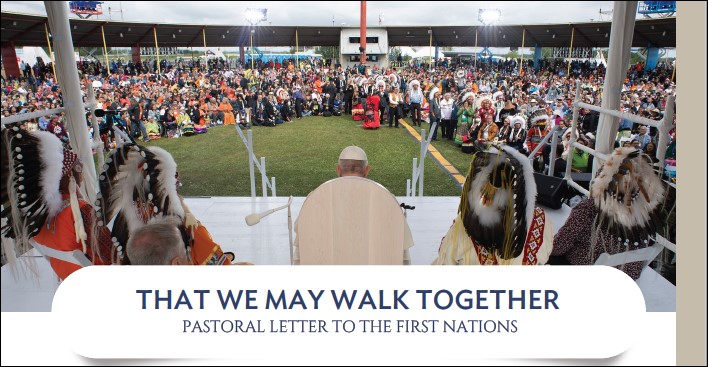

Archbishop J. Michael Miller is urging the faithful of the archdiocese to read “with an open heart” four pastoral letters from Canada’s bishops to Canada’s Indigenous peoples, saying “we have so much to learn from one another.”
The Canadian Conference of Catholic Bishops Wednesday released the four distinct letters to First Nations, Inuit, Métis, and the People of God in Canada. The letters resulted from the bishops’ plenary meeting last September at which they agreed to build on relationships with Indigenous communities at the local and national levels, to work on continued dialogue, and to collaborate on projects at the national, regional, and especially local levels, where the bishops hope the pastoral letters will help guide initiatives.
Archbishop Miller said the letters “express the profound desire of the Catholic Church in Canada to build on the steps taken by Pope Francis on the journey towards truth and healing and reconciliation” between Indigenous and non-Indigenous peoples of Canada.
The Archbishop asked for prayers that “with God’s grace the future steps outlined in the letters will be speedily implemented.”
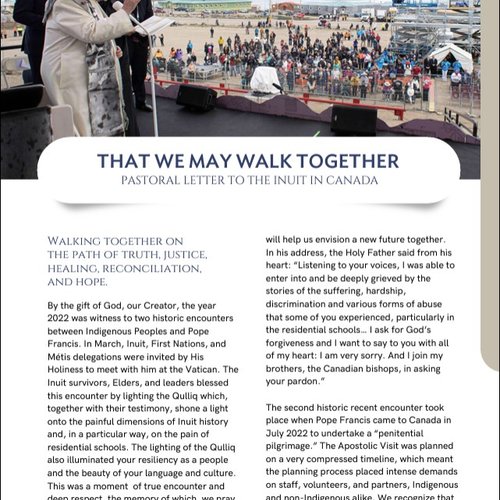
In the series of letters, entitled That We May Walk Together, the bishops pledge to continued engagement at the diocesan level and support for the Indigenous Reconciliation Fund, which has raised more than $9 million toward a five-year $30-million commitment from the bishops.
The bishops also commit to supporting efforts to make Indigenous culture more widely known, particularly by working with Catholic schools, seminaries, religious houses, and pastoral formation programs.
In the letters the bishops pledge to work with local community leaders in addressing social challenges – including addictions, suicide, violence, poverty, and incarceration – and celebrating the role of women in Indigenous faith communities.
The bishops also commit to finding new ways for Indigenous elders to share their spiritual wisdom in dioceses.
In the Pastoral Letter to the People of God, the Catholic faithful are invited “to join their bishops, in a spirit of love and service, as the local churches take tangible steps toward reconciliation with Indigenous Peoples in view of a new era of encounter and dialogue.”
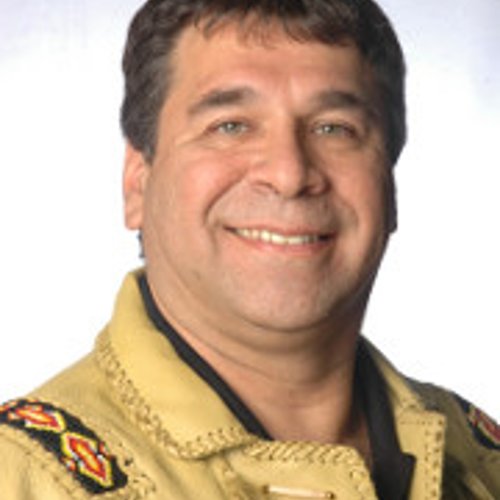
A North Vancouver Indigenous consultant said the letters “acknowledge a way forward.”
Kevin Barlow, a Catholic Mi’kmaw who has advised the Archdiocese of Vancouver on Indigenous issues, said, “I welcome the genuine sentiments contained in the pastoral letters.”
Barlow is pleased that the Indigenous Reconciliation Fund offers “one effort by the Catholic Church to move a healing path along. The healing needs on our communities are many, and with this type of support, I am certain we can heal.”
Deacon Rennie Nahanee, a member of the Squamish First Nation, said a start to implementing the pastoral letters’ recommendations would be the creation of a national bishops office “to proceed from rhetoric to an action plan.”
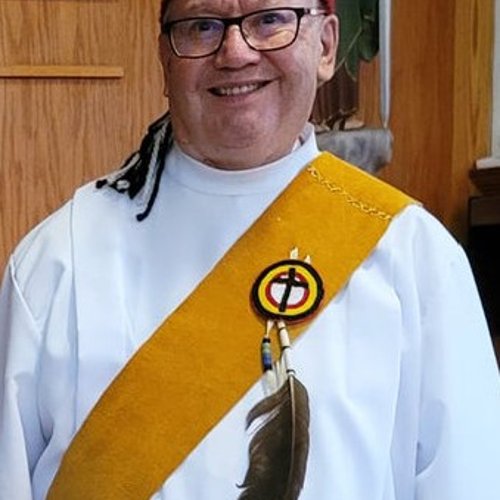
He pointed out the CCCB has two subcommittees – the Canadian Catholic Indigenous Council, with an advisory role, and the Our Lady of Guadalupe Circle, an action committee.
Their mandates could include implementing the recommendations, such as educating Catholic institutions on Indigenous history and respecting Indigenous culture.
“As a Catholic deacon I see a need for Inculturation in the Mass to help keep alive our Squamish language, which the Church – directed by the federal government of the day – forbade being spoken,” Deacon Nahanee said.
“Dialogue with Indigenous people works best in talking circles. The Catholic Church then needs to respond” using that structure to continue the conversation.
‘Healing and forgiving can help us restore balance’
The long and often-troubled history between Church and Indigenous peoples is not uniform across Canada, as Mi’kmaq consultant Kevin Barlow points out.
The Mi’kmaq converted to Catholicism in 1610 at the direction of their Grand Chief Membertou, said Barlow. “Since that time, Mi’kmaq have practised the Catholic faith fervently,” including an annual pilgrimage to Ste-Anne-de-Beaupre in Quebec to honour Saint Anne, the Mi’kmaq’s patron saint.
“The pastoral letters mention Treaties, and it may be useful to know that all the treaties signed in the east under King George are referred to Peace and Friendship Treaties,” said Barlow.
Mi’kmaq came to the aid of newly arrived European settlers who were “quite ill with scurvy and challenged to survive harsh winters here; we helped them. Our treaties never gave up land or rights, we simply agreed to co-exist in peace and friendship.”
Barlow said Grand Chief Membertou likely instructed the Mi’kmaqs to convert because “the basic tenets of the Catholic Church are in keeping with our spiritual views. That is why we acted as Christians would, even before conversion, to aid those in need – settlers.”
Over time, “something made a wrong turn,” Barlow said, “and we somehow got legally shut out of industries and resource extraction, which contributed to economic hardships for our people.”
Although the past can’t be changed, “the pastoral letters acknowledge a way forward – in that spirit of peace and friendship. I know there are many deeply wounded Indigenous people who cannot find it in them to forgive, we need to respect that. I also believe though, through my own personal healing journey, that when possible and with genuine efforts to meet us, healing and forgiving can help us restore balance.”
This story will be updated.