
How tightly must we be bound by an artist’s intention when interpreting his creation?
For example, must viewers embrace Francis Ford Coppola vision for his masterpiece Apocalypse Now, which Coppola didn’t intend as an anti-war film?
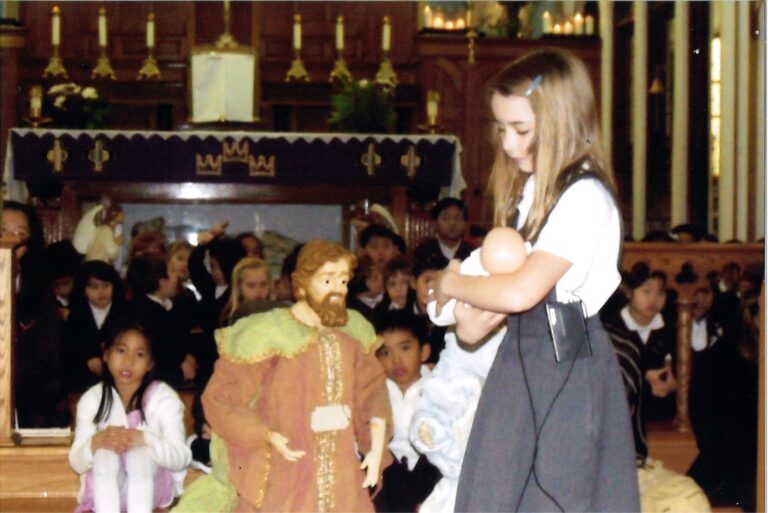
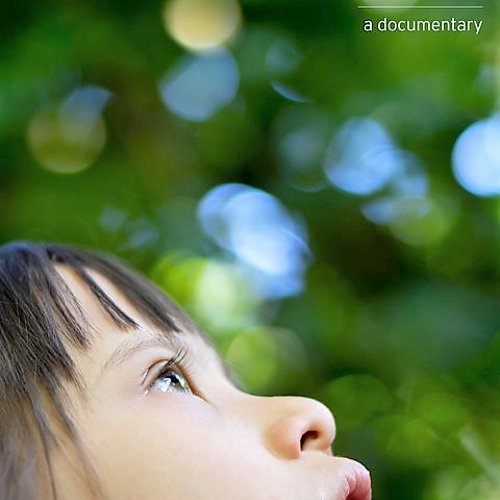
A current example of this sort of challenge arises with a documentary film entitled Raising Ava Rose. The 24-minute film focuses on the day-to-day life of a girl named Ava Rose, a student at St. Paul’s Elementary in Richmond.
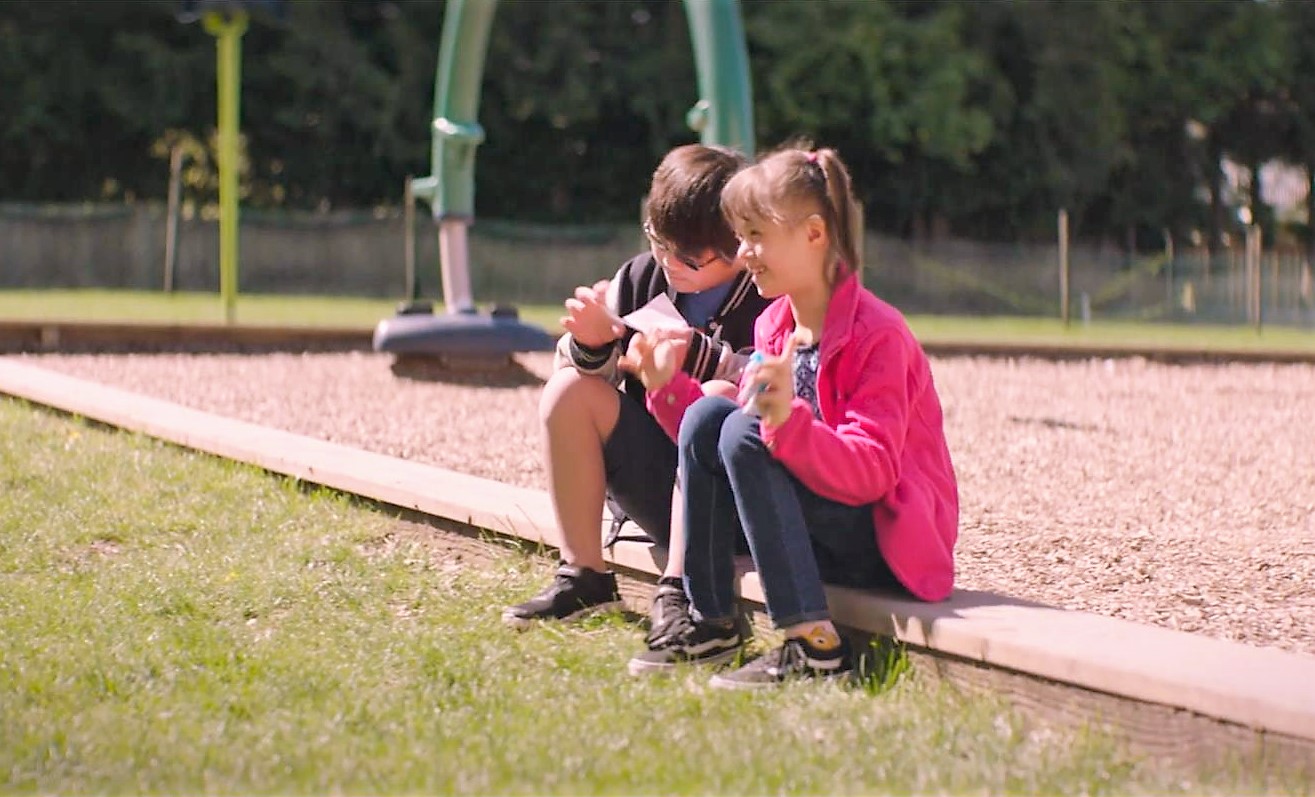
Beautifully directed by her cousin, Jordan Macken, a 29-year-old graduate of St. Paul’s and then Vancouver College and the UBC film studies program, the documentary shows Ava Rose at home with her loving and concerned parents, at school in class and outside playing with fellow students, and after school hanging out and kidding around with her best friend, Marcus.
What’s special about these otherwise everyday activities is that Ava Rose has Down Syndrome, as does Marcus.
The film contains many touching scenes, including personal interviews with Ava Rose’s parents, Belinda and Eric Plourde. It’s clear they are worried about their daughter’s future – her looming entry into high school being their foremost concern.
At the same time, the film captures the love that not only surrounds Ava Rose, but also emanates from her. For every ounce of worry and concern, there’s a pound of joy and hope.
Macken, who is also the film’s executive producer, said in an interview that he had no ideological message in mind when he made the documentary, whose production was funded by the Telus STORYHIVE.
On the other hand, “a filmmaker can’t avoid some purpose,” he said. “In the edit room, [I] choose lines to cut, lines to keep … there’s no way around it, that I have some vision, for sure, but I guess I wanted to keep it away from politics.”
He said his purpose was to show Ava Rose’s humanity in the hopes that viewers would become more aware of the issues faced by families who are raising a child with Down Syndrome.
It’s difficult to see how they would not be so moved. Macken’s care for his young cousin emanates from the screen. Only the most hard-hearted viewer would not have a positive response.
But is this all that the film is about? Are there other ways in which the viewing public, including 122 million daily viewers of YouTube, the platform on which Raising Ava Rose is viewable, can interpret it?
The answer is yes. Macken’s humanizing film not only paints a loving portrait of its subject but can also be seen as delivering a powerful pro-life message, one that is incredibly important in an age when prenatal screening for Down Syndrome often leads to pressure on mothers to abort their unborn child.
Raising Ava Rose is a celebration of Ava Rose’s life – a life that would not exist if her parents had made the choice that is becoming increasingly widespread around the world. In short, then, it can be seen as a pro-life film, even though, when asked whether he intended it to be interpreted this way, Macken said, “I did not, no.”
Nevertheless, pro-life advocates in the Lower Mainland have been embracing the film and spreading its life-affirming message. Asked for his reaction to those who want to show the film in order to support their pro-life principles, Macken said, “That’s fine, and that’s great, which I’d love.”
The archdiocese’s pro-life chaplain, Father Larry Lynn, a filmmaker before he entered the priesthood, said first and foremost Raising Ava Rose should be seen as “a good movie, a really good movie. If you’re preaching, it’s not a good movie. [Macken] made a good movie because he’s telling the truth about life, what is life.”
Moreover, the movie celebrates life, Father Lynn said. “We can see people with Down Syndrome … they’re alive, they’re people, they’re wonderful people, and they contribute so much to our existence. And it’s all good.”
So, watch Raising Ava Rose for its celebration of humanity. Or watch it for its implicit pro-life message. One way or the other, though, watch it.
Jordan Macken can be reached at jordanmackenfilm@gmail.com.