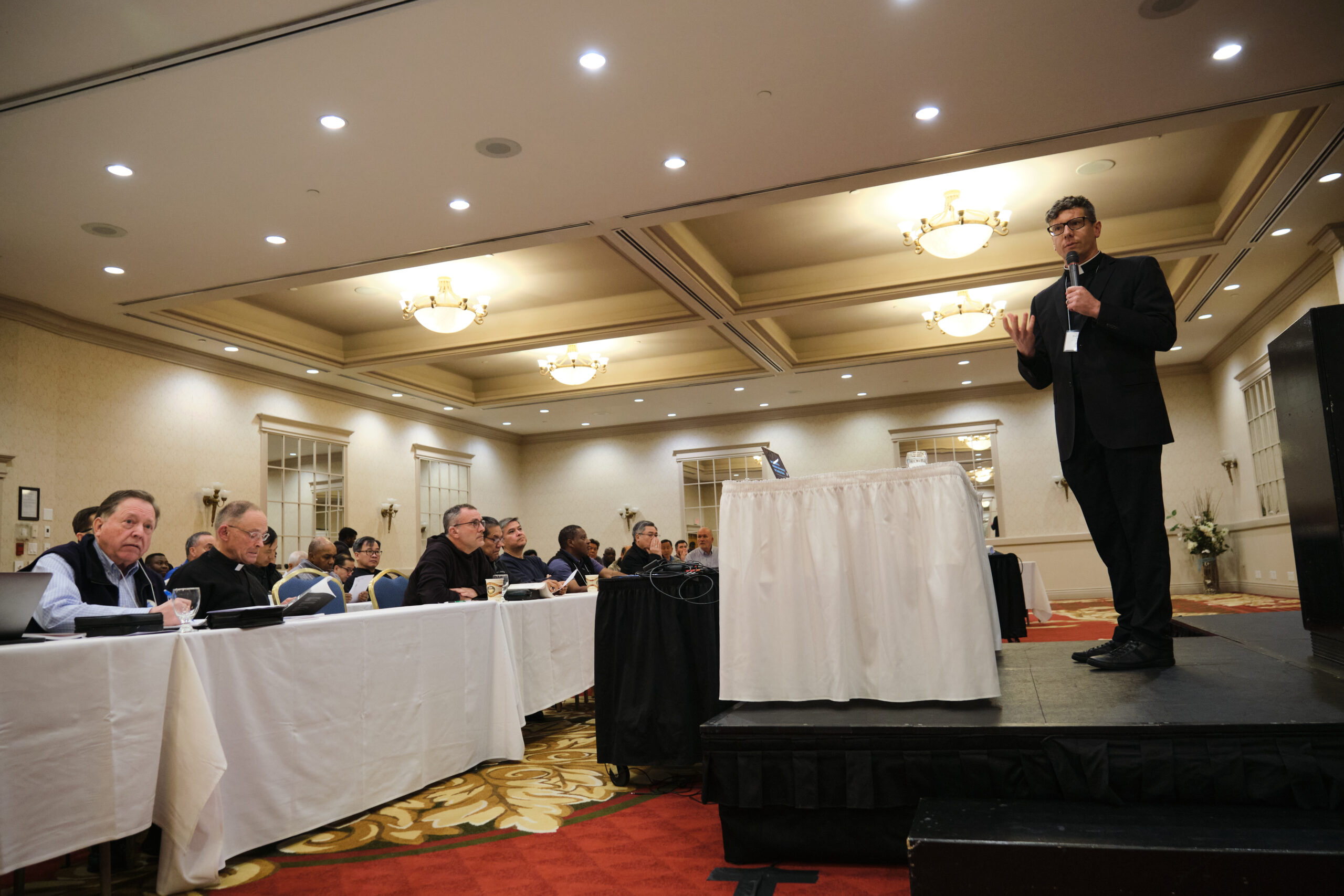

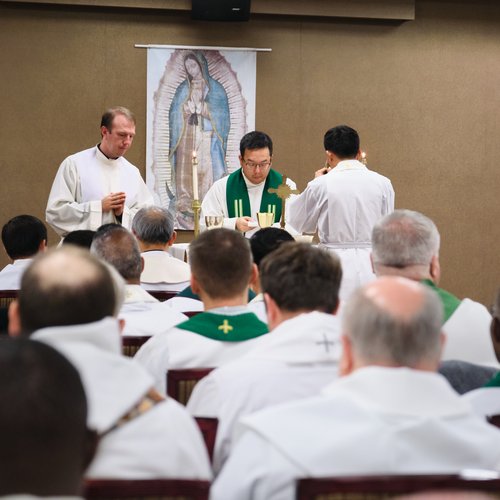
With few social issues as vexing to pastors as transgenderism and its related sexual ideologies, pastoral responses to transgenderism were a significant focus for archdiocesan priests during their annual study week.
During one talk, national columnist Father Raymond J. de Souza told the over 100 priests gathered in Harrison that these issues “may have destabilized us as priests.”
Father de Souza was one of three speakers, including Dr. Julia Sadusky and Father Bryan Duggan, who gave talks aimed at helping priests work through the problem of transgenderism both philosophically, and pastorally.
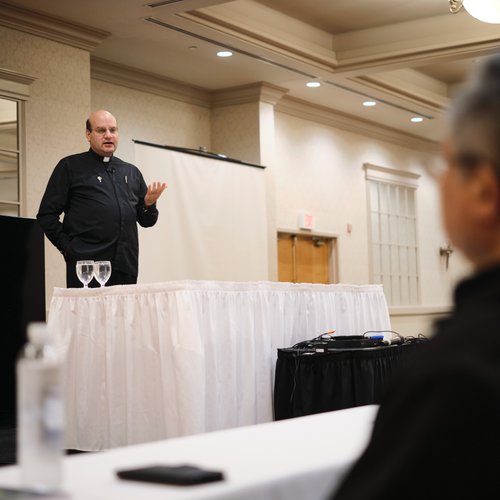
Father de Souza presented the problem theologically, relying on Saint John Paul II’s interpretation from the book of Genesis that the body is the “icon of the human person.”
Throughout the history of Western civilization, there have been different ideas about what constitutes a human person, he said.
Plato believed in the importance of the soul, considering the body as secondary. Today, the secular understanding is much more gnostic, with the material world and, consequently, the human body becoming the primary place to find truth and meaning in human life.
Catholics, the teachings of Aristotle through Thomas Aquinas explain that human beings are both body and soul. One cannot exist in fullness without the other. “Apart from my body, I am not myself,” said Father de Souza.
Preaching versus pastoring: an interview with Dr. Sadusky and Father Duggan
Understanding some of the philosophical and theological ideas surrounding sex and gender is one thing, but it can seem detached from the pastoral reality of dealing with individuals struggling with gender and sexuality.
Dr. Julia Sadusky and Father Bryan Duggan spoke about how pastors can navigate the pastoral reality posed by these issues. Sadusky told The B.C. Catholic that because priests are public figures, they have responsibilities to engage with the public and political domains; they need to preach the teaching of the Church, just as much as they need a sensitive pastoral sense. This requires a nuanced approach that is “doctrinally clear, outward facing, thoughtful and calm,” she said.
Sadusky encourages pastors to understand the terms and definitions often encountered in LGBTQ culture.
Understanding is not the same as condoning behaviour, Sadusky told the priests. It merely helps to form an authentic understanding. Pastors should approach the problem of sexuality and gender like an anthropologist in a foreign land.
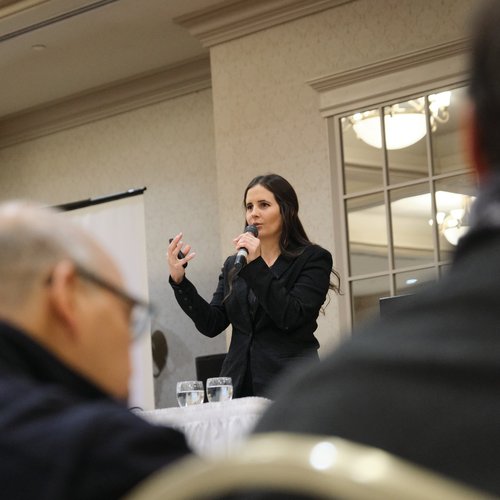
“You have to learn the language to communicate with them,” she said, and the most important thing a pastor can do is ask questions to understand the person in front of them better.
This openness can feel at odds with modern culture’s emphasis on understanding the “why” of a problem in order to solve it, but Sadusky says there are better ways to accompany a struggling person. People respond better if they know they are being heard.
Ultimately, the pastoral problem finds its best expression or solution in accompaniment, she said. The goal is to help people encounter Christ, something “they can usually only tolerate through a relationship with another person.”
Accompaniment in a pastoral context is not about control or influence. Rather, it’s about helping the person discern while honouring their freedom. “If they are going to listen to God, it will spring from trust,” said Sadusky. “It’s trust that makes people peek in the door.”
“Accepting that people can make choices can be one of the hardest things to learn because people make all kinds of decisions, some of which might disappoint,” said Sadusky. “This can be a point of tension.”
In reality, a pastor must accept that their hope for someone may not always be realized in their time together. What matters is that the pastoral relationship keeps a person in dialogue with God. When done right, Sadusky says this leads the person to an openness to God that may not have otherwise existed.
Father Dugan told The B.C. Catholic, “There is a tension between what we know to be revealed Truth, and what actually helps someone to change.”
In other words, “What actually promotes behaviour change or healing?”
Sometimes, this question leads people to divide the problem, placing pastoral concern in conflict with proclaiming the actual truth of the faith, but Father Duggan sees things differently.
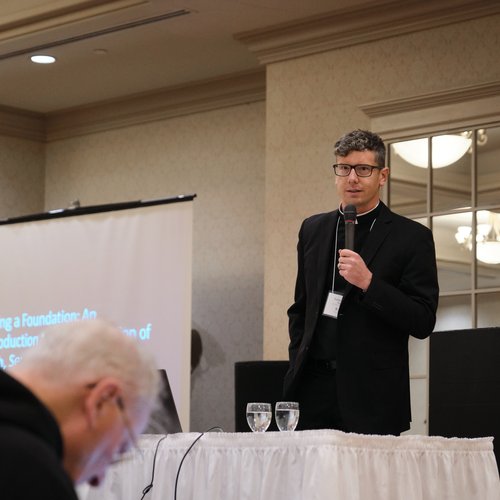
“Many gender and sexual minorities express a pretty strong belief and feeling that the Church can not help them, and that it has nothing to offer them,” said Father Duggan.
The focus should be on relationships, “while I hold these [Catholic] truths, I am also with this person. How can I, with the time I have, make an impact in this person’s life?”
He said youths struggling with issues of gender and sexuality often report dissatisfaction when they approach faith leaders because they feel pastors use faith and accompaniment to coerce them into specific kinds of behaviour.
“Somehow, something has been communicated to people who are suffering or experiencing their gender and sexuality in a non-traditional way that the Church cannot help them,” he said.
“They feel they can not wrestle with these issues within the Church.” As a result, they feel like they have to choose “between faith and being authentic about their experiences.”
He said there is no simple solution to this problem. The only thing anyone can do, including pastors, is to listen with charity, understanding that God loves us all.
Share your thoughts and contribute to the ongoing conversation by sending us a Letter to the Editor.