
As Archbishop Miller writes in his election letter to Catholics this week, the Oct. 19 B.C. election is a rare opportunity for voters to help guide the direction of the province by prayerfully discerning and voting.
By voting, you can help select leaders who have the good of all British Columbians in mind – the unborn, the elderly, the young, families, workers, farmers, business owners, future generations, and the forgotten and ostracized by society.
Catholics are called to participate in accordance with the full measure of talents entrusted to them by God. At a minimum, this means voting wisely after considering the relevant issues, the positions of the candidates and parties, relevant Church teachings, and after having prayed for guidance.
Here, thanks to the hard work of Catholic Conscience, is a summary of relevant issues with related Church teachings. By visiting the Catholic Conscience website you’ll find the main political parties’ key policy proposals, examined through the lens of Catholic social teaching.
The Sanctity of Human Life: From Conception to Natural Death
Abortion, Euthanasia and Alternatives │ Human Engineering │ Population Control
CHURCH TEACHING
The right to life from conception to natural death is the foundation of all Catholic social teaching. This is something that is not subject to alleged forms or ‘modernizations.’ It is not ‘progressive’ to try to resolve problems by eliminating a human life.
Catholics care about the sanctity of life because the entire purpose of each soul God endows with life is to find its way back to God by loving God and caring for all the souls God has placed around it. Voluntary termination of life any time between conception and natural death necessarily frustrates that purpose.
The source of human dignity is the likeness to God that is bestowed on each of us at the moment we are conceived. We respond appropriately to this gift by using all the time, talent, and treasure that God has entrusted to us to seek and grow closer to God, by sharing in his continuing act of creation and caring for those around us. Our first purpose is to seek God, especially in one another. If we do that, everything else will be given to us. Anything that interferes with that is contrary to the Word of God. Genesis chapter 1; Matthew Chapters 6, 22 and 25
Abortion and Euthanasia
You shall not kill.” – the 5th Commandment
The right to life from conception to natural death is the foundation of all Catholic Social Teaching, and in particular, implies the illicitness of every form of procured abortion and of euthanasia. – 155, Compendium of the Social Doctrine of the Church
“This is not something subject to alleged reforms or ‘modernizations.’ It is not ‘progressive’ to try to resolve problems by eliminating a human life.” Pope Francis, Evangelii Gaudium 214
Human Engineering
Cloning and Cell Manipulation
An issue of particular social and cultural significance today, because of its many and serious moral implications … the simple replication of normal cells or of a portion of DNA presents no particular ethical problem. Very different, however, is cloning understood in the proper sense. Such cloning is contrary to the dignity of human procreation because it takes place in total absence of an act of personal love between spouses, being agamic and asexual reproduction. In the second place, this type of reproduction represents a form of total domination over the reproduced individual on the part of the one reproducing it …
Cloning for therapeutic use does not attenuate its moral gravity, because in order that such cells may be removed the embryo must first be created and then destroyed. Compendium of the Social Doctrine of the Church, 236
Gender Election
Everyone, man and woman, should acknowledge and accept his sexual identity. Physical, moral and spiritual difference and complementarities are oriented towards the goods of marriage and the flourishing of family life. Compendium of the Social Doctrine of the Church, 224
Men and women with homosexual tendencies must be accepted with respect, compassion, and sensitivity. Every sign of unjust discrimination in their regard should be avoided. Catechism of the Catholic Church, 358
Population Growth; Birth Control; Family Planning
Judgment concerning the interval of time between births, and that regarding the number of children, belongs to the spouses alone. This is one of their inalienable rights, to be exercised before God … The intervention of public authorities must be made in a way that fully respects the freedom of the couple. All programmes of economic assistance aimed at financing campaigns of sterilization and contraception are to be orally condemned as affronts to the dignity of the person and the family.
The answer to questions connected with population growth must instead by sought in simultaneous respect both of sexual morals and of social ethics, promoting greater justice and authentic solidarity so that dignity is given to life in all circumstances.
All reproductive techniques – such as the donation of sperm or ova, surrogate motherhood, heterologous artificial fertilization – that make use of the uterus of another woman or of gametes of persons other than the married couple, injuring the right of the child to be born of one father and one mother who are father and mother are ethically unacceptable both from a biological and from a legal point of view. Compendium of the Social Doctrine of the Church, 234-235,
Human Trafficking
The solemn proclamation of human rights is contradicted by a painful reality of violations, including new forms of slavery such as trafficking in human beings, illegal drug trafficking, and prostitution. “Even in countries with democratic forms of government, these rights are not always fully respected.” Some serious problems remain unsolved: trafficking in children, the phenomenon of “street children, and the use of children for commerce in pornographic material. 158, 245 Compendium of the Social Doctrine of the Church, 158, 245
POINTS TO PONDER: LIFE and HUMAN DIGNITY
A conscience well formed by the social teachings of the Church will take seriously the following questions:
The Dignity of Life and Social Indexes to Guide Policy Making
It is a sad fact that many of our parties, along with many of our voters, have stopped talking about or even acknowledging the evils of abortion, Socially-Assisted Death (SAD), and other sins against the dignity of life. Is this because we as a society have been distracted by the comforts and worries of modern life, and lost touch with the purpose of life? Or are we hiding, like the timid steward of Matthew 25:18?
And what of our governments? For years, many (probably most) of our political parties have been fond of asserting, in dozens of ways, that various groups of Canadians “deserve” or are “entitled to” a very wide variety of benefits in order to enable them (us) to live lives of “dignity.” They are much more reluctant, however, to offer any indication of what they mean by a “dignified” life, or any way of measuring the effect of the benefits they propose on improving it. Indeed, the only indexes used by most governments to gauge wellness of any kind are gross domestic production levels (GDP) – the aggregate worth of the material objects our society produces. This has caused many observers to remark that Canada and other parts of the world appear to have lost any common conception of the proper meaning of the dignity or purpose of life, replacing that common conception its accompanying sense of community, shared culture, and a sense of the common good with an obsessive consumerism and pursuit of comfort and material wealth. All sense of civil community and our obligation to serve that common good suffers as well. The result has been a postmodern individualism that leaves human beings feeling isolated and on their own.
In his encyclical Fratelli tutti, Pope Francis observed that:
Today, in many countries, hyperbole, extremism and polarization have become political tools. Employing a strategy of ridicule, suspicion and relentless criticism, in a variety of ways one denies the right of others to exist or to have an opinion. Their share of the truth and their values are rejected and, as a result, the life of society is impoverished and subjected to the hubris of the powerful. Political life no longer has to do with healthy debates about long-term plans to improve people’s lives and to advance the common good, but only with slick marketing techniques primarily aimed at discrediting others. In this craven exchange of charges and counter-charges, debate degenerates into a permanent state of disagreement and confrontation.
Recently some parties have begun to propose various “wellness” indicators as an alternative to reliance on GDP in gauging social wellbeing. Such indicators are based on factors said to represent the health, happiness, and well-being of society and its individual members. And in 2019 the current Canadian government quietly introduced a new “Quality of Life” measure in its instructions to new cabinet ministers, and caused the creation of a “Quality of Life Hub.” The Hub introduces the index and a draft method for measuring it, and solicits public feedback. (See 160.statcan.gc.ca)
1) Bearing in mind that it is citizen voters who are ultimately responsible for the behaviour of democratic governments, how should Catholics respond to the government’s call for comment, with properly and prayerfully-formed consciences?
2) What does the government say about abortion, suicide, “gender modification,” population growth, and other life issues?
How do the following questions, and their answers, factor into the government’s proposed framework? How do they relate to life and politics in the province of British Columbia?
- What limits should be placed on voluntary termination of human life, either prior to birth or at any time before death? What can or should be done at the federal level, and what should be left to the provinces, or to private, religious, or other non-profit organizations?
- What options is our society able to offer to reluctant or unwilling mothers, as alternatives to abortion and to support unwanted children?
- Is it appropriate to allow minors to consider suicide as a health care option without consulting their parents?
- What options can be offered by provincial or federal governments to families of minors who are being encouraged to consider medically-assisted suicide?
- Are federal restrictions and controls on cloning and the use of human cells, fetuses, and body parts properly crafted? What, if anything, should be done differently? Should there be more discussion of this serious moral issue in our society?
- To what extent should voluntary, elective services that are morally questionable to large numbers of individuals, such as the voluntary termination of life or the voluntary “modification” of gender, be financed publicly through mandatory taxation? If such services are to be offered, should they be financed by the individuals who elect to access them, or by sympathetic charities, or by dissenting taxpayers?
Stewardship of Creation
Climate Change │ Species, Diversity and Wildlife │ Energy and Resources │ Conservation and Sustainable Development
CHURCH TEACHING
Living our vocation to be protectors of God’s handiwork is essential to a life of virtue:
it is not an optional or secondary aspect of our Christian experience.
– Pope Francis, Laudato si’, 217
God gave humans dominion over the earth, thereby making us stewards of creation as we work with him in his continuing act of creation.
We must constantly consider how our actions glorify or harm this wonderous gift God has entrusted to us. This is a multi-faceted question, which must not be over-simplified.
With a vocation to glorify all life which includes respect for the inviolability and integrity of life, humans find themselves in the presence of all God’s other creatures. We can and are obliged to put them at our own service and to enjoy them, but our dominion over the world requires the exercise of responsibility. It is not a freedom of arbitrary and selfish exploitation. All of creation has value and is “good” in the sight of God. This is a marvellous challenge to the human intellect. Compendium of the Social Doctrine of the Church, 112, 113
The Book of Genesis provides us with certain foundations of Christian anthropology, including the meaning of human activity in the world, which is linked to the discovery and respect of the laws of nature that God has inscribed in the created universe, so that humanity may live in it and care for it in accordance with God’s will. Compendium of the Social Doctrine of the Church, 37.
Climate Change
There is urgency to this issue. Every Pope since at least Paul VI has written of our need to shift to a more responsible use of the earth and its abundant resources. The Church accepts that that need is now urgent.
“A very solid scientific consensus indicates that we are presently witnessing a disturbing warming of the climatic system … Humanity is called to recognize the need for changes of lifestyle, production and consumption, in order to combat … at least the human causes which produce or aggravate it. It is true that there are other factors, yet a number of scientific studies indicate that most global warming in recent decades is due to the great concentration of greenhouse gases released mainly as a result of human activity. Pope Francis, Laudato si’, 23
Energy and Resources
The good steward neither allows the resources entrusted to him to lie fallow or to fail to produce their proper fruit, nor does he waste or destroy them (Matthew 25:14-30). Rather, he uses them responsibly, for the Lord’s purposes, to realize their increase so that he may enjoy his livelihood and provide for the good of his family, his descendants, and his neighbours.
Humanity’s relationship with creation and the creatures of the earth “requires the exercise of responsibility, it is not a freedom of arbitrary and selfish exploitation.” Compendium of the Social Doctrine of the Church, 115
One of the higher priority issues in economics is the utilization of resources, that is, of all those goods and services to which economic subjects – producers and consumers in the private and public spheres – attribute value because of their inherent usefulness in the areas of production and consumption … Resources in nature are quantitatively scarce, which means that each individual economic subject, as well as each individual society, must necessarily come up with a plan for their utilization in the most rational way possible, following the logic dictated by the “principle of economizing.” Compendium of the Social Doctrine of the Church, 346
Because of the powerful means of transformation offered by technological civilization, it seems that the balance between man and the environment has reached a critical point … A reductionistic conception quickly spread, starting from the presupposition – which was seen to be erroneous – that an infinite quantity of energy and resources are available, that it is possible to renew them quickly, and that the negative effects of the exploitation of the natural order can be easily absorbed … Compendium of the Social Doctrine of the Church, 461, 462
Conservation and Sustainable Development
Care for the environment represents a challenge for all of humanity. It is a matter of a common and universal duty, that of respecting a common good, destined for all, by preventing anyone from using “with impunity the different categories of beings, whether living or inanimate – animals, plants, the natural elements – simply as one wishes, according to one’s own economic needs.”
Responsibility for the environment, the common heritage of mankind, extends not only to present needs but also to those of the future … This is a responsibility that present generations have towards those of the future … A correct understanding of the environment … at the same time … must not absolutize nature and place it above the dignity of the human person himself. In this latter case, one can go so far as to divinize nature or the earth, as can readily be seen in certain ecological movements that seek to gain an internationally guaranteed institutional status for their beliefs. Compendium of the Social Doctrine of the Church, 361, 461-463
Species Diversity and Wildlife
Man and woman find themselves also in the presence of all the other creatures. They can and are obliged to put them at their own service and to enjoy them, but their dominion over the world requires the exercise of responsibility, it is not a freedom of arbitrary and selfish exploitation. All of creation has value and is “good” in the sight of God, who is its author. Man must discover and respect its value. This is a marvellous challenge to his intellect, which should lift him up as on wings towards the contemplation of the truth of all God’s creatures, that is, the contemplation of what God sees as good in them. Man must recognize all of God’s creatures for what they are and establish with each of them a relationship of responsibility. Compendium of the Social Doctrine of the Church, 113.
“Each of the various creatures, willed in its own being, reflects in its own way a ray of God’s infinite wisdom and goodness. Man must respect the particular goodness of every creature, to avoid any disordered use of things which would be in contempt of the Creator and would bring disastrous consequences for human beings and their environment.” Catechism of the Catholic Church, 399
It is a responsibility that must mature on the basis of the global dimension of the present ecological crisis … This perspective takes on a particular importance when one considers, in the context of the close relationships that bind the various parts of the ecosystem, the environmental value of biodiversity, which must be handled with a sense of responsibility and adequately protected … Compendium of the Social Doctrine of the Church, 466
POINTS TO PONDER: STEWARDSHIP OF CREATION
The following data is very important for a properly formed conscience to consider in discerning its vote:
Many voices, including scientists, the Vatican, and the United Nations, agree that in order to avoid catastrophic global heating, with resulting unpredictable increases in the number and severity of extreme weather events, loss of agricultural land, particularly in the poorest countries, and collapse of ecosystems, the global average temperature increase must be limited to 1.5 degrees Centigrade; and that to achieve such a limit, emissions of carbon dioxide, methane, and nitrous oxide must be cut in half by 2030 and brought to zero net increase by 2050. Canada is currently committed is to a 30% reduction in greenhouse gas emissions, relative to 2005 levels, by 2030, but according to the auditor general may not meet that goal.
– What can or should federal, provincial, and municipal governments, non-governmental organizations, families, and individuals do, if anything, to help prevent irreversible and possibly catastrophic damage to the earth’s atmosphere?
– How can or should the provincial government help guide British Columbia toward a sustainable, adaptable, and resilient economy and life style, in order to protect future generations and those who live in other parts of the world, while enabling British Columbians to work at materially-sustaining and spiritually fulfilling jobs?
– Should the elimination of single-use plastics, packaging, and implements be made a social priority? If so, what can or should the federal or provincial governments do, or local or charitable organizations? What other issues should be at the top of our climate agenda?
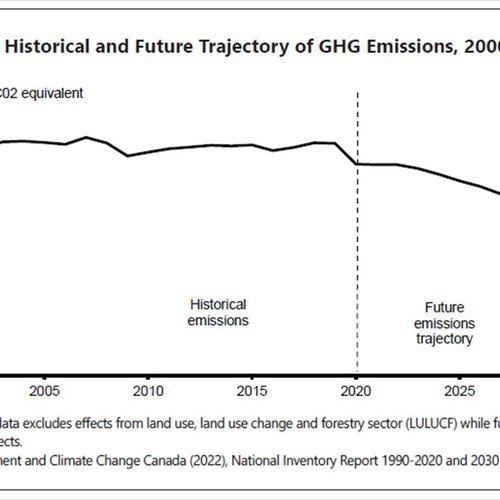
Chart: Trends as of 2020, from Canada Federal Budget 2023, pg 16s
Family, Community and the Common Good
Role of the Family │ Healthcare │ Education and Young Workers │ Culture Arts and Tourism
CHURCH TEACHING
The family is the primary unit in society. The priority of the family over society and the State must be affirmed.
The demands of the common good … are strictly connected to respect for and the integral promotion of the person and his fundamental rights. These demands concern above all the commitment to peace, the organization of the State’s powers, a sound juridical system, the protection of the environment, and the provision of essential services to all, some of which are at the same time human rights: food, housing, work, education and access to culture, transportation … Compendium of the Social Doctrine of the Church, 166
The Role and Development of the Family
“Honour your father and mother.” – the 4th Commandment
The family is the primary unit in society. It is where education begins and the Word of God is first nurtured. The priority of the family over society and the State must be affirmed. Compendium of the Social Doctrine of the Church, 209-214
The Church teaches that the proper role of government and other human institutions is to foster human life and dignity by maintaining social conditions that enable and encourage us to serve God in one another, and thereby to promote that which is truly in the common interest. This begins with nurturing and enabling families, as well as supporting the elderly and other marginalized members of society.
A society built on a family scale is the best guarantee against drifting off course into individualism or collectivism, because within the family the person is always at the centre of attention as an end and never as a means. It is patently clear that the good of persons and the proper functioning of society are closely connected with the healthy state of conjugal and family life. Without families that are strong in their communion and stable in their commitment, peoples grow weak.
The priority of the family over society and the State must be affirmed. The family does not exist for society or the State, but society and the State exist for the family.
Every social model that intends to serve the good of man must not overlook the centrality and social responsibility of the family. In their relationship to the family, society and the State are seriously obligated to observe the principle of subsidiarity. In virtue of this principle, public authorities may not take away from the family tasks which it can accomplish well by itself or in free association with other families; on the other hand, these same authorities have the duty to sustain the family, ensuring that it has all the assistance that it needs to fulfil properly its responsibilities. Compendium of the Social Doctrine of the Church, 209-214
The Church teaches that the proper role of government and other human institutions is to foster human life and dignity by maintaining social conditions that enable and encourage us to serve God in one another, and thereby to promote that which is truly in the common interest. This begins with nurturing and enabling families, as well as supporting the elderly and other marginalized members of society.
Health Care
The demands of the common good concern above all commitment to a sound juridical system, the protection of the environment, and the provision of essential services to all, some of which are at the same time human rights: food, housing, work, education and access to culture, transportation, basic health care, the freedom of communication and expression, and the protection of religious freedom.
Among the causes that greatly contribute to underdevelopment and poverty, mention must be made of illiteracy, lack of food security, the absence of structures and services, inadequate measures for guaranteeing basic healthcare, and the lack of safe drinking water and sanitation. Compendium of the Social Doctrine of the Church, 166, 447
Support for the Elderly
If the elderly are in situations where they experience suffering and dependence, not only do they need health care services and appropriate assistance, but and above all they need to be treated with love. Compendium of the Social Doctrine of the Church, 222
Education
May Nazareth remind us what the family is, what the communion of love is,
its stark and simple beauty, its sacred and inviolable character; may it help us to see how sweet
and irreplaceable education in the family is; may it teach us its natural function
in the social order. May we finally learn the lesson of work.
– St. Paul VI, Address at Nazareth (5 January 1964)
Maintaining employment depends more and more on one’s professional capabilities. Instructional and educational systems must not neglect human or technological formation, which are necessary for gainfully fulfilling one’s responsibilities. Young people should be taught to act upon their own initiative, to accept the responsibility of facing with adequate competencies the risks connected with a fluid economic context that is often unpredictable in the way it evolves. Compendium of the Social Doctrine of the Church, 289, 290
“[T]here is a growing loss of the sense of history … A kind of “deconstructionism,” whereby human freedom claims to create everything starting from zero, is making headway in today’s culture. The one thing it leaves in its wake is the drive to limitless consumption and expressions of empty individualism. Concern about this led me to offer the young some advice. “If someone tells young people to ignore their history, to reject the experiences of their elders, to look down on the past and to look forward to a future that he himself holds out, doesn’t it then become easy to draw them along so that they only do what he tells them? He needs the young to be shallow, uprooted and distrustful, so that they can trust only in his promises and act according to his plans. That is how various ideologies operate: they destroy (or deconstruct) all differences so that they can reign unopposed. To do so, however, they need young people who have no use for history, who spurn the spiritual and human riches inherited from past generations, and are ignorant of everything that came before them.” Pope Francis, Fratelli tutti, 13
Culture, Arts and Tourism
Faced with rapid technological and economic progress, and with the equally rapid transformation of the processes of production and consumption, a great deal of educational and cultural work is urgently needed. Compendium of the Social Doctrine of the Church, 376, 401
Certain economically prosperous countries tend to be proposed as cultural models for less developed countries; instead, each of those countries should be helped to grow in its own distinct way and to develop its capacity for innovation while respecting the values of its proper culture. A shallow and pathetic desire to imitate others leads to copying and consuming in place of creating, and fosters low national self-esteem.
We forget that “there is no worse form of alienation than to feel uprooted, belonging to no one. A land will be fruitful, and its people bear fruit and give birth to the future, only to the extent that it can foster a sense of belonging among its members, create bonds of integration between generations and different communities, and avoid all that makes us insensitive to others and leads to further alienation.” – Fratelli tutti, –51-53
POINTS TO PONDER: FAMILY, COMMUNITY and THE COMMON GOOD
A conscience well formed by the social teachings of the Church will take seriously the following questions:
Families and Child Well-Being
1) In what circumstances, if any, is it appropriate for governments to place limits on the right of parents to make decisions pertaining to the care or education of their children?
2) To what extent is child poverty a problem in Canada? To the extent that it is a problem, what can be done about it?
3) Some political parties have suggested that full participation by all eligible workforce members, including both parents of two-parent couples and all single parents, is critical in order to maximize return from the national economy–so that economic well-being can be optimized. Moreover, in order to maximize those returns and ensure full economic participation, it is critical to ensure that affordable child care is accessible by all families. And so, let us consider the following question: Which is more important for children: a stable and dignified home with two loving parents, one of whom might be available to stay home part or full time, or maximized national economic returns? To the extent that being home with a parent is best for a child, how can that be encouraged by society?
Health Care
Given that the Church speaks of a right to adequate health care, consider the following questions that any informed Catholic should ponder before voting for a particular political party:
1) What should be done to ensure that adequate levels of quality health care are available to all who need it, without undue delays or waiting times?
2) While birth control pills are covered by provincial health care and at least one party has proposed coverage (including travel, if needed) for in-vitro fertilization, the costs of counseling for Natural Family Planning are not. Is it reasonable to provide drugs and expensive, invasive procedures to young couples free of charge, while requiring those who seek natural, non-chemical methods, to pay? Or, should the federal government consider providing coverage for proven natural family planning methods?
3) In a publicly-funded healthcare system, does there exist any obligation for an individual person to take reasonable measures to avoid health issues (e.g., wearing a mask during a pandemic, or a helmet while riding a bicycle), so as to avoid becoming a publicly-funded health care burden when preventable illness or injury occurs? If so, what can or should be done to encourage individuals to adopt such measures?
4) It is it wise for a country to ensure that it is self-dependent for important health care products, such as vaccines against serious illnesses? If so, what can or should the federal government do to encourage and support such self-dependence?
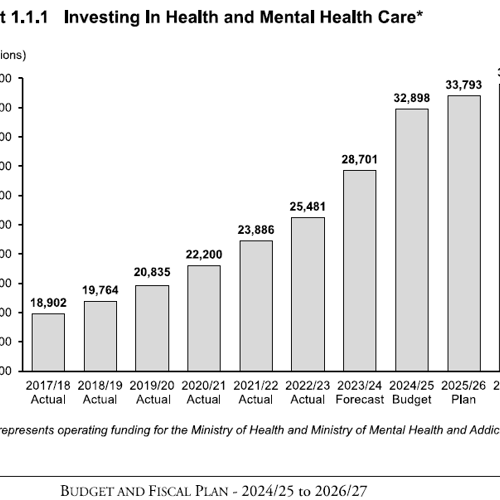
5) The table below, which was taken from the 2024-2025 provincial budget, shows current, historical, and projected future costs for public health care in British Columbia. Are these costs sufficient to provide the adequate health care spoken of by the church? Do less expensive alternatives exist, or ways of sharing the health care burden? For example, what if anything could or should be done by private, non-profit, or community organizations, including the Church and lay Catholic organizations, to ensure that efficient, quality basic health care is available to all who need it, without undue costs or delays?
Care for the Elderly
1. Some parties are calling for increased space in publicly-funded facilities for the elderly and long-term care patients. Should any other solutions, such as nurturing a culture of life-long intergenerational family cohesiveness and support, including home caregivers, be considered also, in addition or as alternatives to long-term residential care?
2. Who should be responsible for long-term support for the elderly? Themselves? Their families? The federal or provincial governments? Charitable institutions? Some combination of these? To what extent?
Education
1. It has been suggested that too many Canadians fail to understand basic democratic principles, such as the responsibilities of federal, provincial, and local governments, and the proper roles of non-governmental institutions such as charities, schools, businesses, news media, and moral and religious organizations. What, if anything, can or should the provincial government do in order to promote a more comprehensive understanding of civics in British Columbia?
2. Should a course of study of economics, at least one semester in length, be mandatory in high school?
3. To what extent should the study of history be mandatory in high schools? Only one full credit course? Every year in high school? What aspects of history should mandatory? National? Provincial? Global? Ancient? Modern?
4. Should natural family planning (NFP) techniques be taught in high school?
An Economy at the Service of All People
The Dignity of Work │ Poverty Reduction │ Labour, Unions, Employment | Industries and Corporations
CHURCH TEACHING
Jesus said to the crowds, “Therefore I tell you, do not worry about your life, what you will eat, or about your body,
what you will wear. Is not life more than food and the body more than clothing?
Look at the birds in the sky; they do not sow or reap, they gather nothing into barns, yet your heavenly Father feeds them.
Are not you more important than they? Can any of you by worrying add a single moment to your life-span?
Seek first the kingdom of God and his righteousness, and all these things will be given you besides.” Matthew 6:25-33
Some people are born into economically stable families, receive a fine education, grow up well nourished, or naturally possess great talent. They will certainly not need a proactive state; they need only claim their freedom. Yet the same rule clearly does not apply to a disabled person, to someone born in dire poverty, to those lacking a good education and with little access to adequate health care. If a society is governed primarily by the criteria of market freedom and efficiency, there is no place for such persons, and fraternity will remain just another vague ideal. – Pope Francis, Fratelli tutti 109
The Dignity and Importance of Work
The use of one’s gifts to seek and serve God necessarily includes work, by which humans cooperate with God in God’s continuing act of creation. Work has a place of honour because it is a source of the conditions for a decent life, and is, in principle, an effective instrument against poverty. But one must not succumb to the temptation of making an idol of work, for the ultimate and definitive meaning of life is not to be found in work. Work is essential, but it is God – and not work – who is the origin of life and the final goal of man.
The underlying principle of wisdom is the fear of the Lord. The demand of justice, which stems from it, precedes concerns for profit: “Better is a little with the fear of the Lord than great treasure and trouble with it” (Pr 15:16). “Better is a little with righteousness than great revenues with injustice” (Pr 16:8). Compendium of the Social Doctrine of the Church, 257.
Work is not only an essential part of life, but when we work in accordance with our inner passions – our individual vocations – it is a joy. And it is also an obligation to one’s family, neighbours, and nation. Man must work, both because the Creator has commanded it and in order to respond to the need to maintain and develop his own humanity. We are heirs of the work of generations and at the same time shapers of the future of all who will live after us. Compendium of the Social Doctrine of the Church, 274
But work, and particularly dignified work, is not readily available for all who seek it. Those who are unemployed or underemployed suffer the profound negative consequences that such a situation creates in a personality and they run the risk of being marginalized within society, of becoming victims of social exclusion … Compendium of the Social Doctrine of the Church, 289
Poverty Reduction
The poor, the marginalized and in all cases those whose living conditions interfere with their proper growth should be the focus of particular concern. To this end, the preferential option for the poor should be reaffirmed in all its force … Today, this love of preference for the poor, and the decisions which it inspires in us, cannot but embrace the immense multitudes of the hungry, the needy, the homeless, those without health care and, above all, those without hope of a better future.” Compendium of the Social Doctrine of the Church, 182
Catholics are called to remember Jesus’ own words: What we do to the least among us, we do to him. Matthew 25:31-46
Helping the poor financially must always be a provisional solution in the face of pressing needs. The broader objective should always be to allow them a dignified life through work. – Pope Francis, Laudato si’ 128
An Economy to Serve All People
I encourage financial experts and political leaders to ponder the words of one of the sages of antiquity: ‘Not to share one’s wealth with the poor is to steal from them and to take away their livelihood. It is not our own goods which we hold, but theirs … ‘ Money must serve, not rule! –Pope Francis, Joy of the Gospel 57-58
The development of economic activity and growth in production are meant to provide for the needs of human beings. Economic life is not meant solely to multiply goods produced and increase profit or power; it is ordered first of all to the service of persons, of the whole man, and of the entire human community. For many people, a living wage and dignified housing are beyond reach. Catechism of the Catholic Church, 2426
The planning capacity of a society oriented towards the common good and looking to the future is measured … above all on the basis of the employment prospects that it is able to offer. Maintaining employment depends more and more on one’s professional capabilities. Instructional and educational systems must not neglect human or technological formation, which are necessary for gainfully fulfilling one’s responsibilities.
Young people should be taught to act upon their own initiative, to accept the responsibility of facing with adequate competencies the risks connected with a fluid economic context that is often unpredictable in the way it evolves. Compendium of the Social Doctrine of the Church, 271-290.
Small Businesses, Trades, and Crafts
The decentralization of production, which assigns to smaller companies several tasks previously undertaken by larger production interests, gives vitality and new energy to the area of small and medium-sized businesses. In this way, alongside traditional artisans there emerge new businesses characterized by small production interests at work in modern production sectors or in decentralized activities of larger companies.
Work in small and medium-sized businesses, the work of artisans and independent work can represent an occasion to make the actual work experience more human, both in terms of the possibility of establishing positive personal relationships in smaller-sized communities and in terms of the opportunities for greater initiative and industriousness. In these sectors, however, there are more than just a few cases of unjust treatment, of poorly paid and, above all, uncertain work. Compendium of the Social Doctrine of the Church, 315.
Industries, Innovation, and Agriculture
Thanks to technological innovations, the world is being enriched with new professions while others are disappearing. In the present phase of transition there is a continuous movement of workers from the industrial sector to that of services … In particular, there is an increase in … part-time, temporary and “non-traditional” employment … Compendium of the Social Doctrine of the Church, 313.
Unions and Workers’ Rights
The demands of competition, technological innovation and the complexities of financial fluxes must be brought into harmony with the defence of workers and their rights. Compendium of the Social Doctrine of the Church, 313.
Any form of materialism or economic tenet that tries to reduce the worker to a mere instrument of production, a simple labour force with an exclusively material value, would hopelessly distort the essence of work and strip it of its most noble and basic human quality. Compendium of the Social Doctrine of the Church, 270-271
Among the rights of workers, the Church recognizes (Compendium of the Social Doctrine of the Church, 301):
– the right to a just wage;
– the right to rest;
– the right to a working environment and to manufacturing processes which are not harmful to the workers’ physical health or to their moral integrity;
– the right that one’s personality in the workplace should be safeguarded “without suffering any affront to one’s conscience or personal dignity;
– the right to appropriate subsidies that are necessary for the subsistence of unemployed workers and their families;
– the right to a pension and to insurance for old age, sickness, and in case of work-related accidents;
– the right to social security connected with maternity;
– the right to assemble and form associations.
The Church recognizes the fundamental role played by labour unions … Such organizations, while pursuing their specific purpose with regard to the common good, are a positive influence for social order and solidarity, and are therefore an indispensable element of social life. Work, because of its subjective or personal character, is superior to every other factor connected with productivity; this principle applies, in particular, with regard to capital.
The Church’s social doctrine teaches that relations within the world of work must be marked by cooperation: hatred and attempts to eliminate the other are completely unacceptable. This is also the case because in every social system both “labour” and “capital” represent indispensable components of the process of production.
No Christian, in light of the fact that he belongs to a united and fraternal community, should feel that he has the right not to work and to live at the expense of others (cf. 2 Thes 3:6-12). Rather, all are charged … to make it a point of honour to work with their own hands, so as to be dependent on nobody (1 Thes 4:12), and to practice a solidarity which is also material by sharing the fruits of their labour with “those in need” (Eph 4:28). Compendium of the Social Doctrine of the Church, 264, 305-307.
Corporations and Competition, and Consumers
You shall not covet your neighbour’s goods.
– the 10th Commandment
The individual profit of an economic enterprise, although legitimate, must never become the sole objective. Social utility is an objective of even higher order. When the free market carries out the important functions mentioned above it becomes a service to the common good and to integral human development. When focused on profit alone, however, the market can degenerate into an inhuman and alienating institution, with uncontrollable repercussions.
Freedom in the economic sector … must be regulated by appropriate legal norms so that it will be placed at the service of integral human freedom … A great deal of educational and cultural work is urgently needed, including the education of consumers in the responsible use of their power of choice, the formation of a strong sense of responsibility among producers and among people in the mass media in particular, as well as necessary intervention by public authorities. In order to balance the principle of solidarity with the rights and obligations of the individual, the State’s intervention in the economic environment must be neither invasive nor absent, but commensurate with society’s real needs. “The State has a duty to sustain business activities by creating conditions which will ensure job opportunities, by stimulating those activities where they are lacking or by supporting them in moments of crisis. The State has the further right to intervene when particular monopolies create delays or obstacles to development. Compendium of the Social Doctrine of the Church, 305-307, 351, 376.
There is a growing loss of the sense of history, which leads to even further breakup. A kind of “deconstructionism,” whereby human freedom claims to create everything starting from zero, is making headway in today’s culture. The one thing it leaves in its wake is the drive to limitless consumption and expressions of empty individualism. – Pope Francis, Fratelli tutti, 12
Transportation and Infrastructure
The demands of the common good … are strictly connected to respect for and the integral promotion of the person and his fundamental rights. Among other things, these demands concern commitment to the provision of essential services to all, some of which are at the same time human rights: food, housing, work, education and access to culture, transportation … Compendium of the Social Doctrine of the Church, 166
POINTS TO PONDER: AN ECONOMY AT THE SERVICE OF ALL PEOPLE
A conscience well formed by the social teachings of the Church will take seriously the following questions:
Poverty Reduction
1. “The poor you will always have with you,” Christ warned his disciples. Why would Christ say that? Is it possible that the poor will always be with us in order that we, who now form the living body of Christ on earth, will always have an opportunity to glorify God by examining the meaning and the causes of poverty, and working to eliminating it, without expect that we will ever, on our own and without the assistance of God, be able to do that?
2. What is an appropriate definition of poverty, particularly in a society overflowing with consumer objects and material wealth?
3. How can Canada best strike a balance between the principles of solidarity – ‘we’re all in this together’ – and subsidiarity – ‘everyone should do what he or she can to support themselves, before burdening others?’
4. Should such definition include as a condition the ability of individuals to seek personal fulfillment in the pursuit of truth? In other words, the ability to enjoy and make use of leisure?
5. What, if anything, should be done to ensure that a dignified living wage, capable of providing a dignified home and opportunity to support a family, is available to workers and those willing to work?
6. Should a basic income policy be considered? If so, what form should it take?
7. What can or should be done by the provinces, and what should be left to the federal government, or to private or community organizations?
It has been observed that debt levels among the elderly are increasing, especially as the costs of long-term, dignified care increase.
1. What can or should be done to alleviate poverty and debt among the elderly?
GDP and Well-Being
For decades, governments have focused exclusively on gross domestic product – a measure of an economy’s sheer productivity – as the best measure of national social health. More recently, some voices have begun to advocate for a broader index of national well-being, to include factors such as the physical and emotional health of the people, the health of the environment, equity in housing, income, and opportunity, and food security, in addition to raw production.
1. Which of these measures of national well-being is better?
2. What else can or should be done to ensure that Canada’s economy serves everyone–rather than the other way around?
3. Is it reasonable to demand continuous economic growth, or might it be preferable to seek sustainable contentment?
Businesses and Corporations
For decades, corporate lobby groups and business schools have taught that the only legitimate object of a business corporation is to make money for its shareholders. More recently, some business voices have begun to call for a broader role for corporations, one that includes service of its employees, its customers, and the community, and protection of the environment.
1. Which approach is more consistent with Catholic social teaching?
2. Should anything be done to encourage development of a corporate and business culture that aims to serve people, communities, and future generations, in addition to fair profits? If so, what?
The Individual and Society: Rights, Responsibility, and Subsidiarity
Civil Liberties │ Human Rights │ Responsibilities: Participation and Subsidiarity
CHURCH TEACHING
To one person’s right there corresponds a duty in all other persons.
Those, therefore, who claim their own rights, yet altogether forget or neglect to carry out their respective duties,
are people who build with one hand and destroy with the other.
Civil Rights and Liberties
Every member of society is imbued with a number of rights. With them come responsibilities.
In Catholic terms, a “right” has been defined as a subjective moral power, residing in the person posing it, “to do, hold, or extract something,” which functions through appeal to another’s will through the other’s intellect. It is to be distinguished from might, i.e. the physical force or power to take something away from another. – Fr John Hardon, SJ, Modern Catholic Dictionary
Man’s history of sin begins when he no longer acknowledges the Lord as his Creator and himself wishes to be the one who determines, with complete independence, what is good and what is evil. “You will be like God, knowing good and evil” (Gen 3:5): this was the first temptation, and it is echoed in all the other temptations to which man is more easily inclined to yield as a result of the original Fall. – Pope Saint John Paul II, Veritatis splendor
The demands of the common good … are strictly connected to respect for and the integral promotion of the person and his fundamental rights. These demands concern above all the commitment to peace, the organization of the State’s powers, a sound juridical system, the protection of the environment, and the provision of essential services to all, some of which are at the same time human rights: food, housing, work, education and access to culture, transportation, basic health care, the freedom of communication and expression, and the protection of religious freedom. Compendium of the Social Doctrine of the Church, 164-166
Racism and Discrimination
The unity of the human family is not yet becoming a reality. This is due to obstacles originating in materialistic and nationalistic ideologies that contradict the values of the person integrally considered in all his various dimensions, material and spiritual, individual and community. In particular, any theory or form whatsoever of racism and racial discrimination is morally unacceptable. Compendium of the Social Doctrine of the Church, 433
Conscience and Religion
The Catholic Church emphasizes, among other rights, the right to religious freedom. Emphasis is given to the paramount value of the right to religious freedom: “all men are to be immune from coercion on the part of individuals or of social groups and of any human power, in such wise that no one is to be forced to act in a manner contrary to his own beliefs, whether privately or publicly, whether alone or in association with others, within due limits.” The respect of this right is an indicative sign of “man’s authentic progress in any regime, in any society, system or milieu.” Compendium of the Social Doctrine of the Church, 320-321
With euthanasia and medically-assisted death and abortion legalized, it is critical that healthcare providers whose deepest moral convictions tell them that such procedures are wrong, not be forced to participate. Catholic teaching says workers should be safeguarded from suffering any affront to conscience or personal dignity. It is a grave duty of conscience to avoid cooperating, even formally, with practices contrary to the Law of God.
Freedom of Speech; Truth, Press, and the Media
Information is among the principal instruments of democratic participation. Participation without an understanding of the situation of the political community, the facts and the proposed solutions to problems is unthinkable.
It is necessary to guarantee a real pluralism in the dissemination of information, ensuring that there are many forms and instruments of information and communications. Special attention must be given to the phenomenon of the news media being controlled by just a few people or groups. This has dangerous effects for the entire democratic system … The media must be used to build up and sustain the human community in its different sectors: economic, political, cultural, educational and religious. Society has a right to information based on truth, freedom, justice and solidarity. The essential question is whether the current information system is contributing to the betterment of the human person; that is, does it make people more spiritually mature, more aware of the dignity of their humanity, more responsible or more open to others, in particular to the neediest and the weakest.
A further aspect of great importance is that new technologies must respect legitimate cultural differences. In the world of the media the intrinsic difficulties of communications are often exacerbated by ideology, the desire for profit and political control, rivalry and conflicts between groups, and other social evils. Moral values and principles apply also to the media … . Compendium of the Social Doctrine of the Church, 414-416
Gender Equity
The feminine genius is needed in all expressions in the life of society. The first indispensable step in this direction is the concrete possibility of access to professional formation. The persistence of many forms of discrimination offensive to the dignity and vocation of women is due to a long series of conditioning that penalizes women, who have seen themselves relegated to the margins of society and even reduced to servitude … An urgent need to recognize effectively the rights of women in the workplace is seen especially under the aspects of pay, insurance and social security. Compendium of the Social Doctrine of the Church, 295
Property
Private property and other forms of private ownership of goods “assure a person a highly necessary sphere for the exercise of his personal and family autonomy and ought to be considered as an extension of human freedom … stimulating exercise of responsibility, it constitutes one of the conditions for civil liberty.” Compendium of the Social Doctrine of the Church, 171
The Church’s social doctrine requires that ownership of goods be equally accessible to all, so that all may become, at least in some measure, owners. The world exists for everyone, because all of us were born with the same dignity. Differences of colour, religion, talent, place of birth or residence, and so many others, cannot be used to justify the privileges of some over the rights of all. As a community, we have an obligation to ensure that every person lives with dignity and has sufficient opportunities for his or her integral development. Compendium of the Social Doctrine of the Church, 176
Not to share our wealth with the poor is to rob them and take away their livelihood. The riches we possess are not our own, but theirs as well … Other rights having to do with the goods necessary for the integral fulfilment of persons, including that of private property or any other type of property, should in no way hinder [this right], but should actively facilitate its implementation. Fratelli tutti, 188-120
Human Rights
The Church also recognizes a number of human rights, including:
– the right to life, an integral part of which is the right of the child to develop in the mother’s womb from the moment of conception
– the right to live in a united family and in a moral environment conducive to the growth of the child’s personality
– the right to develop one’s intelligence and freedom in seeking and knowing the truth
– the right to share in the work which makes wise use of the earth’s material resources, and to derive from that work the means to support oneself and one’s dependents
– and the right freely to establish a family, to have and to rear children through the responsible exercise of one’s sexuality.
The Church also emphases rights to adequate housing; clean water, and secure, nutritious food; education and access to culture, transportation, basic health care. Compendium of the Social Doctrine of the Church, 151-166
Individual Responsibilities
In human society, to one man’s right there corresponds a duty in all other persons: the duty, namely, of acknowledging and respecting the right in question. Those, therefore, who claim their own rights, yet altogether forget or neglect to carry out their respective duties, are people who build with one hand and destroy with the other. Compendium of the Social Doctrine of the Church, 156
Subsidiarity
Subsidiarity is the principle that each element of society should serve its proper purpose, and support others in serving theirs, the over-arching goal being to encourage and enable the authentic human development of the individual.
One consequence of this principle is that each individual, and smaller groups of people, should be allowed and expected to make for themselves all the decisions that can responsibly be left to them, rather than to larger groups or greater authorities. A premise of this principle is that we are each responsible for our own salvation, within the limits of the gifts and the challenges with which God has endowed us. This is one of the fundamental social teachings of the Church, since it helps to ensure that each individual is empowered to find his or her own way to God.
Families, Individuals, and Civil Society
It is impossible to promote the dignity of the person without showing concern for the family, groups, associations, local territorial realities; in short, for that aggregate of economic, social, cultural, sports-oriented, recreational, professional and political expressions to which people spontaneously give life and which make it possible for them to achieve effective social growth. This is the realm of civil society … This network of relationships strengthens the social fabric and constitutes the basis of a true community of persons, making possible the recognition of higher forms of social activity.
The political community is established to be of service to civil society, from which it originates … This vision is challenged by political ideologies of an individualistic nature and those of a totalitarian character, which tend to absorb civil society into the sphere of the State. The political community and civil society are not equal in the hierarchy of ends. The political community is essentially at the service of civil society and, in the final analysis, the persons and groups of which civil society is composed.
The State must provide an adequate legal framework for social subjects to engage freely in their different activities and it must be ready to intervene, when necessary and with respect for the principle of subsidiarity, so that the interplay between free associations and democratic life may be directed to the common good. Compendium of the Social Doctrine of the Church, 185, 417, 418
Subsidiary governments: provinces, municipalities, territories, and Aboriginal societies
The principle of subsidiarity is opposed to various forms of centralization, bureaucratization, and welfare assistance, and to the unjustified and excessive presence of the State in public mechanisms … Just as it is gravely wrong to take from individuals what they can accomplish by their own initiative and industry and give it to the community, so also it is an injustice and at the same time a grave evil and disturbance of right order to assign to a greater and higher association what lesser and subordinate organizations can do. Compendium of the Social Doctrine of the Church, 185
POINTS TO PONDER: RIGHTS and RESPONSIBILITIES; SUBSIDIARITY
A conscience well formed by the social teachings of the Church will seriously consider the following questions:
Civic and Individual Rights and Responsibilities
It is clear that the nation and the provinces owe their citizens great respect for each of a broad range of human rights. But with rights come responsibilities. In fact, a right is nothing other than the flip side of an obligation (responsibility). And while individual citizens have rights, the civil community as a whole also has rights, which means that individual citizens have some fundamental obligations towards the civil community as a whole (the nation).
In that light, we can ask:
1. What responsibilities do individuals have toward their communities, provinces, the nation, and the world? For example:
a) to what extent are citizens called to live sustainable lifestyles, for example by conserving energy, avoiding waste, and ensuring that they minimize their impact on future generations?
b) what should citizens look to their governments for, to encourage or enable sustainable consumer lifestyles?
c) To what extent are citizens called to:
i) participate in society, for example through informed voting, continued engagement with candidates and elected representatives, and keeping up responsibly with the news?
ii) lend a hand to their neighbours, for example by volunteering at home or within the community, in addition to paying taxes?
2. Can our governments do anything to enable or encourage citizens to contribute by volunteer service?
3. Under what conditions, if any, is it morally right to require health care providers to participate in morally questionable practices such as abortion or assisted death, when it is contrary to their understanding of morality or their religious beliefs?
In addition to human and civil rights, many parties speak of things British Columbians and others “deserve.”
1. How do the parties determine what citizens do or do not deserve? Do they apply predictable, objective criteria in making such determinations, or can such determinations sometimes seem arbitrary and unfair, or, in the context of elections, opportunistic? What criteria should be applied?
2. As the list of our defined political rights expand, how do we reconcile conflicts between them?
Government and Civil Society
1. Should the powers of the Federal government be expanded or reduced?
2. Should the powers of the Provincial government be expanded or reduced?
3. Is there too much government intervention in Canada or too little?
4. Or, should the powers of government be redistributed in order to ensure that individuals, public interest groups, and service organizations have opportunities to employ their lives and talents in the service of others, and the common good?
Solidarity
Supporting the Marginalized │ Indigenous Peoples │ Rural Communities │ Refugees and Newcomers
CHURCH TEACHING
Solidarity is found in a commitment to the good of one’s neighbour.
The good of one is the good of all, and the other is as important as the self.
Injustice done to another is an injustice that affects everyone. Compendium of the Social Doctrine of the Church, 193
Support for the Marginalized and the Vulnerable
Some people are born into economically stable families, receive a fine education, grow up well nourished, or naturally possess great talent. They will certainly not need a proactive state; they need only claim their freedom. Yet the same rule clearly does not apply to a disabled person, to someone born in dire poverty, to those lacking a good education and with little access to adequate health care. If a society is governed primarily by the criteria of market freedom and efficiency, there is no place for such persons, and fraternity will remain just another vague ideal. Pope Francis – Fratelli tutti, 109
So many needy brothers and sisters are waiting for help, so many who are oppressed are waiting for justice, so many who are unemployed are waiting for a job, so many peoples are waiting for respect. How can it be that even today there are still people dying of hunger? Condemned to illiteracy? Lacking the most basic medical care? Without a roof over their head?
The scenario of poverty can extend indefinitely, if in addition to its traditional forms we think of its newer patterns. These new patterns often affect financially affluent sectors and groups which are nevertheless threatened by despair at the lack of meaning in their lives, by drug addiction, by fear of abandonment in old age or sickness, by marginalization or social discrimination … Compendium of the Social Doctrine of the Church, 5
Disabilities, Mental Health and Addictions
Persons with disabilities are fully human subjects, with rights and duties: “in spite of the limitations and sufferings affecting their bodies and faculties, they point up more clearly the dignity and greatness of man.” Persons with disabilities are to be helped to participate in every dimension of family and social life at every level accessible to them and according to their possibilities … They too need to love and to be loved, they need tenderness, closeness and intimacy according to their capacities. Compendium of the Social Doctrine of the Church, 148
Indigenous Peoples and Reconciliation
The relationship of Indigenous peoples to their lands and resources deserves particular attention, since it is a fundamental expression of their identity. These peoples offer an example of a life lived in harmony with the environment that they have come to know well and to preserve. Their extraordinary experience, which is an irreplaceable resource for all humanity, runs the risk of being lost together with the environment from which they originate. Compendium of the Social Doctrine of the Church, 471
The Canadian Catholic Church supports the work of the Truth and Reconciliation commission. We are called to support thriving Indigenous communities in Canada, rooted in their unique cultures and traditions.
Northern and Rural Communities
Looking after the common good means making use of the new opportunities for the redistribution of wealth to the benefit of the underprivileged that until now have been excluded or cast to the sidelines of social and economic progress. Too often, social services and infrastructure development suffer from neglect in rural areas. Compendium of the Social Doctrine of the Church, 299, 300, 363
Agricultural labour merits special attention … considering the many problems that need to be met in the context of an ever more globalized economy as well as its growing significance in safeguarding the natural environment. Radical and urgent changes are therefore needed in order to restore to agriculture – and to rural people – their just value as the basis for a healthy economy … Compendium of the Social Doctrine of the Church, 363, 299.
Refugees, Immigrants and Newcomers
Ideally, unnecessary migration ought to be avoided; this entails creating in countries of origin the conditions needed for a dignified life and integral development. Yet until substantial progress is made in achieving this goal, we are obliged to respect the right of all individuals to find a place that meets their basic needs and those of their families, and where they can find personal fulfilment. Our response to the arrival of migrating persons can be summarized by four words: welcome, protect, promote and integrate. – Pope Francis, Fratelli tutti, 129
In the modern world, where there are still grave inequalities between rich countries and poor countries, and where advances in communications quickly reduce distances, the immigration of people looking for a better life is on the increase. These people come from less privileged areas of the earth and their arrival in developed countries is often perceived as a threat to the high levels of well-being achieved thanks to decades of economic growth. In most cases, however, immigrants fill a labour need which would otherwise remain unfilled … Institutions in host countries must keep careful watch to prevent the spread of the temptation to exploit foreign labourers, denying them the same rights enjoyed by nationals, rights that are to be guaranteed to all without discrimination. Compendium of the Social Doctrine of the Church, 297, 298
We are called to welcome immigrants and refugees with generosity and good will, as if they were Jesus Christ himself. Matthew, Chapter 25
When a stranger sojourns with you in your land, you shall not do him wrong.
The stranger who sojourns with you shall be to you as the native among you,
and you shall love him as yourself; for you were strangers in the land of Egypt:
I am the Lord your God. Lev. 19:33-34)
POINTS TO PONDER: SOLIDARITY
It is always important, as Archbishop Donald Bolen of Regina has said, “to listen to the voices of the suffering, to be guided by them in how we respond and to be ready to engage with them in moving forward.” (Catholic Register 18 July 2021)
1. What does it mean – to the government, to social organizations, and to individual Canadians – to listen to, and to be guided by, the voice of someone who is suffering?
2. Who, in Canada and around the world, is suffering now?
3. How can such voices be heard so that a healthy, positive, and loving response can be determined?
Indigenous Rights and Reconciliation
1. How can the provincial government and the Church work together to facilitate reconciliation with Indigenous peoples, so that all Canadians can benefit from re-establishing right-relationship?
Mental Health and Addictions
Several parties have proposed decriminalization of drug dealing and drug possession, in order to focus on the treatment of addiction as a health care issue.
1. Is it possible, by decriminalizing drug sales and drug possession, to both relieve an overburdened criminal justice system and help more individuals heal and recover from addictions? If so, what might a helpful approach look like?
2. Is it possible, through review of criminal legislation, education, and focused health care initiatives, to give individuals greater freedom to “develop their potentialities, become aware of their dignity and prepare to face their unique and individual destiny?” (quoting St. John Paul II, On the Hundredth Year (Centesimus Annus) #39
3. Is there any way to ensure that such measures are accompanied by effective mechanisms to address the root causes of and eliminate drug abuse, for example through educational initiatives at all levels of society?
4. To what extent can or should such measures be tailored to the individual human needs, desires, and weaknesses of those caught in cycles of abuse?
Refugees and Newcomers
1. What is being done, and what, if anything, should further be done to ensure that refugees and newcomers are safe, healthy, and enabled to flourish in British Columbia?
2. It seems obvious that many immigrants are attracted by one or more features of Canadian life and culture. To what extent is it possible and proper to expose immigrants to Canadian culture and expect them to embrace it?
3. If it is possible and proper to any degree, how are Canadian life and culture are to be defined, and by whom?
Northern and Rural Communities
1. What is being done, and what, if anything, should further be done to ensure vibrant, healthy rural life in British Columbia?
2. Of those measures, what should be done at the federal level? By the provinces? By businesses, residents, and civil associations in rural areas?
3. Northern areas are also of concern. What special circumstances are faced by those living in the North, and how should their needs best be assessed?
Good Government: Democracy, Justice, and Peace
Role and Purpose of Government │ Stewardship and Reform │ Provinces, Territories, Municipalities │ International Relations and Defence │ Public Safety
CHURCH TEACHING
An authentic democracy is the fruit of a convinced acceptance of the values that inspire democratic procedures: the dignity of every human person, the respect of human rights, commitment to the common good as the purpose and guiding criterion for political life.
The Proper Role of Government
It is impossible to understand the role and purpose of government and other social institutions without first appreciating the purpose of life.
If, as the Church believes, the purpose of life is for each soul to search for and find the truth which is God, and to seek to grow closer to God, and to ensure that all other souls are encouraged and enabled to find their own ways to God, it follows that the proper role of government is to provide, with the support of the Church and other moral, educational, and economic institutions, a legal and economic framework in which the common good can flourish, in order that the people may accomplish their mission, that is, so that the people may use the freedom God has given them to seek the truth and thereby return to him.
An authentic democracy is not merely the result of a formal observation of a set of rules but is the fruit of a convinced acceptance of the values that inspire democratic procedures: the dignity of every human person, the respect of human rights, commitment to the common good as the purpose and guiding criterion for political life. If there is no general consensus on these values, the deepest meaning of democracy is lost and its stability is compromised.
The Church’s social doctrine sees ethical relativism, which maintains that there are no objective or universal criteria for establishing the foundations of a correct hierarchy of values, as one of the greatest threats to modern-day democracies. Compendium of the Social Doctrine of the Church, 407
Institutions and Democracy
The Magisterium recognizes the validity of the principle concerning the division of powers in a State: “it is preferable that each power be balanced by other powers and by other spheres of responsibility which keep it within proper bounds. This is the principle of the ‘rule of law’, in which the law is sovereign, and not the arbitrary will of individuals.”
Responsibilities of the State include:
– ensuring that all individuals are enabled to achieve their full potential, by maintaining a framework capable of providing all the material, moral, and spiritual goods necessary for the common good
– harmonizing the different interests of sectors of society with the requirements of justice, including particularly the reconciliation of private ownership of goods with the common good
– ordering society not only in accordance with the desires of the majority, but the effective good of all the members of the community, including minorities
Compendium of the Social Doctrine of the Church, 168
The Role of the Church
The Church does not wish to exercise political power or eliminate the freedom of opinion of Catholics regarding contingent questions. Instead, it intends – as is its proper function – to instruct and illuminate the consciences of the faithful, particularly those involved in political life, so that their actions may always serve the integral promotion of the human person and the common good. The social doctrine of the Church is not an intrusion into the government of individual countries. It is a question of the lay Catholic’s duty to be morally coherent, found within one’s conscience, which is one and indivisible. Compendium of the Social Doctrine of the Church, 571
Taxes and Stewardship of Government
Public administration at any level – national, regional, community – is to be oriented towards the service of citizens, serving as steward of the people’s resources, which it must administer with a view to the common good.
Taxes
Tax revenues and public spending take on crucial economic importance for every civil and political community. The goal to be sought is public financing that is itself capable of becoming an instrument of development and solidarity. Just, efficient and effective public financing will have very positive effects on the economy, because it will encourage employment growth and sustain business and non-profit activities and help to increase the credibility of the State as the guarantor of systems of social insurance and protection that are designed above all to protect the weakest members of society.
Public spending is directed to the common good when certain fundamental principles are observed: the payment of taxes as part of the duty of solidarity; a reasonable and fair application of taxes; precision and integrity in administering and distributing public resources.
In the redistribution of resources, public spending must observe the principles of solidarity, equality and making use of talents. It must also pay greater attention to families, designating an adequate amount of resources for this purpose. In the democratic system, political authority is accountable to the people. Compendium of the Social Doctrine of the Church, 355, 408, 412
Democratic Reform
Representative bodies must be subjected to effective social control. This control can be carried out above all in free elections which allow the selection and change of representatives. The obligation on the part of those elected to give an accounting of their work – which is guaranteed by respecting electoral terms – is a constitutive element of democratic representation.
Among the deformities of the democratic system, political corruption is one of the most serious. If there is no ultimate truth to guide and direct political action, then ideas and convictions can easily be manipulated for reasons of power. A democracy without values easily turns into totalitarianism. Compendium of the Social Doctrine of the Church, 406-412
Cooperation and respect between parties
Political parties have the task of fostering widespread participation and making public responsibilities accessible to all. Political parties are called to interpret the aspirations of civil society, orienting them towards the common good … An authentic democracy is not merely the result of a formal observation of a set of rules but is the fruit of a convinced acceptance of the values that inspire democratic procedures: the dignity of every human person, the respect of human rights, commitment to the common good as the purpose and guiding criterion for political life. If there is no general consensus on these values, the deepest meaning of democracy is lost and its stability is compromised. Compendium of the Social Doctrine of the Church, 407, 413
Subsidiary governments: provinces, municipalities, territories, and Indigenous peoples
The principle of subsidiarity is opposed to various forms of centralization, bureaucratization, and welfare assistance, and to the unjustified and excessive presence of the State in public mechanisms … Just as it is gravely wrong to take from individuals what they can accomplish by their own initiative and industry and give it to the community, so also it is an injustice and at the same time a grave evil and disturbance of right order to assign to a greater and higher association what lesser and subordinate organizations can do. Compendium of the Social Doctrine of the Church, 185
Peace and Good Order
Interprovincial and International Trade
The Church has time and again called attention to aberrations in the system of international trade, which often, owing to protectionist policies, discriminates against products coming from poorer countries and hinders the growth of industrial activity in and the transfer of technology to these countries.
The continuing deterioration in terms of the exchange of raw materials and the widening of the gap between rich and poor countries has prompted the Church to point out the importance of ethical criteria that should form the basis of international economic relations: the pursuit of the common good and the universal destination of goods; equity in trade relationships; and attention to the rights and needs of the poor in policies concerning trade and international cooperation.
Economic and social imbalances in the world of work must be addressed by restoring a just hierarchy of values and placing the human dignity of workers before all else. Compendium of the Social Doctrine of the Church, 370, 321, 364
“Opening up to the world” is an expression that has been co-opted by the economic and financial sector and is now used exclusively of openness to foreign interests or to the freedom of economic powers to invest without obstacles or complications in all countries. Local conflicts and disregard for the common good are exploited by the global economy in order to impose a single cultural model. This culture unifies the world, but divides persons and nations, for “as society becomes ever more globalized, it makes us neighbours, but does not make us brothers.
We are more alone than ever in an increasingly massified world that promotes individual interests and weakens the communitarian dimension of life. Indeed, there are markets where individuals become mere consumers or bystanders. As a rule, the advance of this kind of globalism strengthens the identity of the more powerful, who can protect themselves, but it tends to diminish the identity of the weaker and poorer regions, making them more vulnerable and dependent. In this way, political life becomes increasingly fragile in the face of transnational economic powers that operate with the principle of “divide and conquer.” Pope Francis, Fratelli tutti, 12
Criminal Justice and Public Safety
In order to protect the common good, the lawful public authority must exercise the right and the duty to inflict punishments according to the seriousness of the crimes committed. The State has the twofold responsibility to discourage behaviour that is harmful to human rights and the fundamental norms of civil life, and to repair, through the penal system, the disorder created by criminal activity … Punishment does not serve merely the purpose of defending the public order and guaranteeing the safety of persons; it becomes as well an instrument for the correction of the offender. There is a twofold purpose here. On the one hand, encouraging the reinsertion of the condemned person into society; on the other, fostering a justice that reconciles, a justice capable of restoring harmony in social relationships disrupted by the criminal act committed. Compendium of the Social Doctrine of the Church, 402
POINTS TO PONDER: GOOD GOVERNMENT
Consider discussing the following with your local candidates, elected representatives, and the parties, and discussing with your family, friends, neighbours, coworkers, and fellow parishioners:
The Role and Purpose of Government
Catholics have definite ideas about the purpose of life and, arising from that purpose, the proper roles of civil society, government, and other social institutions.
- Are those ideas shared by most Canadians? If not, to what extent can or should we share our ideas with other Canadians?
- Are any values held in common by most Canadians? If so, what are they, and how do they inform the proper role of government and other social institutions? For example, what do we owe each other, and what does the answer mean for government, charities, schools, etc.?
- Is it important for a society to share common values? How can common values be promoted within a society?
The Government of Canada has recently published a Framework for Quality of Life (160.statcan.gc.ca/infosheet-infofiche-eng.htm), and has instructed its ministers that “Across our work, we remain committed to ensuring that public policies are informed and developed through an intersectional lens, including applying frameworks such as Gender-based Analysis Plus (GBA Plus) and the quality of life indicators in decision-making.”
1. To what extent is the Quality of Life framework consistent with the principles and values of Catholic social teaching?
2. To what extent does, or should, the Quality of Life framework apply to provincial governance as well we federal?
Truth, Respect and Good Governance
Each of the mandate letters used by the federal government to instruct its ministers at the time the current government assumed office explains that: “Canadians expect us to work hard, speak truthfully and be committed to advancing their interests and aspirations. When we make mistakes – as we all will – Canadians expect us to acknowledge them, and most importantly, to learn from them.”
1. Has this standard been applied to provincial government in British Columbia?
2. To the extent it has not, what can or should individual British Columbians do to encourage their governments to apply it?
It is an unfortunate and nearly universal practice for our political parties, in framing their platforms and policy statements, to focus at least as much on what’s wrong with the other parties as they do on what’s right about themselves.
- How can we, as citizens and voters, help encourage parties to look for common ground, speak positively about one another, and voice their suggestions for improvement in respectful and collaborative terms?
Democratic Reform
Canada and many of its provinces have long debated the advantages and disadvantages of first-past-the-post vs. proportional voting schemes.
- Should the present system be changed? If so, how?
It is very often the case that party members and candidates – including particularly rank-and-file members and staff members – are very good people, who sacrifice much in order to contribute to a better world. And it seems too seldom that we thank them, or have anything other than criticism to offer.
- What can we, as individuals, do to thank and support these selfless people?
Contracting; Public-Private Partnerships
Contracting and cooperation between government and corporations or other private entities can be instrumental in accomplishing great common projects. On the other hand, unwatched they can become instruments of misuse.
- To what extent should public-private partnerships be allowed, for research, infrastructure development, or other purposes?
- What type(s) of entities should be considered when contemplating such partnerships? Local or foreign corporations? Non-profit or charitable organizations?. How should such partnerships be monitored or regulated, in order to assure that arms-length relationships are maintained, and that principles of subsidiarity are respected?
Fiscal Responsibility
The table below is taken from the 2024-2025 provincial budget, and shows projected provincial revenues, expenses, and debt for the next several years.
- What do the figures tell British Columbians?
- Should voters or taxpayers be concerned?
- Should future generations of voters, taxpayers, or citizens be concerned?
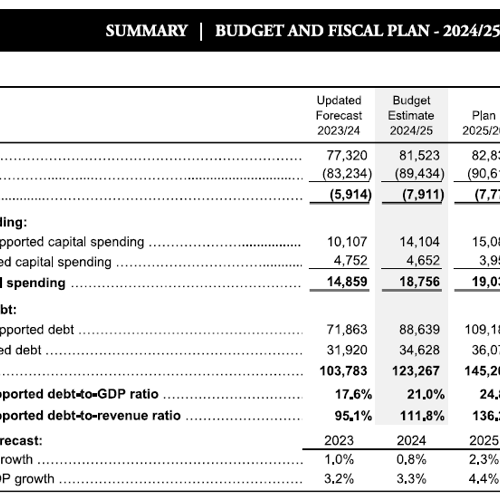
Your voice matters! Join the conversation by submitting a Letter to the Editor here.Your voice matters! Join the conversation by submitting a Letter to the Editor here.