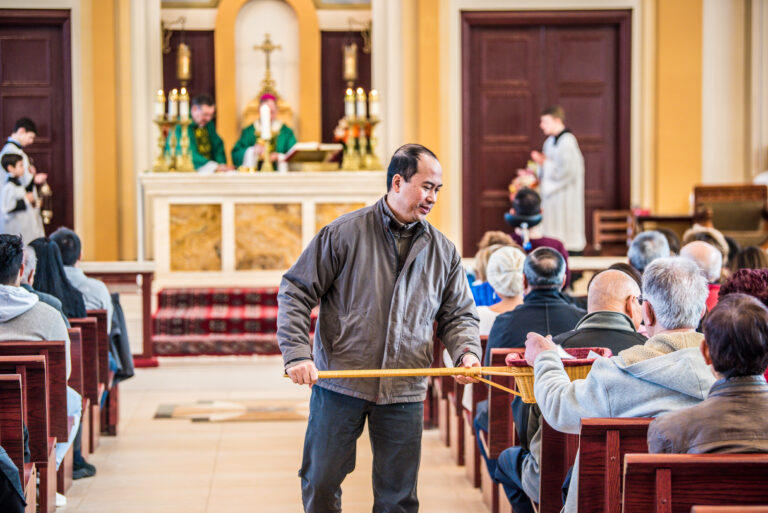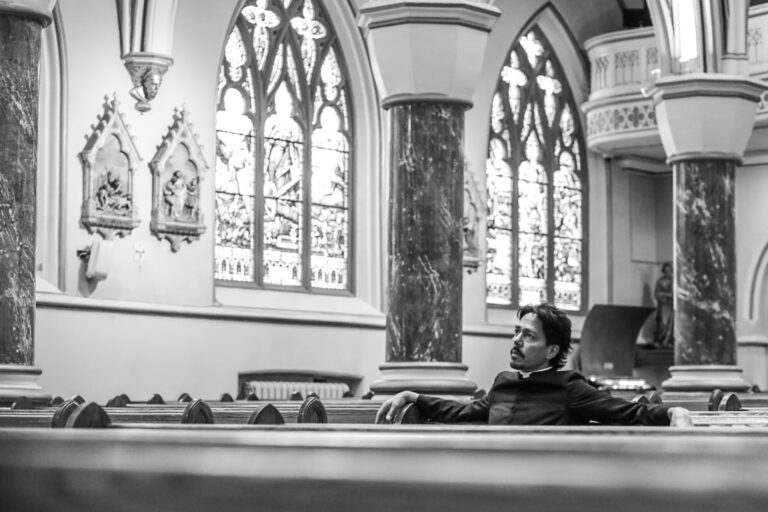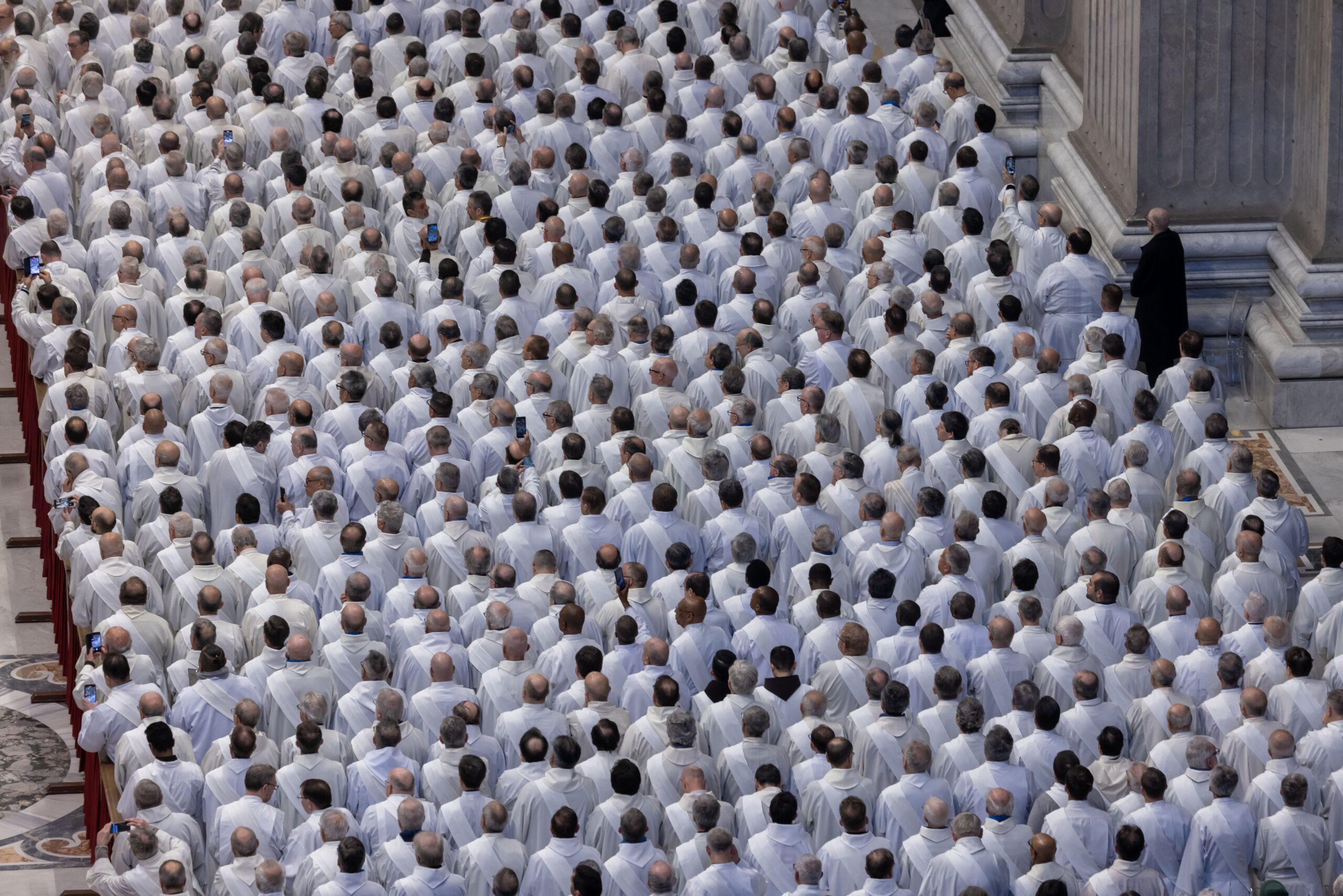

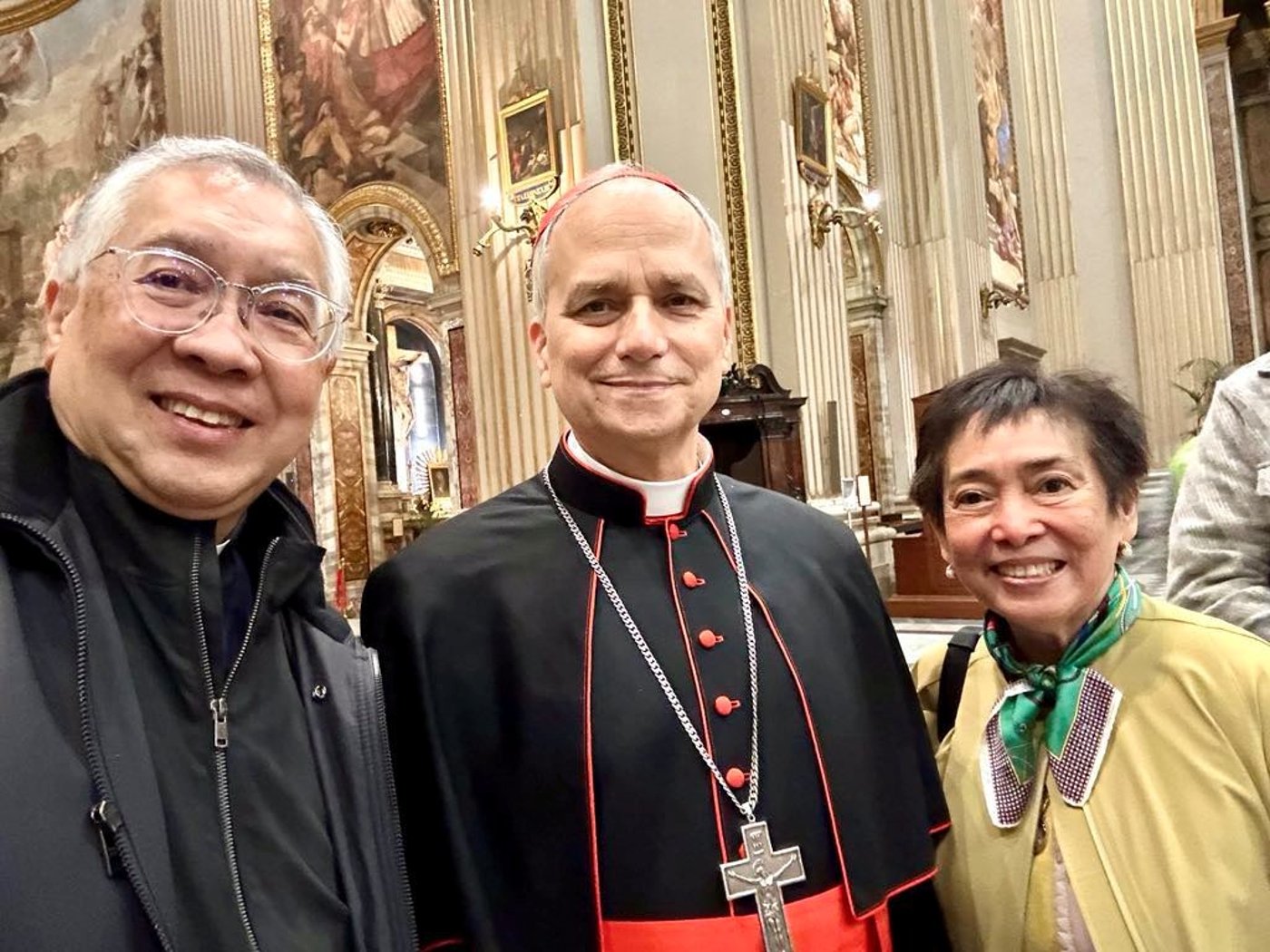
Deacon Richard Chau, Ecumenical and Interfaith Relations Officer for the Archdiocese of Vancouver, recalls his February encounter with Cardinal Robert Prevost — now Pope Leo XIV — earlier this year at the Jubilee of Deacons in Rome and called the session “enlightening and motivating.”
The event took place at the Basilica of Sant’Andrea della Valle, and Deacon Chau said the future Pope was “very approachable and a very good listener,” taking time to thoughtfully answer questions posed by deacons from around the world.
“Cardinal Prevost reminded us of the essence of the ministry of deacons,” said Deacon Chau, noting the Cardinal’s reference to St. Lawrence.
“He said deacons are not half-priests, not second-grade priests, not altar servers — but have a primary role of service, administration, and charity, especially to the poor and sick.”
The Cardinal also spoke about marriage and family life, encouraging deacons to embrace communion in their vocation and family life.
“He said God does not call us to division but communion, including authentic communion in marriage — the deacon and wife sharing their vocation in life-giving ways.”
He shared three guiding principles for diaconal ministry:
Be humble — “Your work is between you and God, not for others to see.”
Be a good husband and parent — serving in humility.
Be a sentinel — “Watch for others in need and see beyond, to recognize the Lord in those you serve.”
“He spoke with conviction from the heart,” said Chau. “He emphasized the priestly duty versus ministry of service and the danger of clericalism. He said roles are different but not above.”
Cardinal Prevost quoted St. Teresa, saying that the Church is “a heart inflamed by love to serve.” He also spoke of the movement of the Holy Spirit since Vatican II and the need for a Church where people find solace.
“The Church must be a welcoming Church,” Chau said. “He is a great promoter and believer in teamwork through synodal spiritual formation.”
Cardinal Prevost also emphasized shared baptism, walking with others, and lay witness in the world.
“He answered Deacon Zak’s question by saying that ‘a deacon can be yeast — an influence in the world on social justice.’”
“May the Spirit continue to lead the Church to bear witness for Christ for the glory of God.”
Broader Canadian reaction
At Corpus Christi and St. Mark’s Colleges, president Gerry Turcotte said Pope Leo XIV will likely champion many of Pope Francis’s priorities, especially in social justice and interfaith understanding.
“Although he is American-born, he has strong ties to Latin America,” said Turcotte. “How a Chicago-born, Augustinian, Latin American enters into these polarized and wounded times is the question everyone will be watching.”
Bishop Hector Vila of Whitehorse, who was born in Peru, said he felt “immense joy” to see a former missionary bishop from his motherland elected pope.
“Pope Leo XIV’s journey from the United States to Peru to Italy to the papacy is a testament to God’s boundless love and providence,” he said.
Bishop Mark Hagemoen of Saskatoon called the moment one of “joy and hope” and praised Pope Leo XIV’s work in governance, dialogue, and reform. “We unite in prayer and hope for the papal leadership of Pope Leo XIV, and the future of our Church in this Jubilee Year of Hope.”
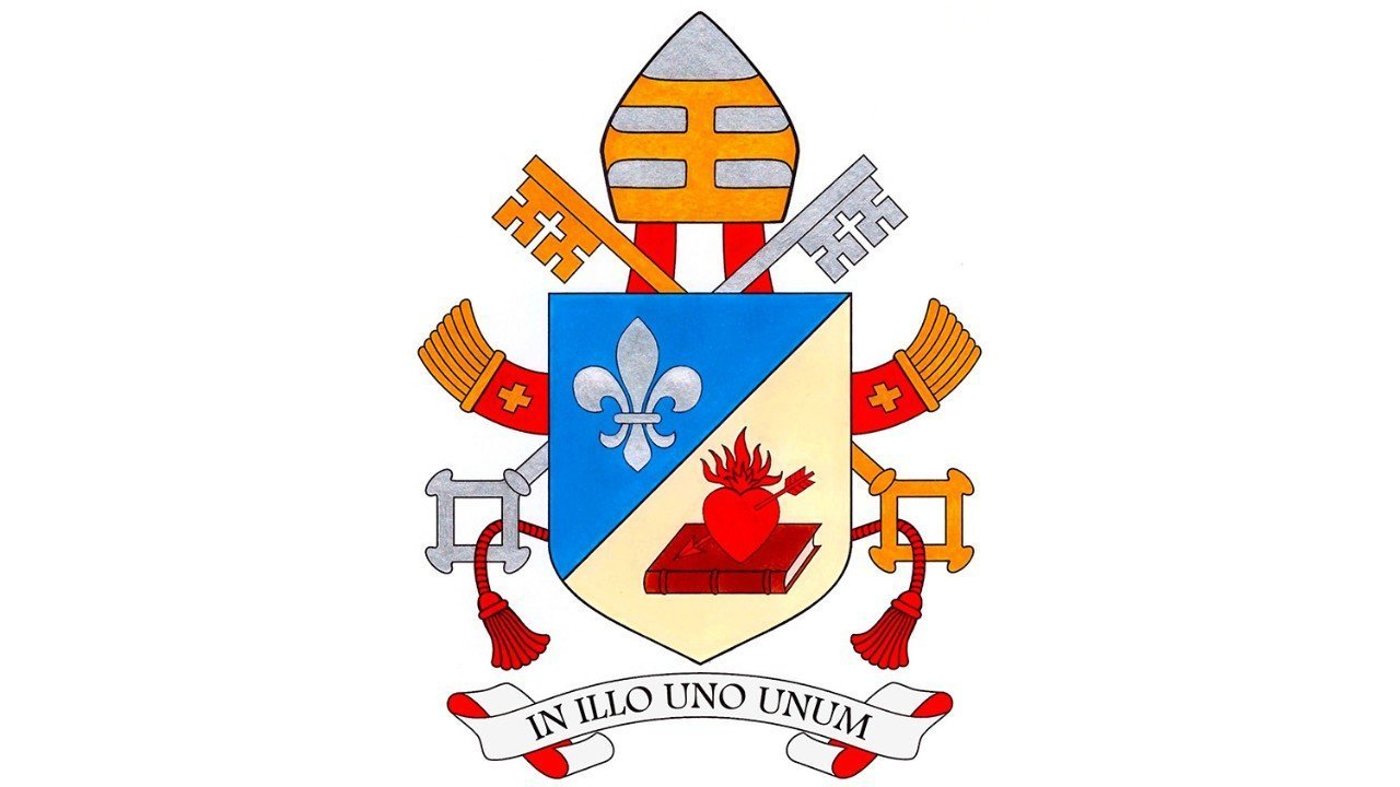
Leo’s coat of arms reflects his French-Canadian ancestry
Pope Leo XIV’s devotion to the Blessed Mother is prominently reflected in his coat of arms, which incorporates elements of both his personal devotions and Augustinian spirituality.
The upper left quadrant features a white fleur-de-lis on a blue background — blue being the traditional colour associated with Mary. The fleur-de-lis, a traditional French symbol of the lily representing Mary’s purity, also reflects Pope Leo’s paternal French-Canadian ancestry.
The lower right section of the shield, set against a beige background, displays a symbol associated with the Order of St. Augustine: a closed book with a heart pierced by an arrow. The book represents the Word of God — God’s communication revealed in history — which was central to the conversion of St. Augustine. Resting on the book is Augustine’s restless heart, as described in his autobiographical Confessions. The heart, pierced by God’s word — symbolized by the arrow — signifies the moment of his conversion and the fulfilment of his deepest longing.
The motto — “In Illo uno unum,” Latin for “In the One, we are one” — comes from a sermon by St. Augustine on Psalm 127. Reflecting on the psalm, Augustine writes, “When I speak of Christians in the plural, I understand one in the One Christ. You are therefore many, and you are one; we are many, and we are one.”
With OSV News files
Your voice matters! Join the conversation by submitting a Letter to the Editor here.